

Theological Themes of Revelation: Why the Last Book of the Bible Matters More Than Ever
Hope, Judgment, Worship, and the Ultimate Victory of Christ in an Age of Uncertainty

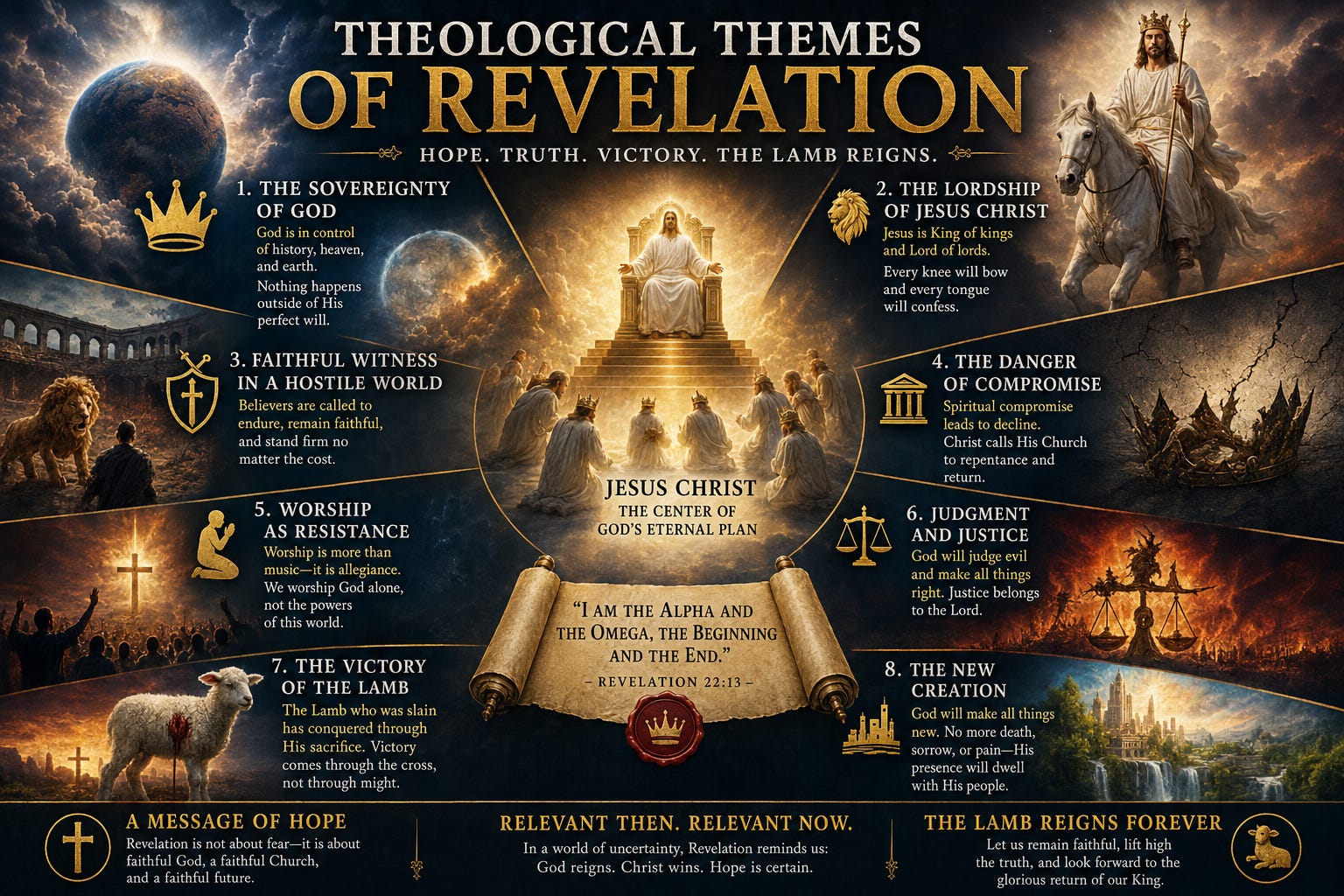
The Book of Revelation is one of the most discussed, misunderstood, and debated books in the Bible. For some readers, it is a mysterious collection of symbols and visions. For others it is a roadmap of future events. Yet beneath its dramatic imagery lies a powerful theological message that speaks directly to every generation. Written during a period of hardship and persecution, Revelation was intended not merely to predict the future but to strengthen believers in the present. Its themes of divine sovereignty, faithful witness, spiritual warfare, judgment, worship, and ultimate victory continue to challenge and encourage Christians today. In an age marked by political uncertainty, cultural conflict, technological change, and spiritual confusion, Revelation remains one of the most relevant books in Scripture.
Introduction
Few books of the Bible generate as much fascination as Revelation.
Images of beasts, dragons, seals, trumpets, angels, and heavenly visions have captivated readers for nearly two thousand years. Entire industries have been built around attempts to decode its symbols and predict future events.
Yet many readers miss the central purpose of the book.
Revelation was not written primarily to satisfy curiosity about the future. It was written to encourage believers to remain faithful to Jesus Christ regardless of the circumstances surrounding them.
The churches of Asia Minor faced pressure from political authorities, pagan culture, emperor worship, false teaching, and spiritual compromise. The challenges confronting them may appear ancient, but their underlying themes remain remarkably modern.
The theological message of Revelation speaks directly to a world searching for meaning amid uncertainty.
The Sovereignty of God
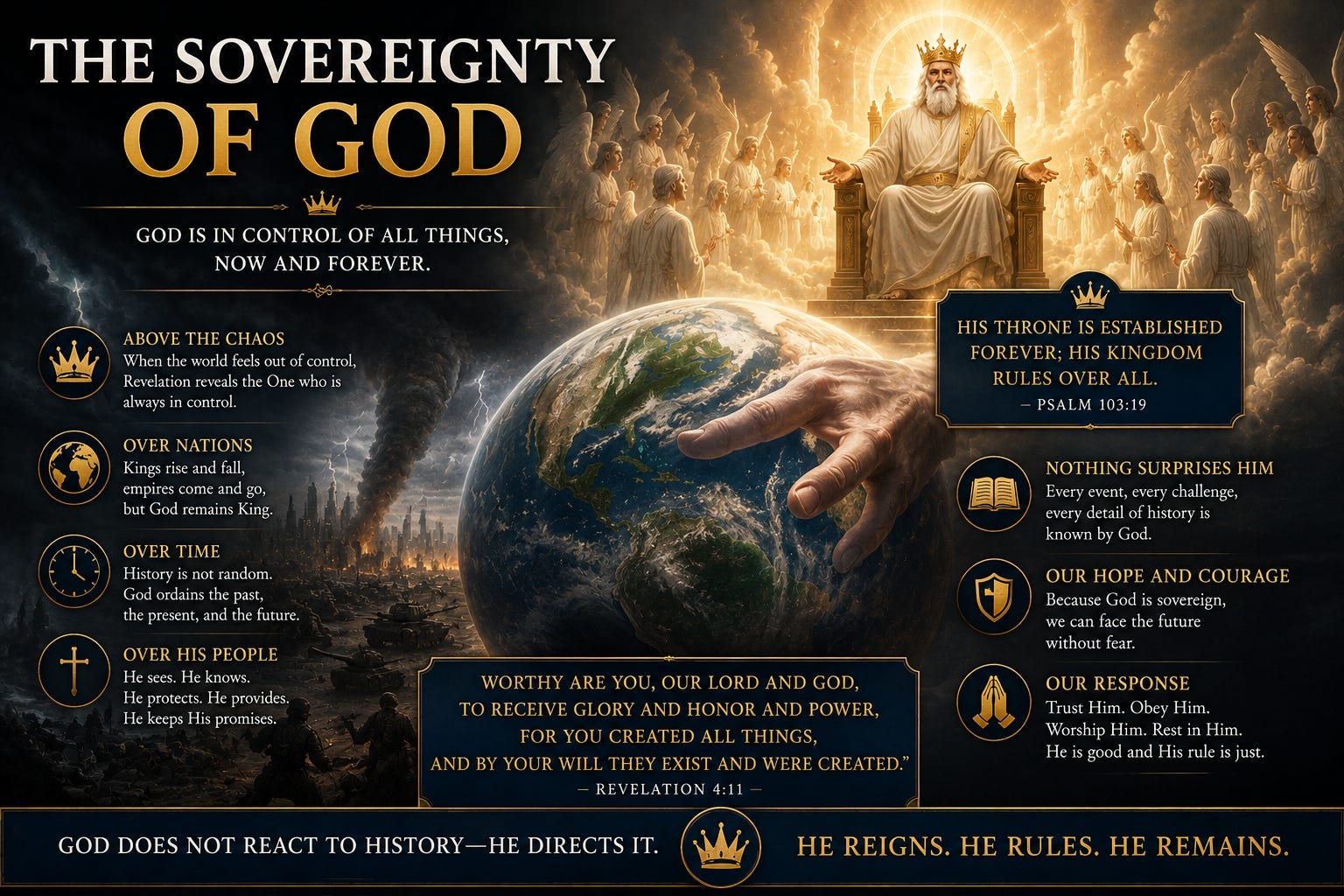
One of the most important themes in Revelation is the absolute sovereignty of God.
The world often appears chaotic. Nations rise and fall. Political leaders compete for power. Wars, disasters, and economic crises create fear and uncertainty.
Yet Revelation repeatedly presents a different perspective.
Behind the turmoil of history stands the throne of God.
The heavenly throne room described in Revelation 4 serves as a reminder that God remains in control even when earthly events seem confusing or frightening.
This truth was deeply encouraging for persecuted Christians in the first century and remains equally important today.
The central message is clear: human history is not ultimately controlled by emperors, governments, markets, or military powers. God remains sovereign over all creation.
The Lordship of Jesus Christ
Another major theme is the supremacy of Jesus Christ.
Revelation presents Christ not merely as a historical figure but as the risen and reigning King.
He is described as the Faithful Witness, the Lamb of God, the Lion of Judah, the Alpha and Omega, and the King of Kings.
These titles reveal different aspects of His identity and mission.
In a world filled with competing loyalties, Revelation calls believers to recognize Christ as the ultimate authority.
The early Christians lived under Roman rule and faced constant pressure to acknowledge Caesar as lord. Revelation boldly rejects this claim.
The message remains relevant today. Modern societies may not worship emperors, but they often elevate political ideologies, wealth, celebrity culture, technology, or personal autonomy to positions of ultimate importance.
Revelation reminds believers that Christ alone deserves absolute allegiance.
Faithful Witness in a Hostile World
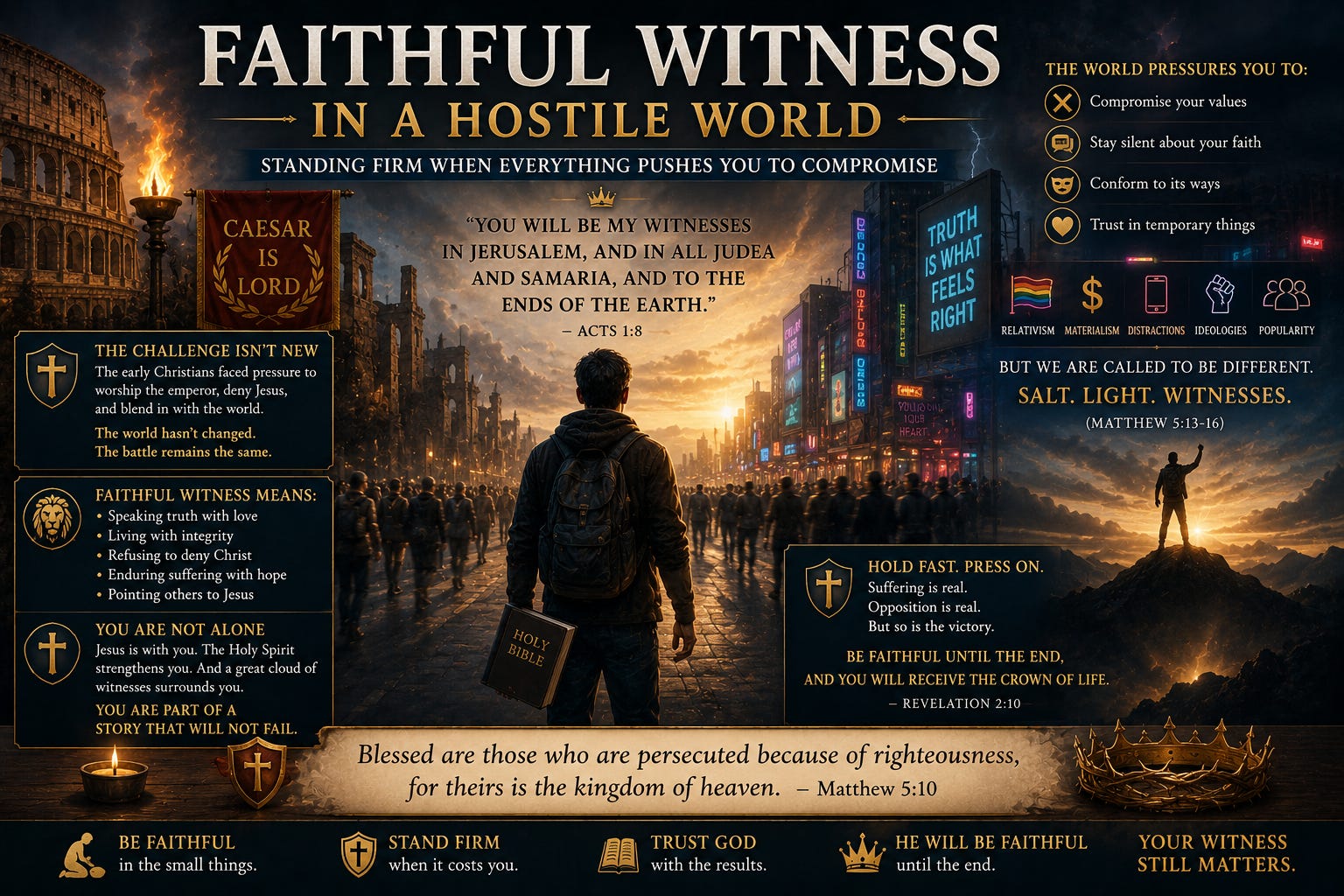
One of the most practical themes of Revelation is faithful witness.
The book consistently encourages believers to endure hardship without compromising their faith.
The churches addressed in chapters two and three faced various challenges. Some struggled with persecution. Others faced false teaching. Some became spiritually complacent.
Yet Christ repeatedly calls His followers to remain faithful.
This theme challenges modern Christians living in cultures that increasingly pressure individuals to conform to popular beliefs and values.
Faithfulness does not always require dramatic acts of heroism. Often it means daily obedience, integrity, and perseverance in ordinary circumstances.
Revelation teaches that genuine discipleship may involve sacrifice, but it is always worthwhile.
The Danger of Compromise
The letters to the Seven Churches repeatedly warn against spiritual compromise.
Pergamum tolerated false teaching.
Thyatira permitted moral corruption.
Sardis possessed a reputation for spiritual life while being spiritually dead.
Laodicea became comfortable and self-satisfied.
These warnings extend far beyond the first century.
Modern churches face similar temptations. The desire for acceptance, popularity, cultural relevance, financial success, or personal comfort can gradually weaken spiritual conviction.
Revelation reminds believers that compromise often begins subtly.
The greatest danger is not always open persecution but gradual accommodation to values that conflict with the Gospel.
Worship as Resistance
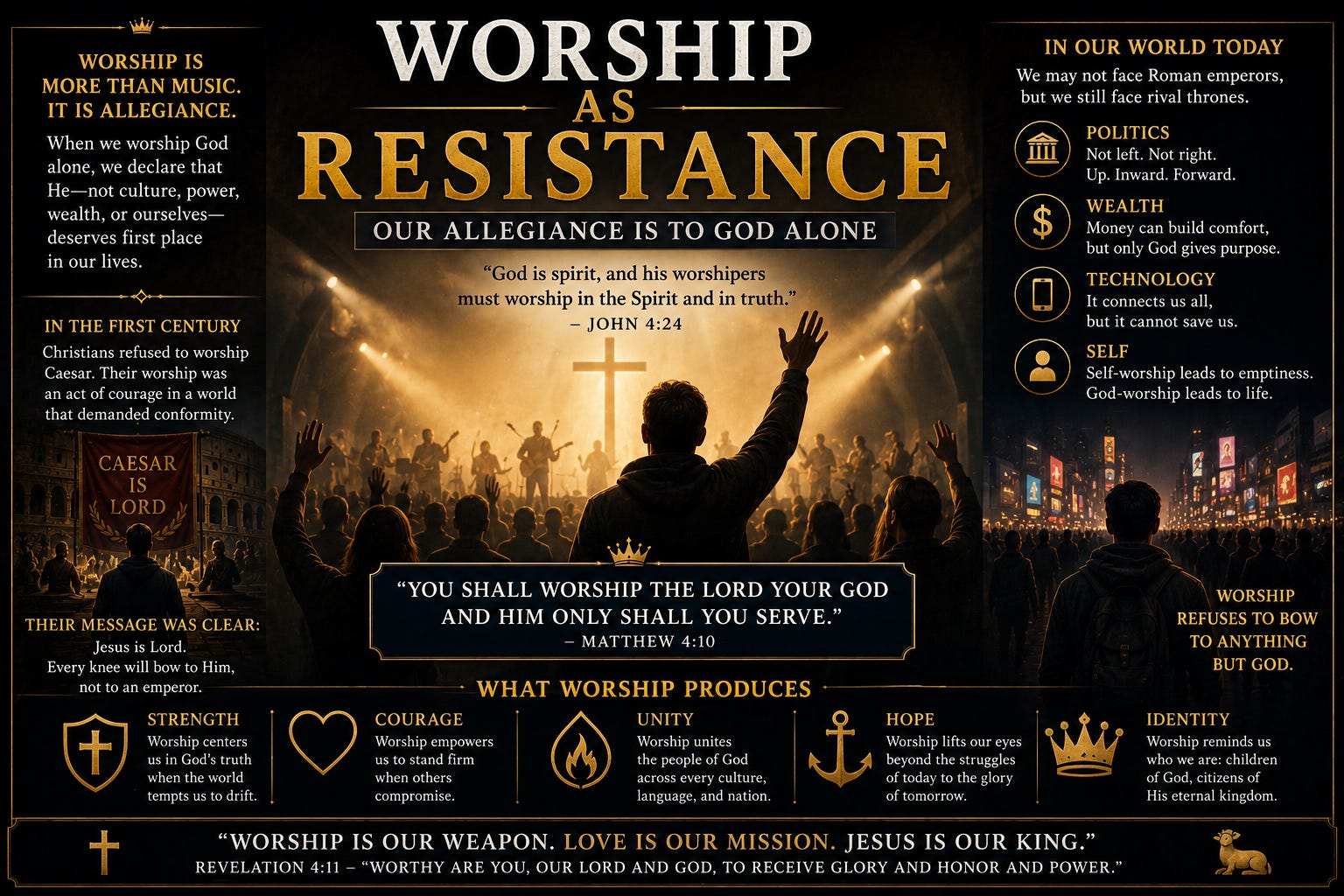
One of Revelation’s most overlooked themes is worship.
Throughout the book, scenes of heavenly worship appear repeatedly.
Angels worship.
Elders worship.
Martyrs worship.
The entire creation worships God.
These scenes reveal that worship is not merely a religious activity. It is an act of allegiance.
When Christians worship God alone, they reject every rival claim to ultimate authority.
In the Roman world, worship distinguished Christians from those who participated in emperor worship.
Today worship continues to serve as a declaration that God, not culture, politics, wealth, or personal ambition, occupies the highest place in life.
Judgment and Justice
Revelation also emphasizes divine judgment.
Modern readers sometimes struggle with this theme, yet it reflects an important truth.
Human history contains injustice, violence, oppression, corruption, and evil.
If God is truly just, evil cannot remain unanswered forever.
Revelation assures believers that God sees every act of injustice and will ultimately establish perfect justice.
This message offered hope to persecuted Christians who appeared powerless before earthly authorities.
The promise of divine justice remains a source of comfort for believers living amid suffering and oppression today.
The Victory of the Lamb
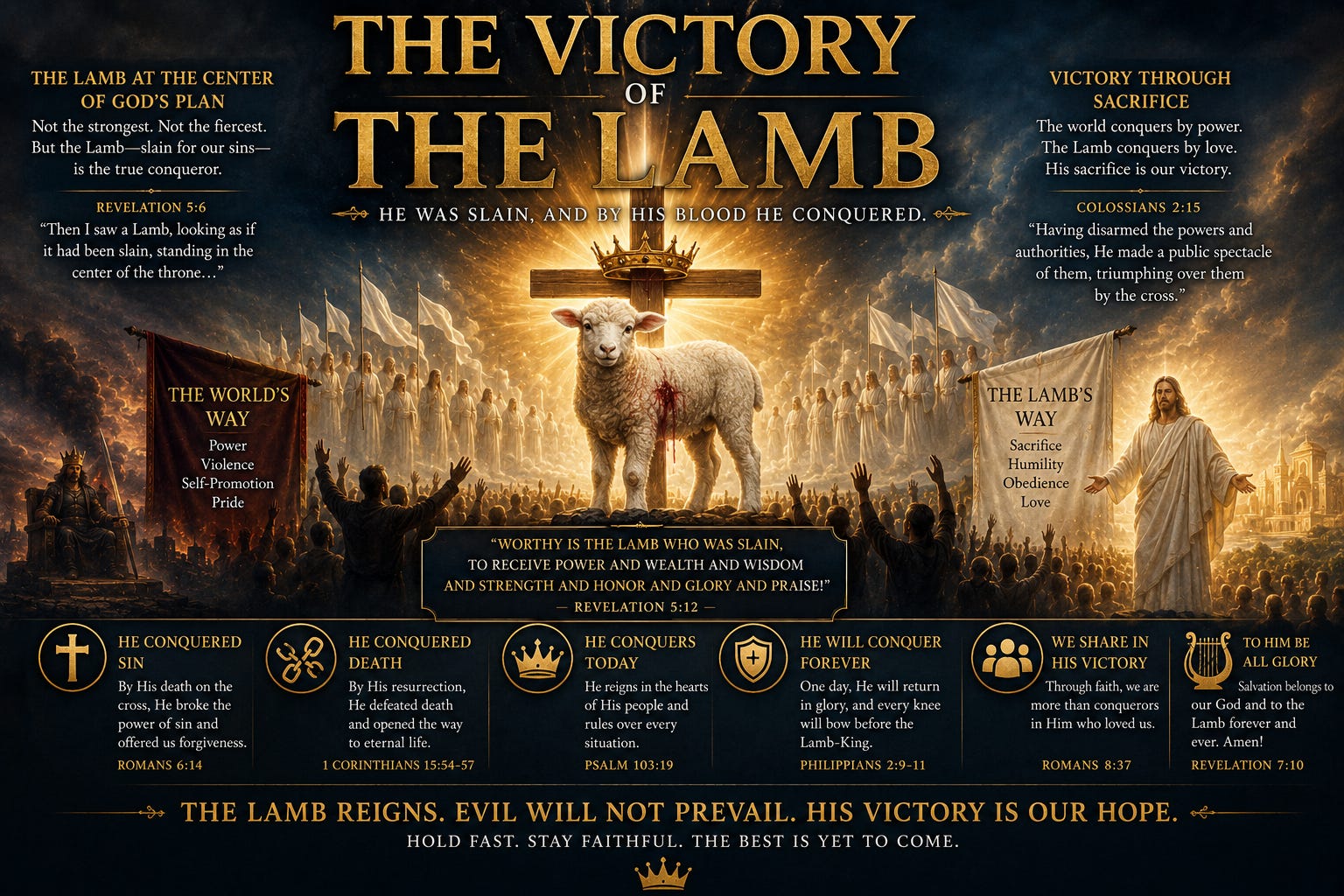
Perhaps the most surprising theological theme in Revelation is the way victory is achieved.
The hero of Revelation is not portrayed primarily as a conquering military ruler but as a slain Lamb.
The Lamb conquers through sacrifice.
The cross stands at the center of God’s victory over sin, death, and evil.
This paradox challenges human assumptions about power.
The world often celebrates dominance, force, and self-promotion.
Revelation presents a different vision of victory rooted in faithfulness, humility, and sacrificial love.
The New Creation
The book concludes with one of the most beautiful visions in Scripture.
A new heaven and a new earth replace the brokenness of the old creation.
God dwells with His people.
Death is abolished.
Suffering ends.
Tears are wiped away.
The New Jerusalem descends from heaven, symbolizing the complete restoration of God’s purposes.
This vision reminds believers that Christianity is ultimately a message of hope.
History does not end in chaos but in renewal.
The final word belongs not to evil, suffering, or death but to God.
Modern Lessons from Revelation
The theological themes of Revelation remain profoundly relevant.
They remind modern readers that:
God remains sovereign despite uncertainty.
Christ deserves ultimate allegiance.
Faithfulness matters more than popularity.
Spiritual compromise is dangerous.
Worship shapes identity.
Justice will ultimately prevail.
Hope is stronger than fear.
In an age dominated by anxiety, division, and rapid change, Revelation invites believers to view history from heaven’s perspective rather than merely through earthly circumstances.
The Book of Revelation is far more than a collection of mysterious symbols or predictions. It is a theological masterpiece that reveals the character of God, the lordship of Christ, the reality of spiritual conflict, and the certainty of ultimate redemption.
Its message challenged the churches of Asia Minor nearly two thousand years ago, and it continues to challenge believers today.
Revelation calls Christians to live courageously, worship faithfully, resist compromise, and trust God’s sovereignty regardless of the circumstances around them.
Above all, it proclaims a message of hope: the Lamb reigns, evil will not prevail, and God’s kingdom will ultimately triumph.
Dr. Daniel J. Grace
Research • Journalism • Theology
© 2026 Dr. Daniel J. Grace. All Rights Reserved.