

The Seven Churches and the Digital Age
Ancient Warnings and Timeless Wisdom for Christians Living in a Connected World

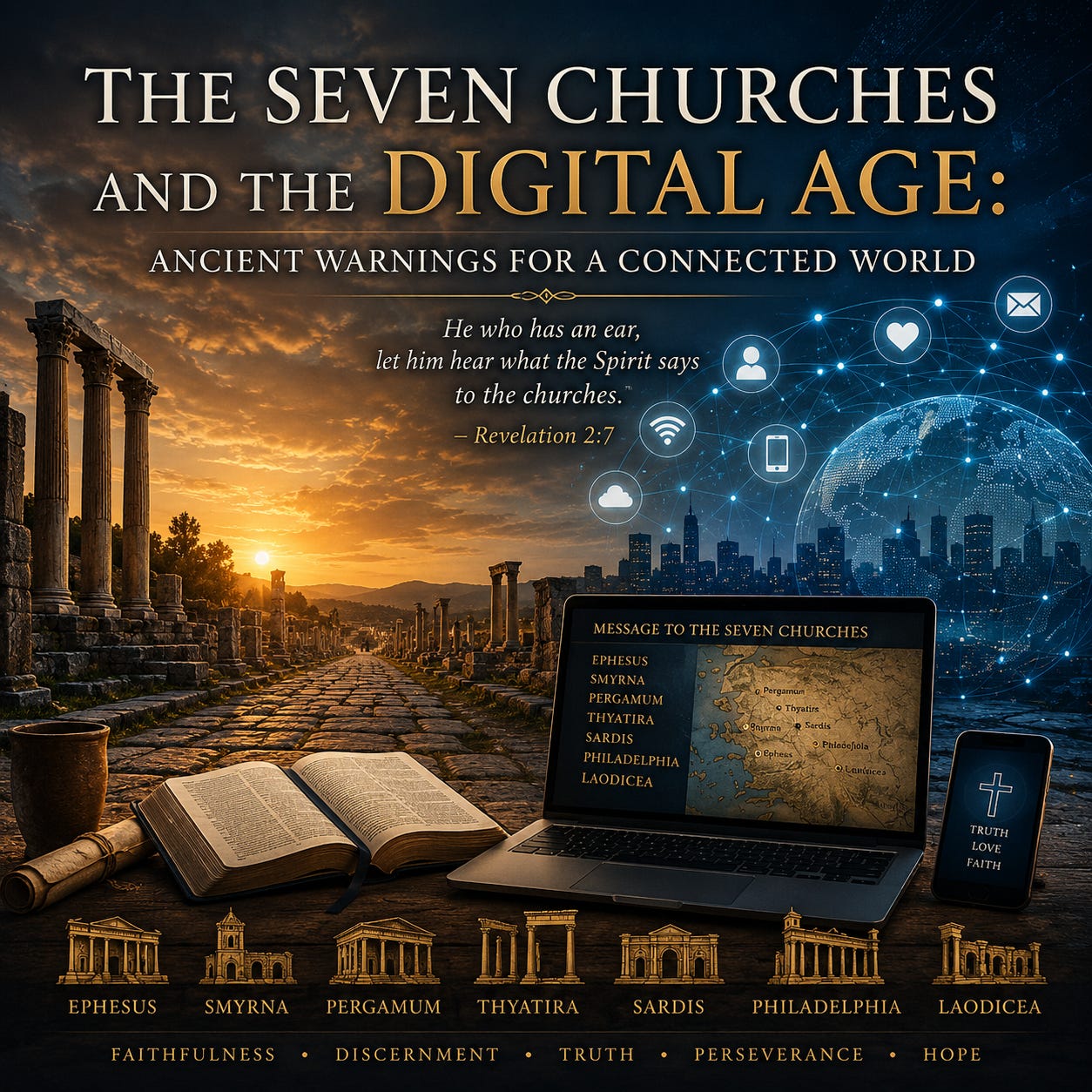
Introduction
The Seven Churches addressed in Revelation chapters 2–3 were real Christian communities located in Asia Minor during the first century. Although nearly two thousand years have passed since the Apostle John recorded Christ’s messages to Ephesus, Smyrna, Pergamum, Thyatira, Sardis, Philadelphia, and Laodicea, the spiritual challenges they faced remain remarkably relevant. Today, the Church exists in a digital age characterised by social media, instant communication, artificial intelligence, online communities, and unprecedented access to information. While technology has transformed how people communicate, learn, and worship, the fundamental questions of faith, obedience, truth, and discipleship remain unchanged.
The messages to the Seven Churches reveal timeless principles that speak directly to the opportunities and dangers of modern digital culture. The struggles of the early churches mirror many of the challenges facing Christians today, offering valuable lessons for navigating faith in an increasingly connected world.
Ephesus: The Danger of Losing Our First Love
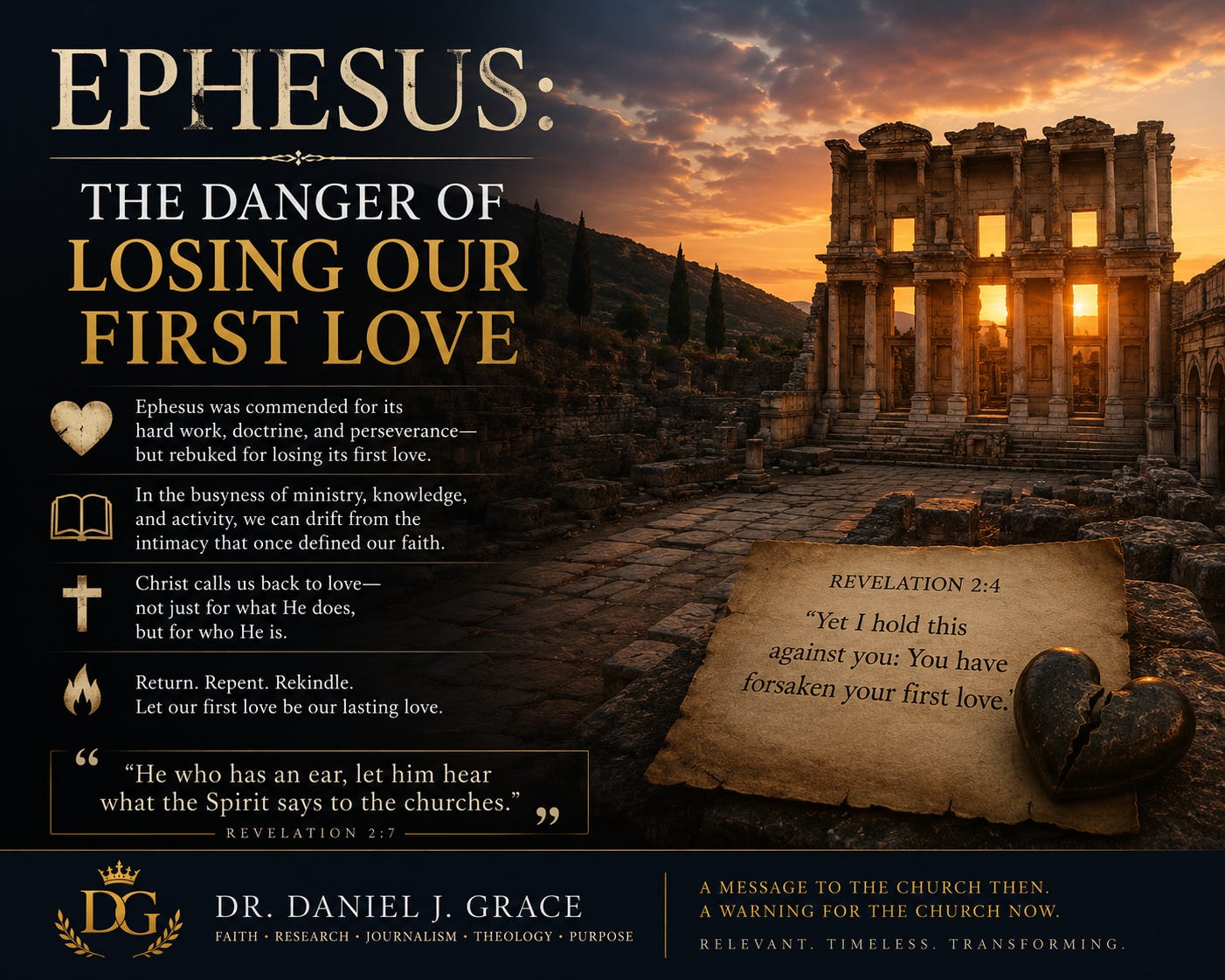
The church in Ephesus was commended for its hard work, perseverance, and commitment to sound doctrine. Yet Christ rebuked them because they had abandoned their first love.
In the digital age, many Christians face a similar danger. It is possible to consume endless religious content, watch sermons, participate in online debates, and share inspirational posts while gradually losing personal intimacy with God. Technology can provide access to spiritual resources, but it cannot replace genuine prayer, worship, and fellowship.
The Ephesian warning reminds believers that faith is not measured by online activity or theological knowledge alone. Christ desires a relationship rooted in love, devotion, and obedience. Digital engagement must never become a substitute for spiritual transformation.
Smyrna: Faithfulness Amid Digital Opposition
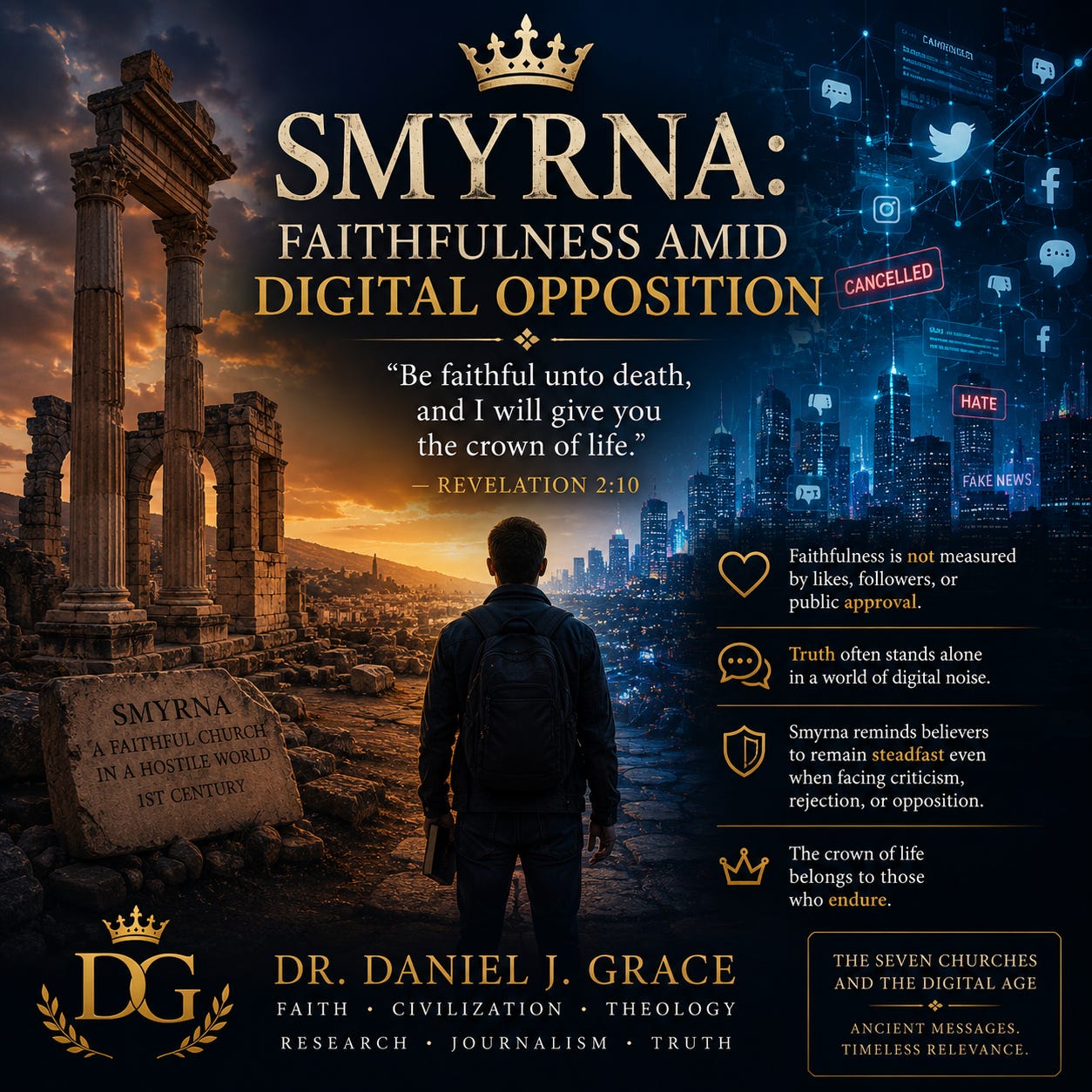
The church in Smyrna faced persecution and hardship. Despite suffering, they remained faithful.
Modern believers may not always face physical persecution, but they often encounter hostility, ridicule, or pressure through digital platforms. Social media can amplify criticism, misinformation, and ideological conflict. Christians may experience isolation when their convictions conflict with popular cultural narratives.
The message to Smyrna encourages believers to remain faithful regardless of public opinion. Faithfulness is not determined by popularity, followers, or approval ratings. Instead, it is measured by perseverance and loyalty to Christ even when standing alone.
In a culture obsessed with visibility and influence, Smyrna reminds the Church that spiritual success is not always accompanied by worldly recognition.
Pergamum: Truth in a Culture of Compromise

Pergamum was praised for holding firmly to Christ’s name but criticised for tolerating false teachings and moral compromise.
The digital world offers unlimited access to information, but not all information is truthful. Christians are exposed daily to competing philosophies, ideologies, and interpretations of reality. The internet provides both opportunities for learning and pathways to confusion.
The challenge facing modern believers resembles that of Pergamum. How can Christians remain faithful to biblical truth while living in a culture that constantly promotes alternative moral standards?
The answer lies in discernment. The Church must engage culture without surrendering its convictions. Christians should evaluate ideas carefully, testing them against Scripture rather than accepting them simply because they are popular or widely shared.
Thyatira: Tolerance Without Discernment
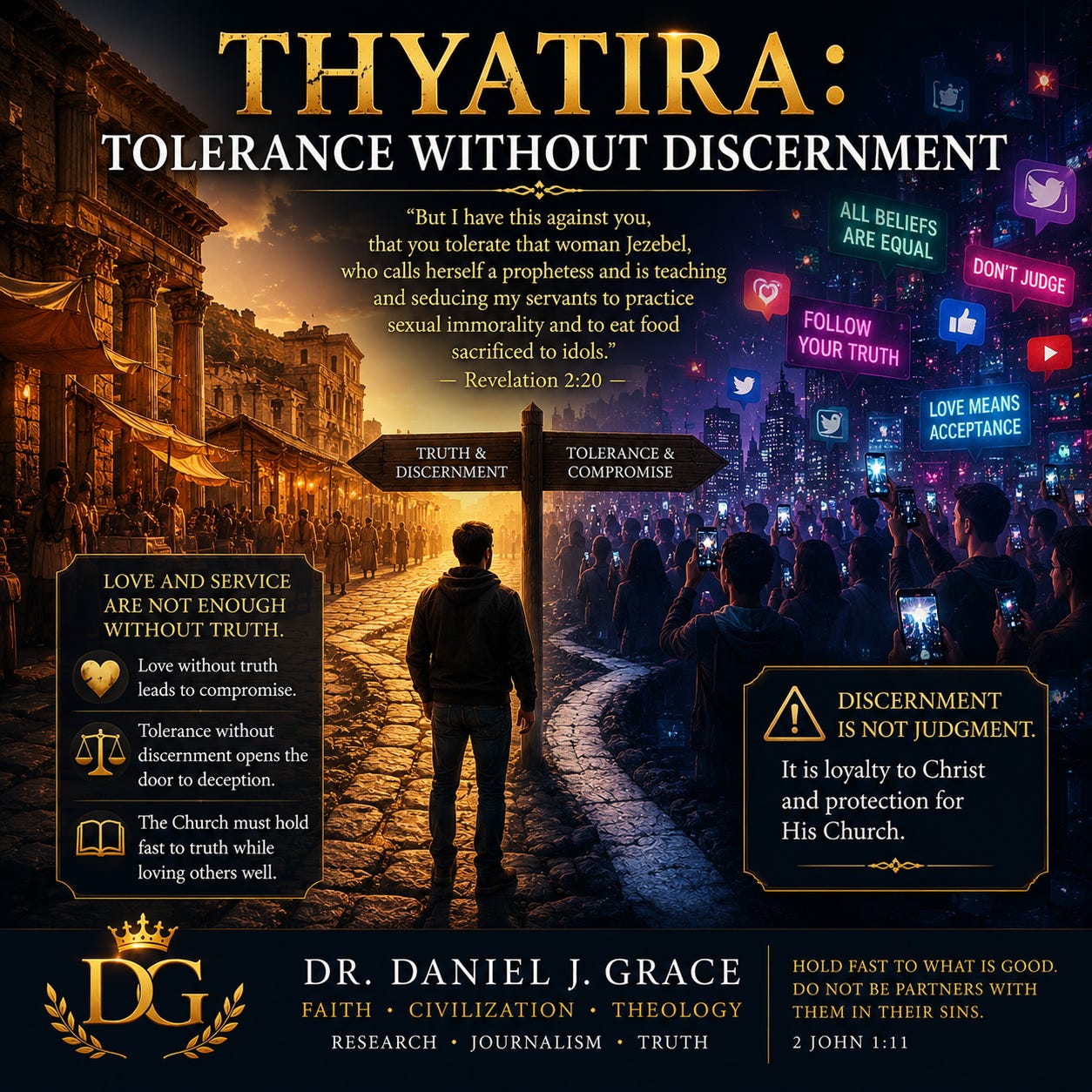
The church in Thyatira was known for love, service, and perseverance. However, it was also criticised for allowing false influences to flourish within the community.
The digital age has made communication easier than ever, but it has also blurred the distinction between tolerance and truth. Many people assume that all beliefs are equally valid and that disagreement is inherently harmful.
While Christians are called to love others, biblical love does not require abandoning truth. The Church must balance compassion with discernment. Online environments often reward emotional reactions and simplistic narratives rather than careful reflection.
The lesson of Thyatira is clear: love and truth must remain united. A church that values acceptance while neglecting discernment risks losing its spiritual foundation.
Sardis: The Illusion of Spiritual Life
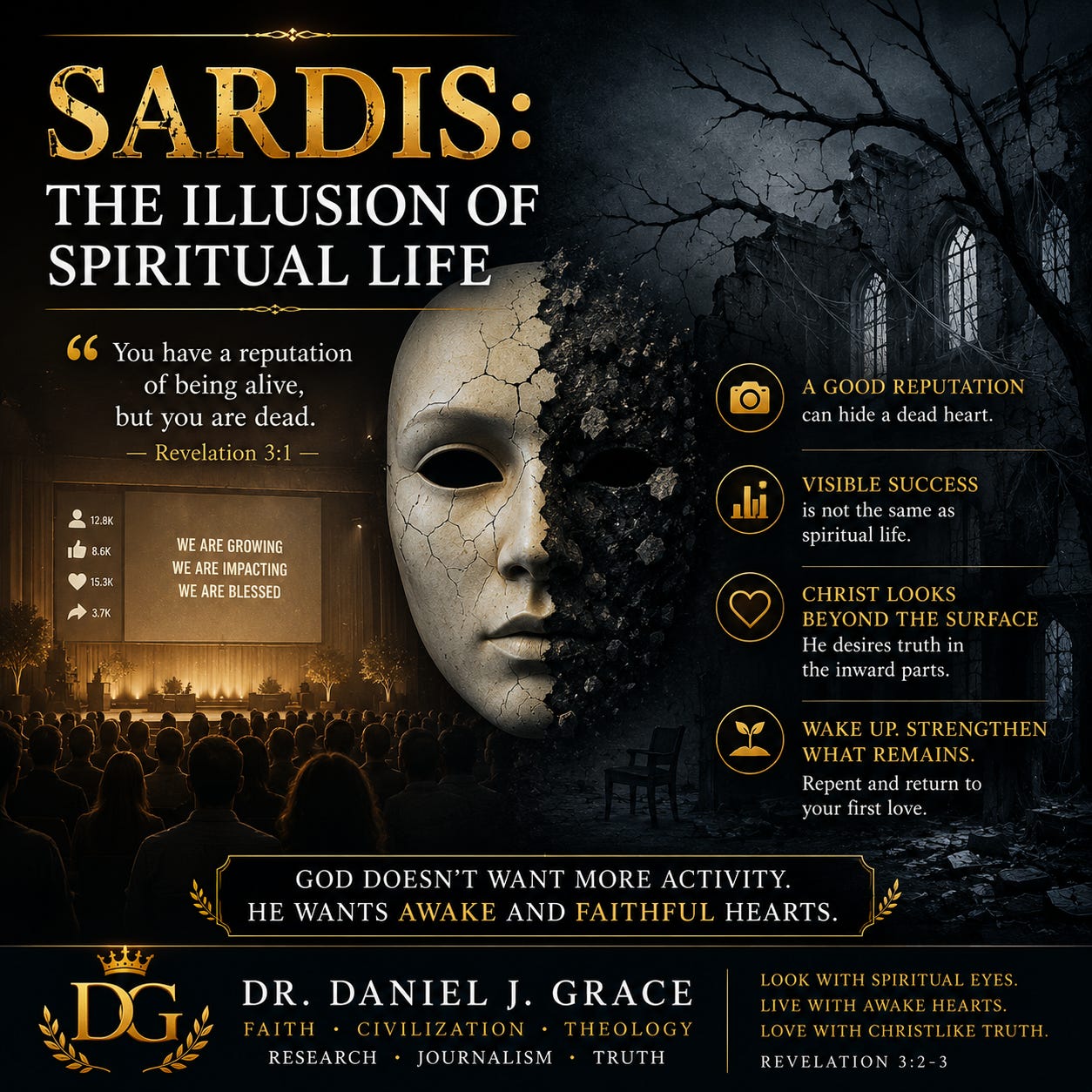
Christ told Sardis, “You have a reputation of being alive, but you are dead.”
This warning may be particularly relevant in the age of digital branding and social media. Churches and individuals can cultivate impressive online appearances while struggling spiritually beneath the surface.
Professional websites, polished livestreams, and large followings do not necessarily indicate spiritual vitality. The temptation to focus on image rather than substance has never been greater.
The message to Sardis challenges Christians to pursue authentic faith rather than external appearances. True spiritual life is demonstrated through holiness, humility, and obedience rather than public recognition.
Philadelphia: Faithfulness in Small Things
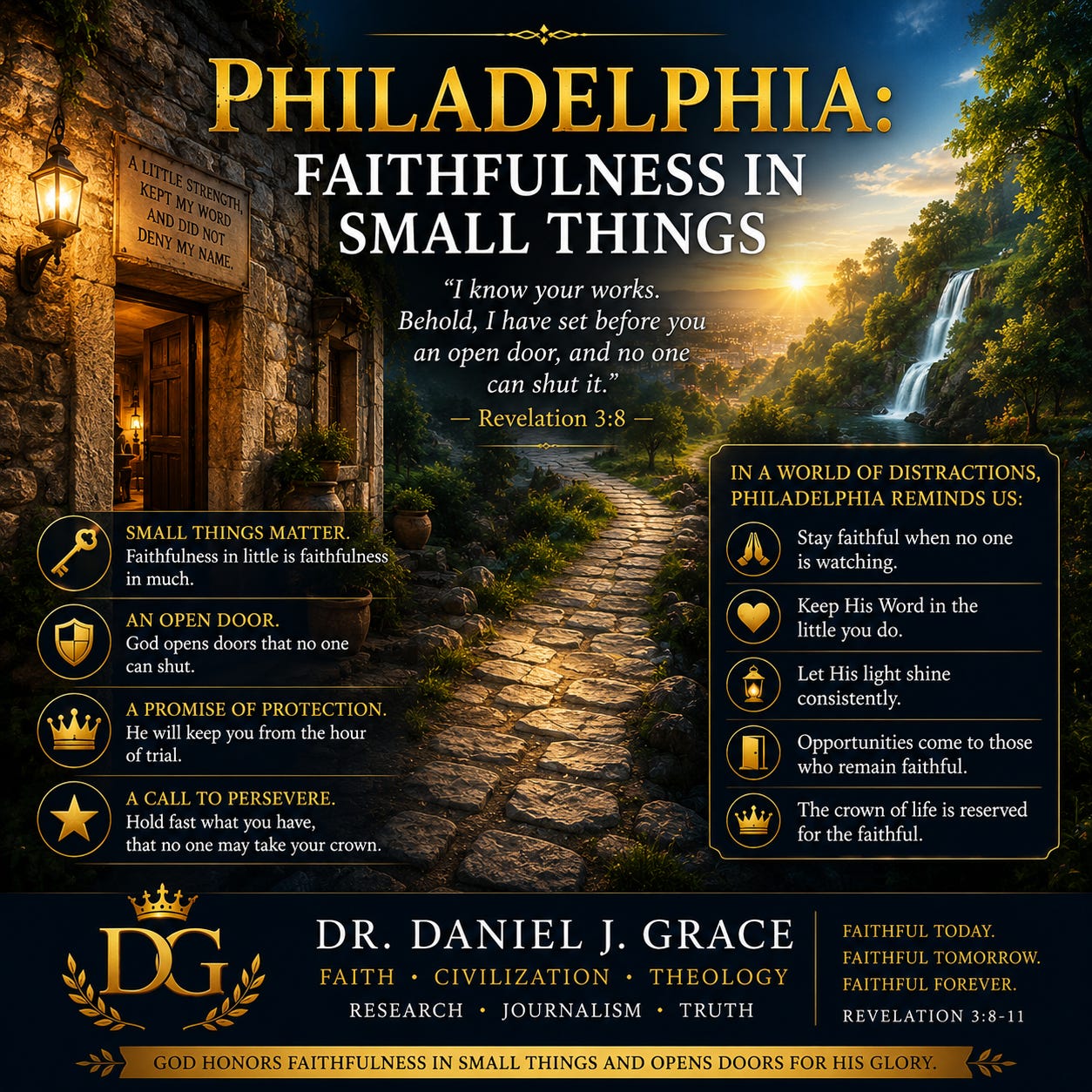
Philadelphia received no rebuke. Though possessing limited strength, this church remained faithful to Christ.
Many believers feel insignificant in an era dominated by celebrities, influencers, and large institutions. Yet Philadelphia reminds us that God values faithfulness more than prominence.
A Christian sharing truth with a small audience may have greater eternal impact than someone with a massive platform but little integrity. Digital influence should never become the measure of spiritual significance.
The Church of Philadelphia teaches that God can use ordinary people who remain faithful, regardless of their resources, visibility, or status.
Laodicea: The Danger of Digital Comfort
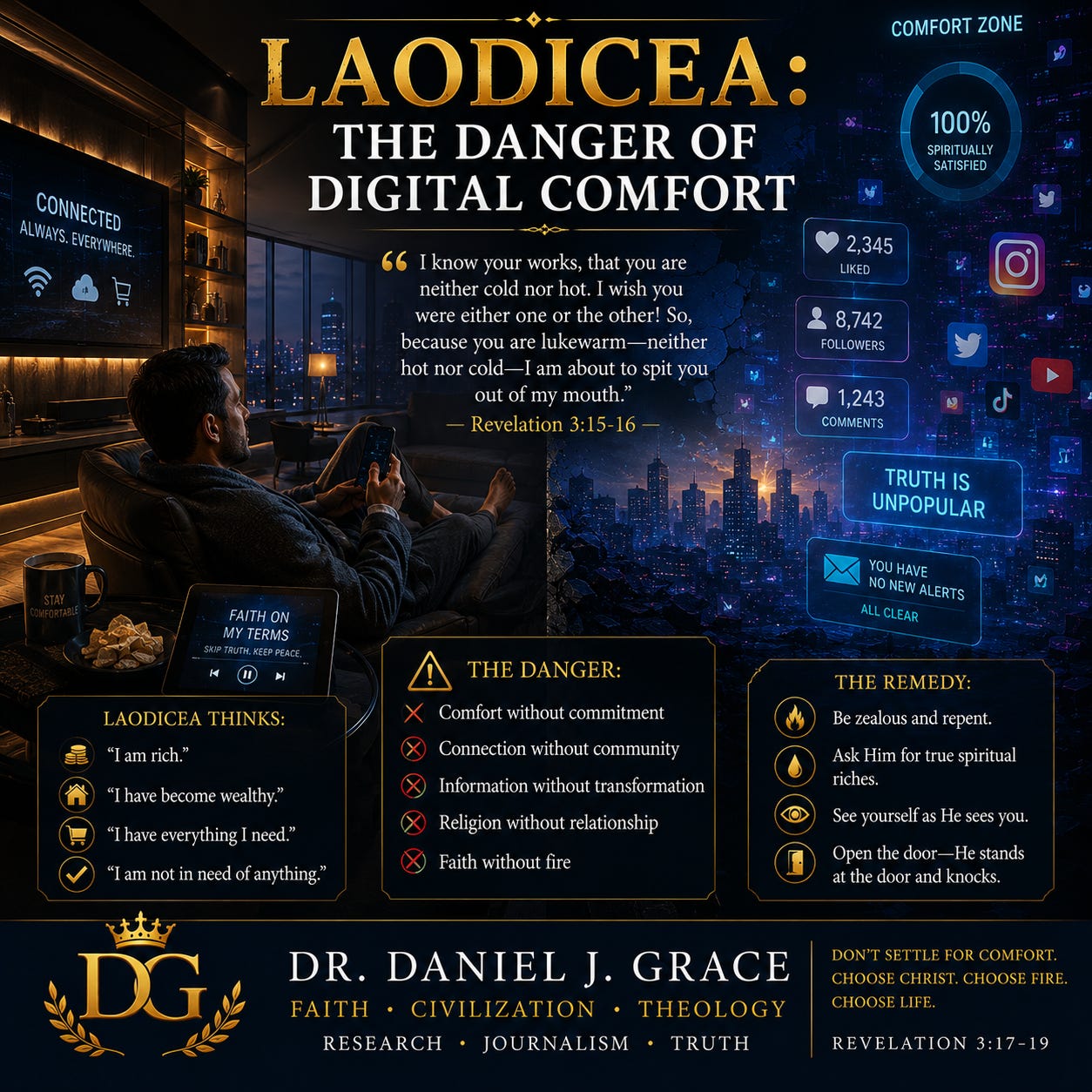
Perhaps no church speaks more directly to the modern world than Laodicea. Wealthy, comfortable, and self-sufficient, the Laodiceans believed they lacked nothing. Yet Christ declared them spiritually poor.
The digital age provides extraordinary convenience. Information, entertainment, shopping, and social interaction are available instantly. While these innovations offer many benefits, they can also encourage complacency and self-reliance.
Modern Christians must guard against the assumption that comfort equals spiritual health. Prosperity and technological advancement do not guarantee closeness to God.
Laodicea reminds believers that spiritual passion cannot be purchased, downloaded, or automated. A vibrant relationship with Christ requires humility, dependence, and continual renewal.
The Seven Churches of Revelation demonstrate that while technology changes, human nature remains remarkably consistent. The same temptations, struggles, and spiritual challenges faced by first-century believers continue to confront Christians today.
Ephesus warns against losing our first love. Smyrna teaches faithfulness amid opposition. Pergamum calls for truth without compromise. Thyatira emphasises discernment. Sardis exposes superficial spirituality. Philadelphia celebrates faithful perseverance. Laodicea warns against complacency and self-sufficiency.
The digital age presents unprecedented opportunities for ministry, education, and global connection. Yet it also amplifies ancient dangers. The messages to the Seven Churches remind believers that technology is a tool, not a saviour. The Church’s ultimate hope remains the same as it was in the first century: faithful obedience to Jesus Christ.
As Christians navigate the complexities of the modern world, the voices of the Seven Churches continue to speak with remarkable clarity. Their warnings remain relevant, their encouragement remains powerful, and their testimony continues to guide believers toward a deeper and more authentic faith.
Dr. Daniel J. Grace
Research • Journalism • Theology
© 2026 Dr. Daniel J. Grace. All Rights Reserved.
This article may not be reproduced, distributed, or transmitted in any form without prior written permission from the author, except for brief quotations used in reviews, academic references, or educational purposes with proper attribution.