

The Seven Churches and Modern Consumer Christianity
A Prophetic Reflection on the Spiritual Condition of the Modern Church

Introduction
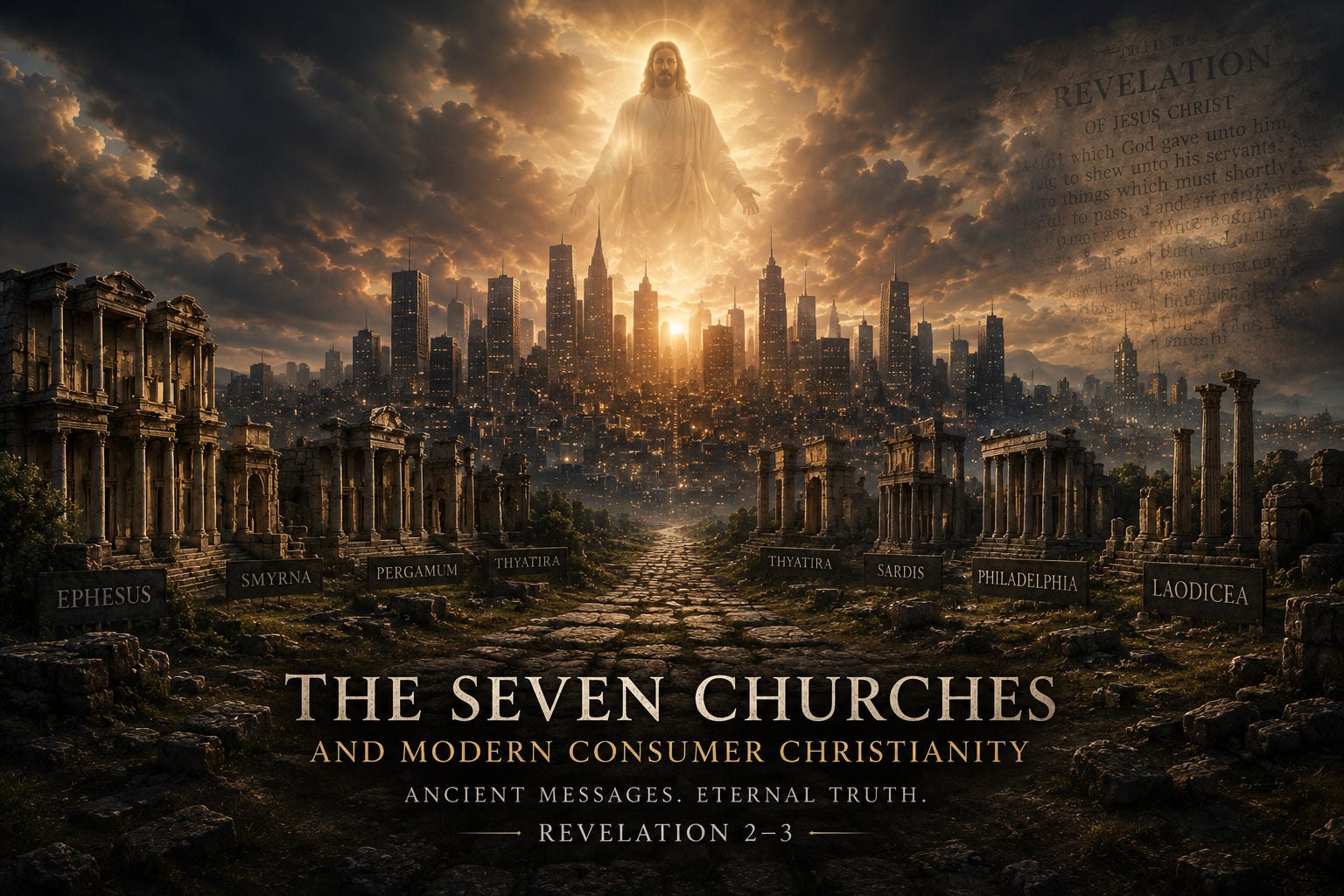
The Book of Revelation remains one of the most mysterious and spiritually profound books in the Holy Bible. Among its many prophetic images and warnings, the letters to the Seven Churches of Asia Minor continue to speak with remarkable relevance to the modern Christian world. Although these churches existed historically in the first century, their spiritual conditions transcend time and culture. Their strengths, failures, compromises, perseverance, and warnings still echo through churches today.
Modern Christianity exists within a rapidly changing world shaped by technology, social media, consumerism, political division, secularism, celebrity culture, and spiritual confusion. Churches are no longer isolated communities struggling under Roman persecution. Instead, many now operate in environments of freedom, wealth, visibility, and global influence. Yet despite external success, many churches face deep internal spiritual crises.
The danger facing Christianity today is not only persecution from outside forces but spiritual compromise from within. The modern church is increasingly tempted to adapt itself to cultural trends rather than remain faithful to the teachings of Christ. In many places, entertainment has replaced reverence, popularity has replaced holiness, and worldly success has replaced spiritual transformation.
The Seven Churches described in Revelation provide a spiritual mirror through which modern Christianity may examine itself. Each church represents not merely a historical congregation but a timeless spiritual condition that may exist in any generation. Through these churches, Christ speaks to believers today with both warning and hope.
This article explores the relationship between the Seven Churches and modern consumer Christianity. It seeks to examine how the spiritual problems identified in Revelation continue to manifest within contemporary churches and how believers may respond faithfully in a spiritually unstable age.
The Rise of Consumer Christianity
Modern Christianity in many parts of the world has increasingly adopted the values and structures of consumer culture. Churches often compete for attendance in ways similar to corporations competing for customers. Worship experiences are marketed, branding becomes central, and success is frequently measured through numbers, finances, and social influence.
In consumer Christianity, believers may begin to approach the church not as a place of spiritual transformation but as a provider of personal satisfaction. The church becomes evaluated according to comfort, entertainment value, convenience, emotional stimulation, or social benefits.
This mentality has profoundly altered the spiritual atmosphere of many churches. Sermons are shortened to maintain attention spans. Difficult biblical teachings are softened to avoid offending audiences. Worship may become performance-oriented rather than spiritually centred. Leadership may become celebrity-focused rather than servant-focused.
The danger is not necessarily technology or growth itself. The danger lies in replacing the centrality of Christ with the preferences of culture.
The Seven Churches help expose these spiritual dangers with extraordinary prophetic relevance.
Ephesus: The Church That Lost Its First Love
The church of Ephesus was doctrinally strong. They rejected false apostles and defended truth. Yet Christ rebuked them for abandoning their first love.
Modern Christianity often reflects this same condition. Many churches possess strong theological systems, sophisticated apologetics, and organized structures, yet lack spiritual intimacy with Christ. Doctrine may remain correct while passion for God slowly fades.
In the digital age, believers may consume endless theological content while neglecting prayer, worship, humility, and love. Churches may become intellectually active yet spiritually cold.
Many modern Christians know about Christ but struggle to truly walk with Him.
The Ephesian condition appears whenever:
ministry replaces intimacy,
knowledge replaces devotion,
religion replaces relationship,
and performance replaces love.
The warning to Ephesus remains deeply relevant today:
“Remember therefore from where you have fallen; repent and do the first works.”
Modern churches must rediscover spiritual sincerity. Programs cannot replace genuine love for God. Public ministry cannot replace private prayer. True Christianity begins with love for Christ above all things.
Smyrna: The Persecuted Faithful Church
Unlike many other churches, Smyrna received no condemnation from Christ. They were poor materially yet rich spiritually. They suffered persecution but remained faithful.
Today, many Christians around the world still live under Smyrna-like conditions. In numerous nations believers face imprisonment, discrimination, violence, and social rejection because of their faith.
Yet Smyrna also speaks symbolically to believers who resist cultural compromise despite pressure. In secular societies, faithful Christians are increasingly mocked or marginalized for maintaining biblical convictions.
Modern culture often demands acceptance of values directly opposed to biblical teaching. Christians who refuse compromise may be labeled intolerant, extremist, or outdated.
The church of Smyrna reminds believers that faithfulness may involve suffering. Christianity was never meant to be merely comfortable. The Gospel calls believers not only to blessing but also to endurance.
In an age obsessed with comfort and success, Smyrna reminds the church that spiritual richness is not measured by wealth, popularity, or influence but by faithfulness to Christ.
Pergamum: The Church of Compromise
Pergamum existed in a spiritually dangerous environment described as the place “where Satan’s throne is.” Although they remained loyal to Christ outwardly, they tolerated false teaching and compromise internally.
This condition closely resembles many modern churches today.
Consumer Christianity often encourages adaptation to cultural values rather than resistance against them. Churches may compromise biblical truth in order to remain socially acceptable or culturally relevant.
Compromise may appear in many forms:
moral relativism,
prosperity-centered theology,
political idolatry,
sexual permissiveness,
celebrity worship,
or dilution of biblical teaching.
The spirit of Pergamum emerges whenever churches prioritize cultural approval above obedience to Christ.
Modern believers face immense pressure to conform to societal expectations. Many churches fear losing attendance, influence, or financial stability if they openly teach difficult biblical truths.
Yet Revelation warns that compromise gradually destroys spiritual integrity.
Pergamum teaches that the greatest danger to the church is often not persecution from outside but corruption from within.
Thyatira: Corruption and False Prophecy
Thyatira tolerated false teaching symbolized through the figure of Jezebel. This church mixed spiritual language with corruption and immorality.
Modern Christianity faces similar dangers through the rise of false teachers, manipulative leaders, and spiritually abusive systems.
In the digital age, anyone can become a religious influencer regardless of theological depth or spiritual maturity. Social media has amplified personalities while weakening discernment.
Many false teachings spread rapidly:
prosperity gospel,
hyper-grace movements,
manipulative prophecy,
spiritual elitism,
conspiracy-based religion,
and emotional exploitation.
Some ministries prioritize wealth accumulation, personal fame, or psychological control rather than humble service to Christ.
The spirit of Thyatira appears whenever churches tolerate corruption for the sake of influence or success.
The danger becomes even greater when believers lose discernment and begin following personalities rather than Scripture.
Christ’s warning to Thyatira remains severe because spiritual corruption damages not only individuals but entire communities of faith.
Sardis: The Spiritually Dead Church
Sardis possessed a reputation for being alive while spiritually dead.
This may be one of the most accurate descriptions of much modern Christianity.
Many churches today appear successful externally:
large attendance,
modern buildings,
social media presence,
professional production,
and financial prosperity.
Yet behind the public image may exist spiritual emptiness.
A church can be organizationally successful while spiritually lifeless.
Modern Christianity sometimes becomes centred on appearance rather than transformation. Churches may focus on branding, image management, and public perception while neglecting holiness, repentance, and spiritual depth.
Sardis represents churches where:
activity replaces spirituality,
image replaces reality,
and reputation replaces genuine faith.
This warning is particularly dangerous because spiritually dead churches may not recognise their condition. External success creates an illusion of health.
Christ’s command to Sardis remains urgent:
“Wake up, and strengthen what remains.”
Modern believers must ask difficult questions:
Is our faith genuine?
Are we spiritually alive?
Are we transformed by Christ or merely participating in religious culture?
Philadelphia: The Faithful Remnant
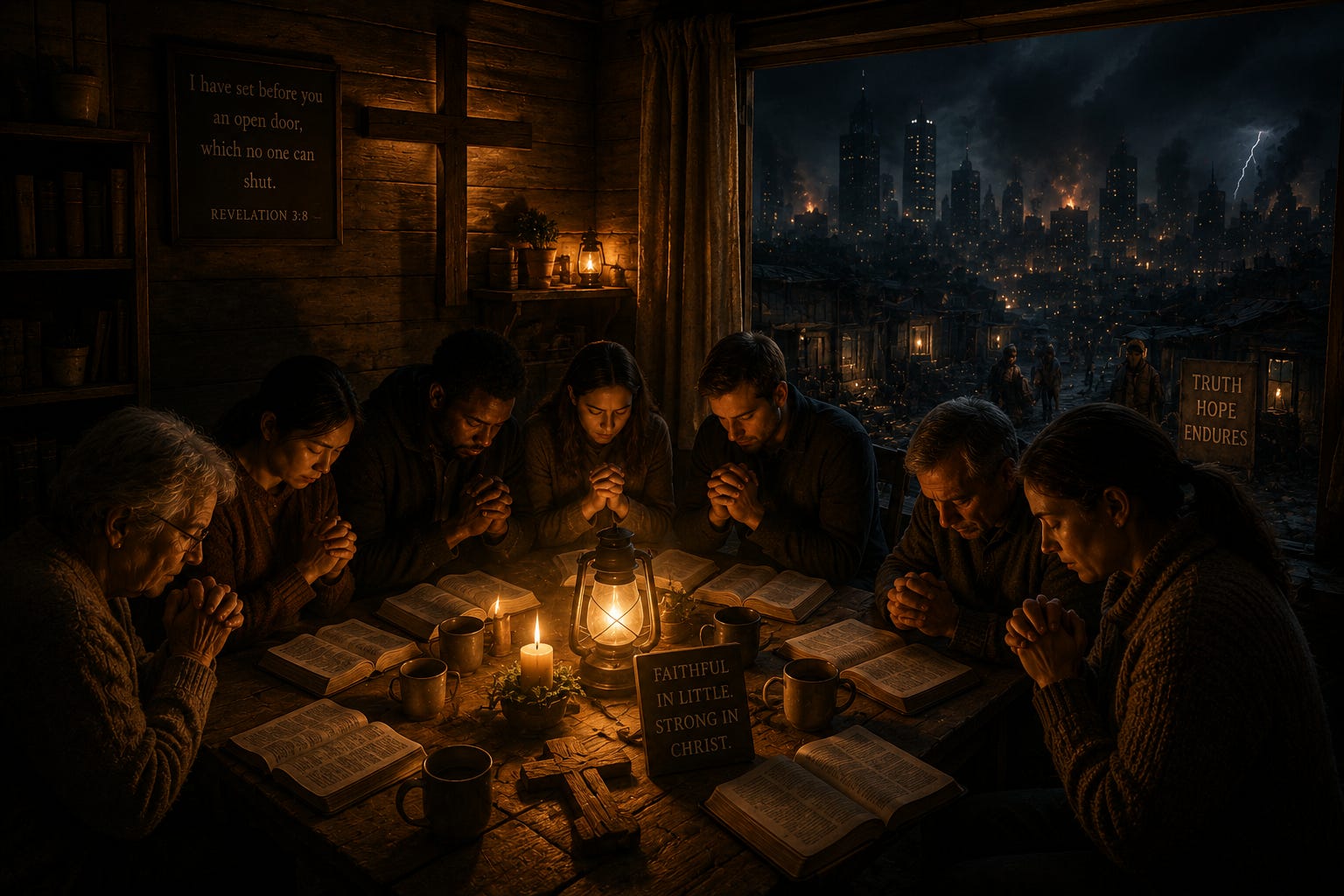
Philadelphia stands as one of the most hopeful churches in Revelation. Though possessing “little strength,” they remained faithful to Christ and His Word.
This church represents believers who quietly remain faithful despite cultural pressure, institutional weakness, or worldly opposition.
The modern church still contains many Philadelphian believers:
humble pastors,
faithful missionaries,
praying families,
persecuted Christians,
and ordinary believers who continue serving Christ sincerely.
These believers may not possess worldly influence or public recognition, yet they preserve spiritual integrity.
Philadelphia reminds modern Christianity that faithfulness matters more than visibility.
Consumer culture celebrates size, fame, and success. Yet Revelation honors perseverance, humility, and obedience.
Christ promises an open door to those who remain faithful. Even in spiritually dark times, God continues working through those who hold firmly to truth.
The church of Philadelphia encourages believers not to lose hope. Spiritual authenticity still exists. Faithful Christians still remain throughout the world.
Laodicea: The Lukewarm Church
Laodicea perhaps most powerfully reflects modern consumer Christianity.
This church was wealthy, comfortable, and self-satisfied. Yet Christ declared them spiritually poor, blind, and naked.
Modern Christianity in affluent societies often resembles Laodicea.
Many churches possess:
wealth,
technology,
influence,
and freedom,
yet lack spiritual urgency.
Consumer Christianity often produces spiritual lukewarmness because comfort weakens dependence upon God.
Believers may become spiritually distracted by:
material success,
entertainment,
social media,
career ambitions,
political obsession,
and personal comfort.
Laodicea believed they needed nothing. Yet Christ exposed their spiritual bankruptcy.
This warning remains terrifyingly relevant.
Modern churches may believe success equals spiritual blessing while neglecting repentance, humility, and holiness.
Christ’s statement remains deeply convicting:
“Because you are lukewarm, and neither hot nor cold, I will spit you out of My mouth.”
The greatest danger facing modern Christianity may not be atheism or persecution but spiritual indifference.
Social Media Christianity
One of the greatest transformations affecting modern Christianity is the rise of digital religion.
Social media allows believers to access sermons, worship, theology, and ministry content instantly. This creates extraordinary opportunities for evangelism and education.
Yet it also creates new spiritual dangers.
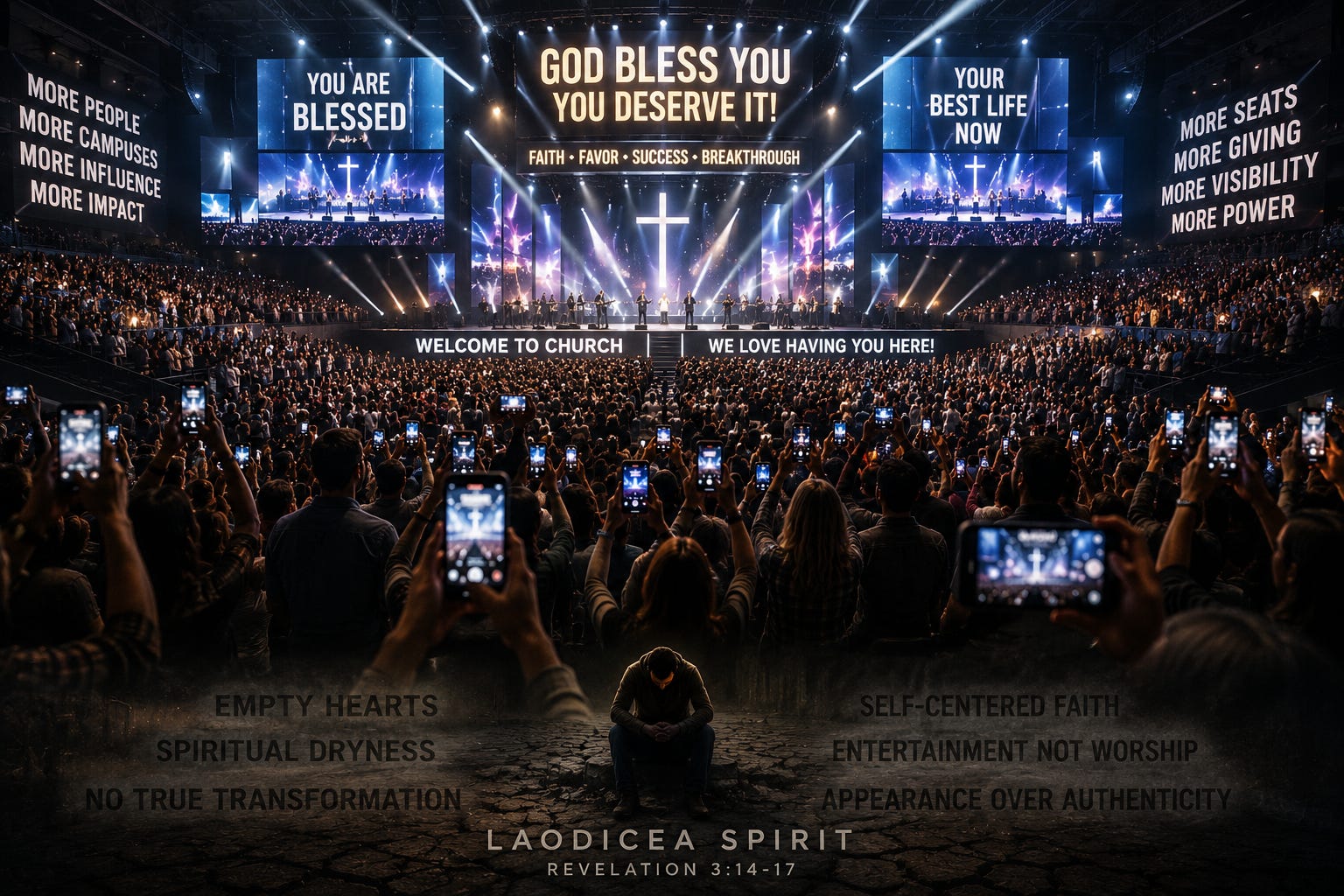
Faith may become performative rather than authentic. Christians may focus more on appearing spiritual online than growing spiritually in private.
Ministry can become influenced by algorithms, popularity metrics, and public image. Some religious influencers shape their message according to audience engagement rather than biblical truth.
The digital age has amplified:
celebrity pastors,
viral theology,
emotional manipulation,
and shallow spirituality.
The Seven Churches help expose these tendencies. Christ consistently focuses not on external visibility but on internal spiritual condition.
Modern believers must learn to distinguish between online visibility and spiritual authenticity.
The Commercialisation of Worship
Consumer culture increasingly transforms worship into entertainment.
Modern church services sometimes resemble concerts, corporate events, or motivational seminars more than sacred gatherings centred on God.
This does not mean excellence or creativity are wrong. Beauty and skill may honour God. The problem emerges when worship becomes centred on emotional experience rather than reverence for Christ.
The danger of commercialisation appears when:
worship becomes performance,
sermons become motivational speeches,
and churches become brands.
The church was never intended to function merely as a provider of religious experiences. It exists to glorify God, proclaim truth, and transform lives.
The Seven Churches repeatedly remind believers that Christ examines not outward presentation but spiritual faithfulness.
End Times Anxiety and Spiritual Discernment
Modern Christianity increasingly exists within a climate of fear, conspiracy theories, political polarization, and apocalyptic anxiety.
Many believers become consumed with:
predicting the end times,
political speculation,
hidden codes,
or fear-based prophecy.
Yet the Seven Churches show that Christ’s primary concern is not speculation but spiritual condition.
The purpose of Revelation is not merely to satisfy curiosity about future events but to call believers toward faithfulness.
Modern Christians must avoid replacing discipleship with obsession. Spiritual discernment requires wisdom, humility, and biblical grounding.
The church must remain focused on:
holiness,
truth,
love,
endurance,
and faithfulness.
The Need for Spiritual Renewal
Despite the many warnings within Revelation, the message of the Seven Churches is ultimately hopeful.
Christ continues speaking to His church because He desires repentance, renewal, and restoration.
Every church except Smyrna and Philadelphia received correction. Yet correction itself is an expression of divine love.
Modern Christianity is not beyond hope.
Throughout history, periods of spiritual decline have often been followed by revival and renewal. God continues calling believers back to authentic faith.
Spiritual renewal begins when believers:
return to prayer,
rediscover Scripture,
practice humility,
reject compromise,
and place Christ at the center once again.
The Seven Churches reveal that every generation must choose between compromise and faithfulness.
Conclusion
The Seven Churches of Revelation continue speaking powerfully to modern Christianity. Their warnings expose the spiritual dangers of consumerism, compromise, corruption, pride, and lukewarm faith.
Yet they also reveal hope:
faithful believers still exist,
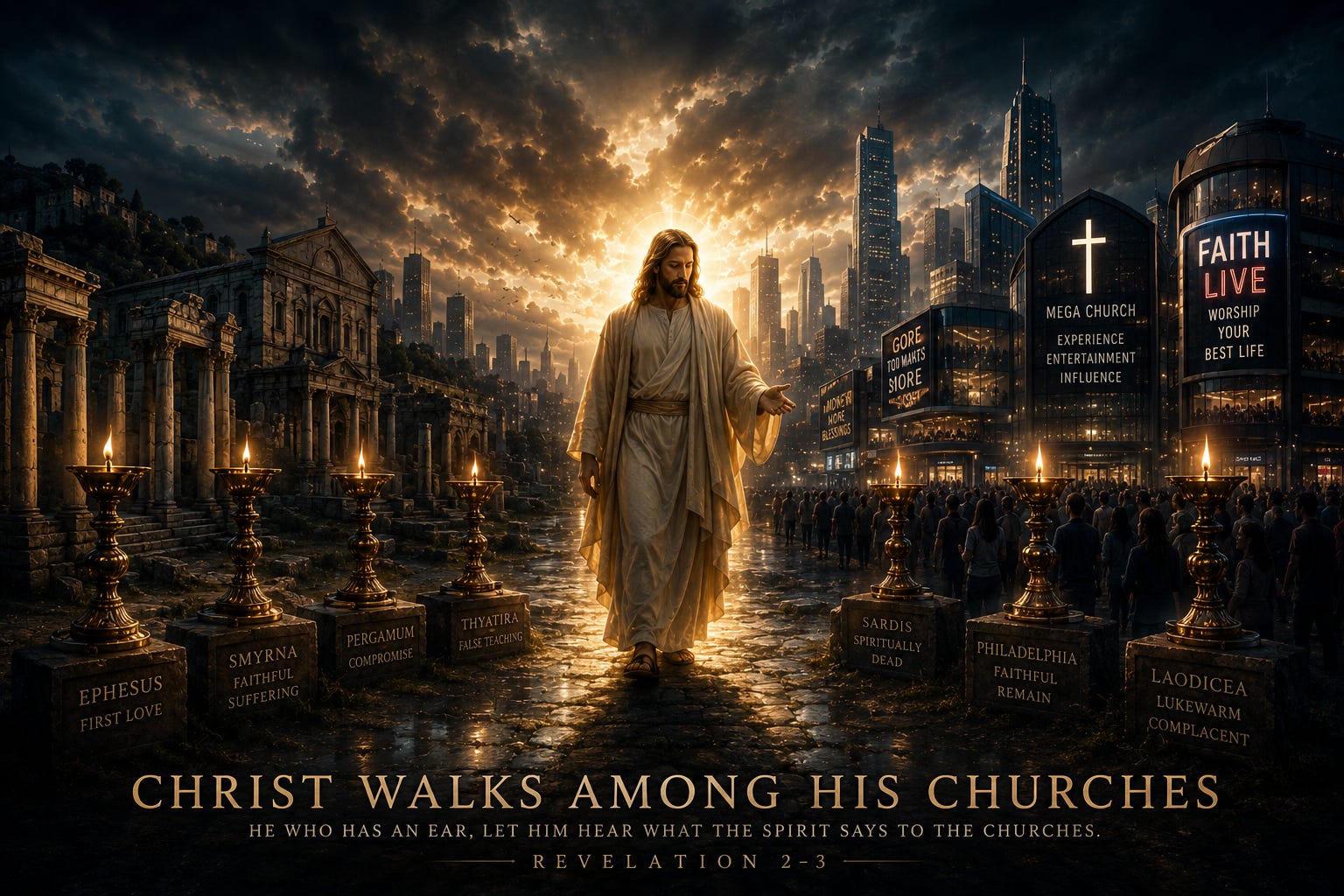
Christ still walks among His church,
and spiritual renewal remains possible.
Modern Christianity must resist the temptation to conform entirely to consumer culture. The church was never intended to function merely as a religious marketplace. It was called to be a holy community centred on Christ.
The messages to Ephesus, Smyrna, Pergamum, Thyatira, Sardis, Philadelphia, and Laodicea remain spiritually alive because human nature itself has not changed.
The modern world may possess new technologies and new social realities, but the fundamental spiritual struggle remains the same:
Will the church remain faithful to Christ?
The future of Christianity will not ultimately depend on popularity, wealth, politics, or cultural acceptance. It will depend upon whether believers continue walking faithfully with Christ in truth, humility, holiness, and love.
The Seven Churches remain not only ancient congregations of Asia Minor but prophetic mirrors reflecting the spiritual condition of every generation.
“He who has an ear, let him hear what the Spirit says to the churches.”
Dr. Daniel J. Grace
Research • Journalism • Theology