

The Psychology of the Seven Churches
Fear, Pride, Comfort, Perseverance, and Spiritual Growth

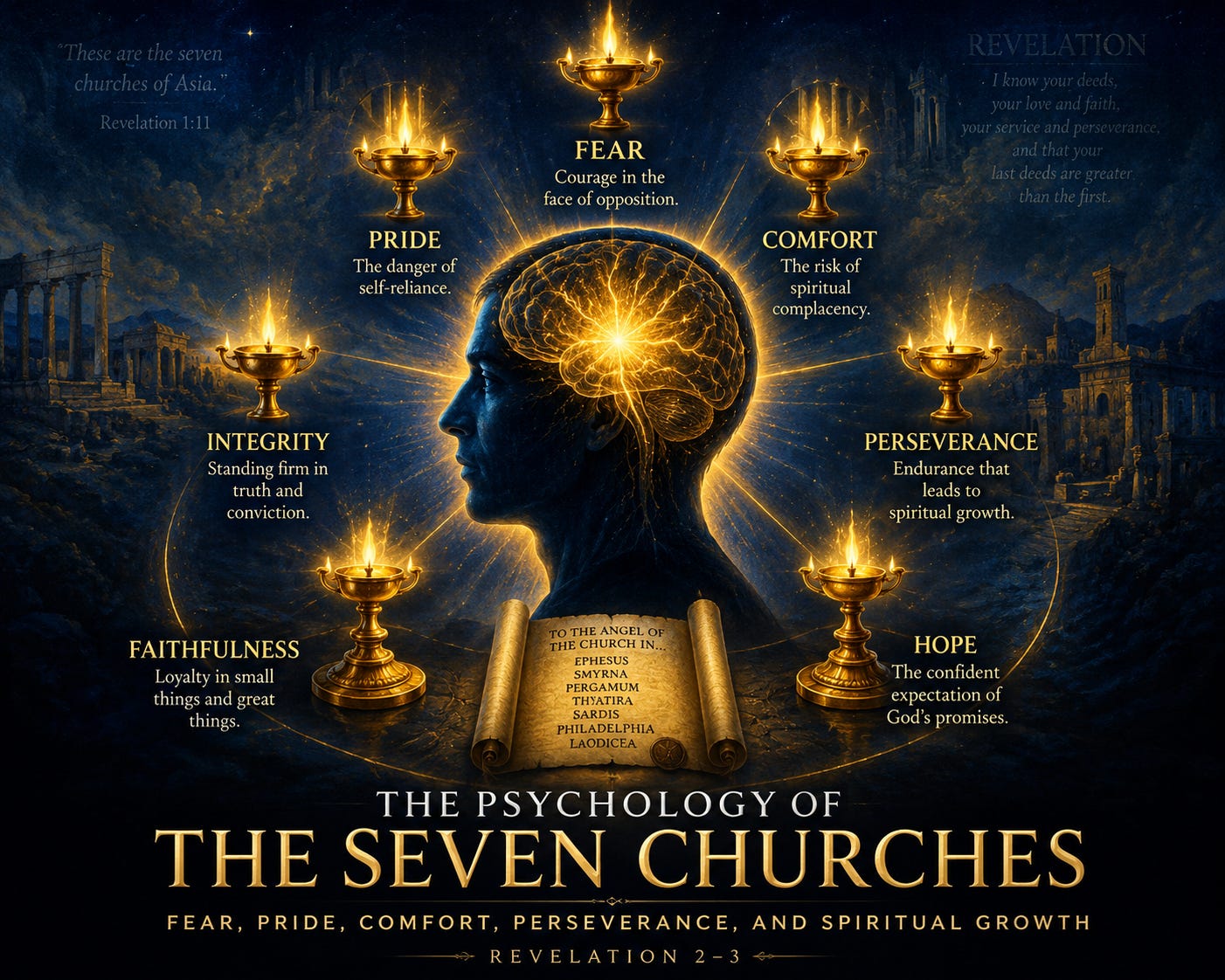
What the Messages of Revelation Reveal About the Human Mind and Heart
The Seven Churches of Revelation are often studied as historical communities, prophetic symbols, or theological case studies. Yet another fascinating perspective deserves attention: psychology.
Long before the development of modern psychology, the messages of Revelation addressed some of the deepest dimensions of human behaviour. Fear, pride, complacency, perseverance, loyalty, temptation, self-deception, and spiritual growth are recurring themes throughout the letters.
The churches of Ephesus, Smyrna, Pergamum, Thyatira, Sardis, Philadelphia, and Laodicea were not simply institutions. They were communities made up of ordinary people struggling with many of the same emotional and psychological challenges that individuals face today.
Viewed through this lens, the Seven Churches become more than ancient congregations. They become mirrors reflecting the human condition.
Ephesus and the Psychology of Lost Passion
The church at Ephesus was praised for its doctrinal faithfulness, hard work, perseverance, and discernment.
Yet Christ identified a critical problem:
“You have left your first love.”
Psychologically, Ephesus illustrates the danger of emotional detachment.
Many people begin important relationships, careers, ministries, and projects with enthusiasm and passion. Over time, routine replaces excitement. Commitment remains, but affection fades.
The believers in Ephesus had not abandoned truth.
They had lost passion.
Modern psychology recognises this phenomenon in relationships, workplaces, and personal development. Individuals can continue performing duties while becoming emotionally disconnected from their original purpose.
The message to Ephesus reminds believers that faith involves both conviction and affection.
Truth without love ultimately becomes incomplete.
Smyrna and the Psychology of Fear
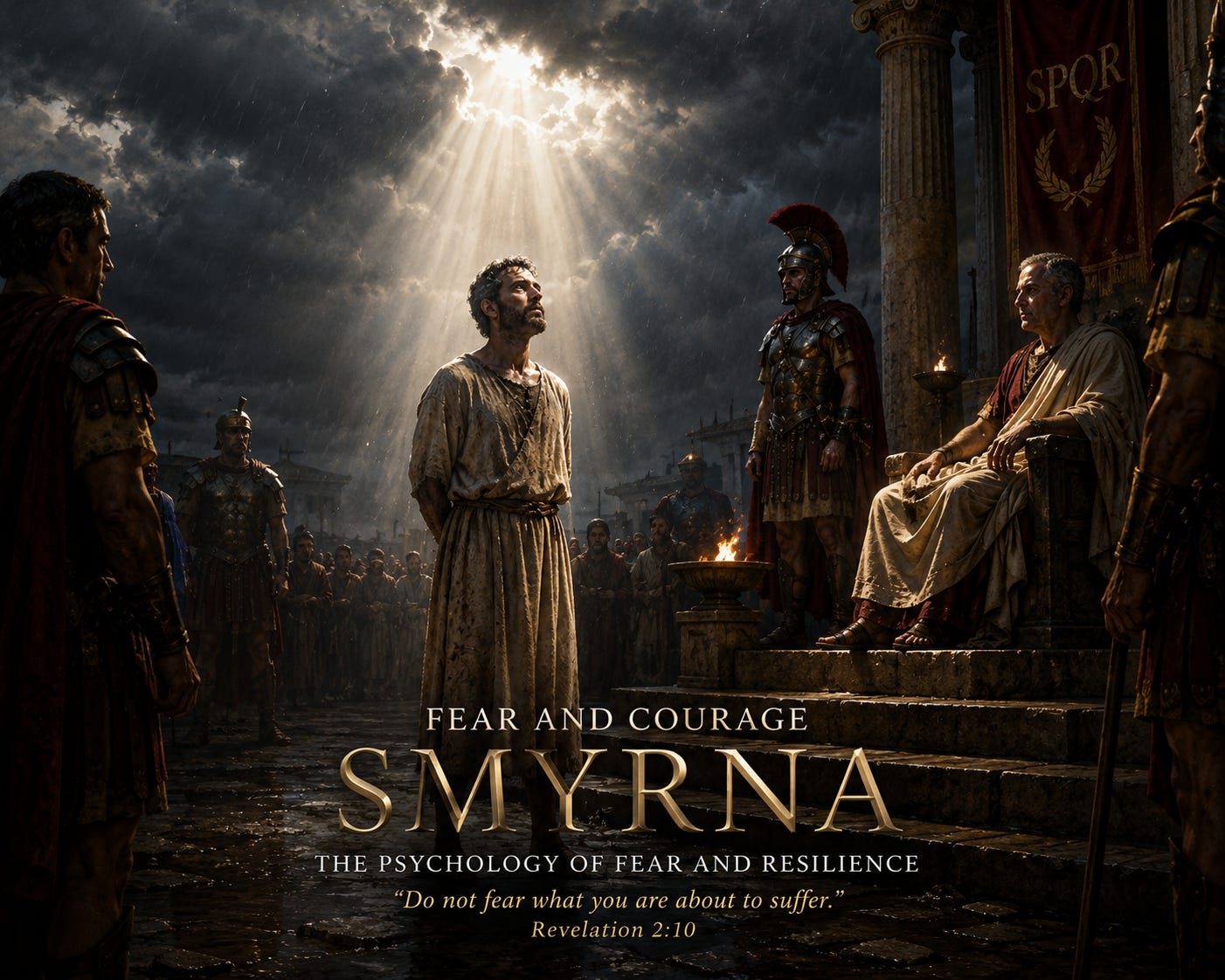
Smyrna faced persecution, poverty, and opposition.
Christ encouraged the church:
“Do not fear.”
Fear is one of the most powerful human emotions.
It influences decisions, relationships, and behaviour.
Throughout history, fear has shaped political systems, social movements, and personal choices.
The believers in Smyrna faced uncertainty regarding their future.
Yet Christ did not promise immediate escape from suffering.
Instead, He called them to faithfulness despite fear.
Modern psychological research consistently demonstrates that resilience is not the absence of fear but the ability to move forward despite it.
Smyrna embodies this principle.
Courage is not fearlessness.
Courage is faithfulness in the presence of fear.
Pergamum and the Psychology of Compromise
Pergamum existed within a culture dominated by political power, emperor worship, and social pressure.
Believers were tempted to compromise their convictions in order to gain acceptance.
Human beings possess a deep need for belonging.
Social psychologists have long observed the influence of conformity.
People often adapt their beliefs and behaviours to align with the expectations of their group.
Pergamum reveals this struggle in spiritual form.
The pressure to fit in can gradually erode conviction.
Compromise rarely occurs suddenly.
It usually develops through small adjustments over time.
The church at Pergamum reminds believers that maintaining integrity often requires resisting the desire for approval.
Thyatira and the Psychology of Rationalisation
The church in Thyatira tolerated teachings and practices that threatened spiritual health.
Rather than confronting error, many believers justified it.
Psychologists describe rationalisation as the process of creating explanations that make questionable behaviour appear acceptable.
People often convince themselves that compromises are harmless.
They reinterpret warning signs.
They minimise consequences.
They persuade themselves that they remain in control.
The problem is not ignorance.
The problem is self-deception.
Thyatira demonstrates how individuals and communities can gradually normalise behaviour that would once have been unacceptable.
The lesson remains relevant today.
Not every danger enters openly.
Some arrive disguised as reasonable compromise.
Sardis and the Psychology of Self-Deception
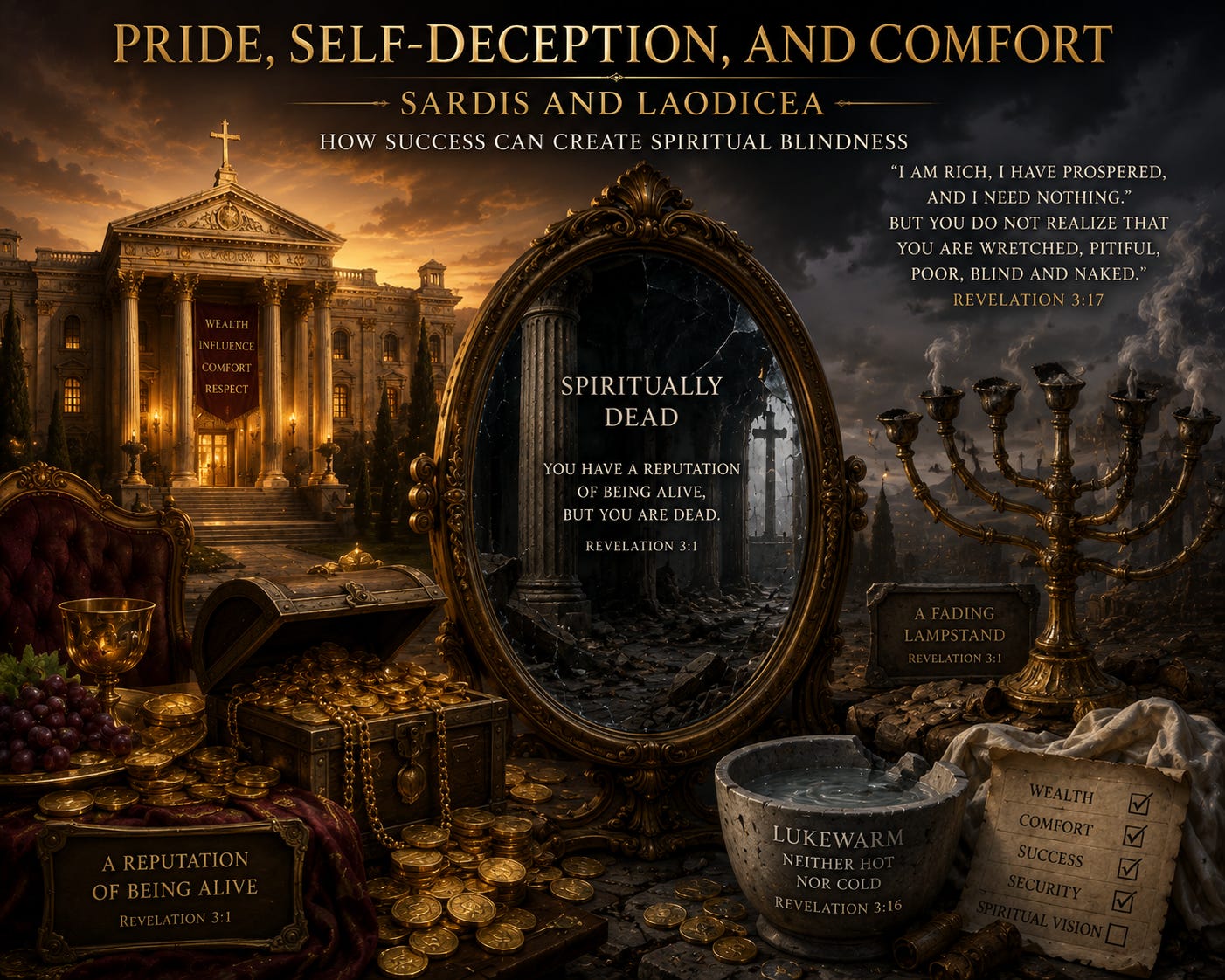
Sardis presents one of the most psychologically insightful messages in Revelation.
Christ declared:
“You have a reputation of being alive, but you are dead.”
The church believed its public image reflected reality.
It did not.
Psychologists refer to this tendency as self-enhancement bias.
Individuals often evaluate themselves more positively than objective evidence justifies.
Organisations can do the same.
Success, reputation, and recognition may create illusions of health.
Yet appearances can conceal deeper problems.
Sardis demonstrates the danger of confusing image with reality.
Spiritual growth requires honest self-examination.
Without it, self-deception becomes inevitable.
Philadelphia and the Psychology of Perseverance
Among the Seven Churches, Philadelphia receives only encouragement.
The church possessed limited resources but remained faithful.
Psychologically, Philadelphia represents perseverance.
Perseverance is the capacity to remain committed despite obstacles, delays, setbacks, or discouragement.
Modern researchers often describe perseverance as one of the strongest predictors of long-term achievement.
Faithfulness rarely depends upon talent alone.
It depends upon endurance.
Philadelphia reminds believers that spiritual success is not measured by size, wealth, or influence.
It is measured by continued faithfulness.
Small acts of obedience repeated over time often produce remarkable results.
Laodicea and the Psychology of Comfort
Laodicea may represent the most recognisable challenge facing modern societies.
The church was neither persecuted nor impoverished.
It was comfortable.
Its wealth created a false sense of security.
Comfort is not inherently harmful.
The problem arises when comfort becomes the ultimate goal.
Psychologists have observed that excessive comfort can reduce motivation, resilience, and personal growth.
Challenges often strengthen character.
Comfort can weaken it.
The believers in Laodicea believed they needed nothing.
Their self-sufficiency blinded them to their spiritual condition.
The lesson remains remarkably relevant.
Prosperity can become as dangerous as persecution.
The Human Mind Has Not Changed
One of the most fascinating aspects of the Seven Churches is their psychological relevance.
The cities have changed.
Empires have fallen.
Technologies have advanced.
Yet human nature remains remarkably familiar.
People still struggle with:
Fear
Pride
Self-deception
Compromise
Comfort
Discouragement
Perseverance
The messages of Revelation continue to resonate because they address universal aspects of human experience.
The churches represent recurring patterns of behaviour rather than merely historical situations.
In many ways, every believer can find aspects of themselves within each church.
Spiritual Growth and Self-Awareness

Modern psychology emphasises self-awareness as a foundation for personal development.
Meaningful growth begins with honest evaluation.
Interestingly, the messages to the Seven Churches follow a similar pattern.
Christ reveals strengths.
He identifies weaknesses.
He offers correction.
He presents hope.
The process resembles a form of spiritual self-assessment.
Growth becomes possible when individuals recognise reality rather than hiding from it.
The churches were invited to see themselves as Christ saw them.
The same invitation remains today.
The Psychology of Hope
Despite the warnings contained in Revelation, every message concludes with hope.
This is psychologically significant.
Research consistently demonstrates that hope plays a critical role in resilience and wellbeing.
People endure hardship more effectively when they believe their actions possess meaning and purpose.
The promises given to the Seven Churches provided precisely this kind of hope.
The focus was not merely upon present difficulties.
It was upon future victory.
Hope transformed perseverance into possibility.
What the Seven Churches Teach Today
The psychological insights of the Seven Churches remain remarkably relevant.
Ephesus teaches the importance of maintaining passion.
Smyrna teaches courage in the face of fear.
Pergamum warns against compromise.
Thyatira exposes rationalisation.
Sardis confronts self-deception.
Philadelphia celebrates perseverance.
Laodicea challenges complacency.
Together, they present a profound portrait of the human mind and heart.
The Seven Churches of Revelation are far more than historical congregations.
They reveal timeless truths about human behaviour, motivation, temptation, and growth.
Long before modern psychology emerged as a discipline, these messages addressed many of the deepest struggles facing humanity.
Fear, pride, comfort, perseverance, self-deception, and hope remain as relevant today as they were in the first century.
The enduring power of the Seven Churches lies partly in their ability to expose universal patterns of human behaviour.
Their message is not confined to ancient Asia Minor.
It speaks to every generation.
Perhaps the greatest psychological lesson of Revelation is that transformation begins with honest self-examination.
The question is not simply which church existed in the first century.
The question is:
Which church most closely resembles us today?
Dr. Daniel J. Grace
Faith • Civilization • Theology
Research • Journalism • Truth
© 2026 Dr. Daniel J. Grace. All Rights Reserved. First published via Zenodo Digital Repository, 2026.