
The Marketplace and the Gospel Business, Commerce, and Christian Ethics in the Seven Churches
How Ancient Trade Shaped Early Christianity and What It Means for Modern Business Leaders

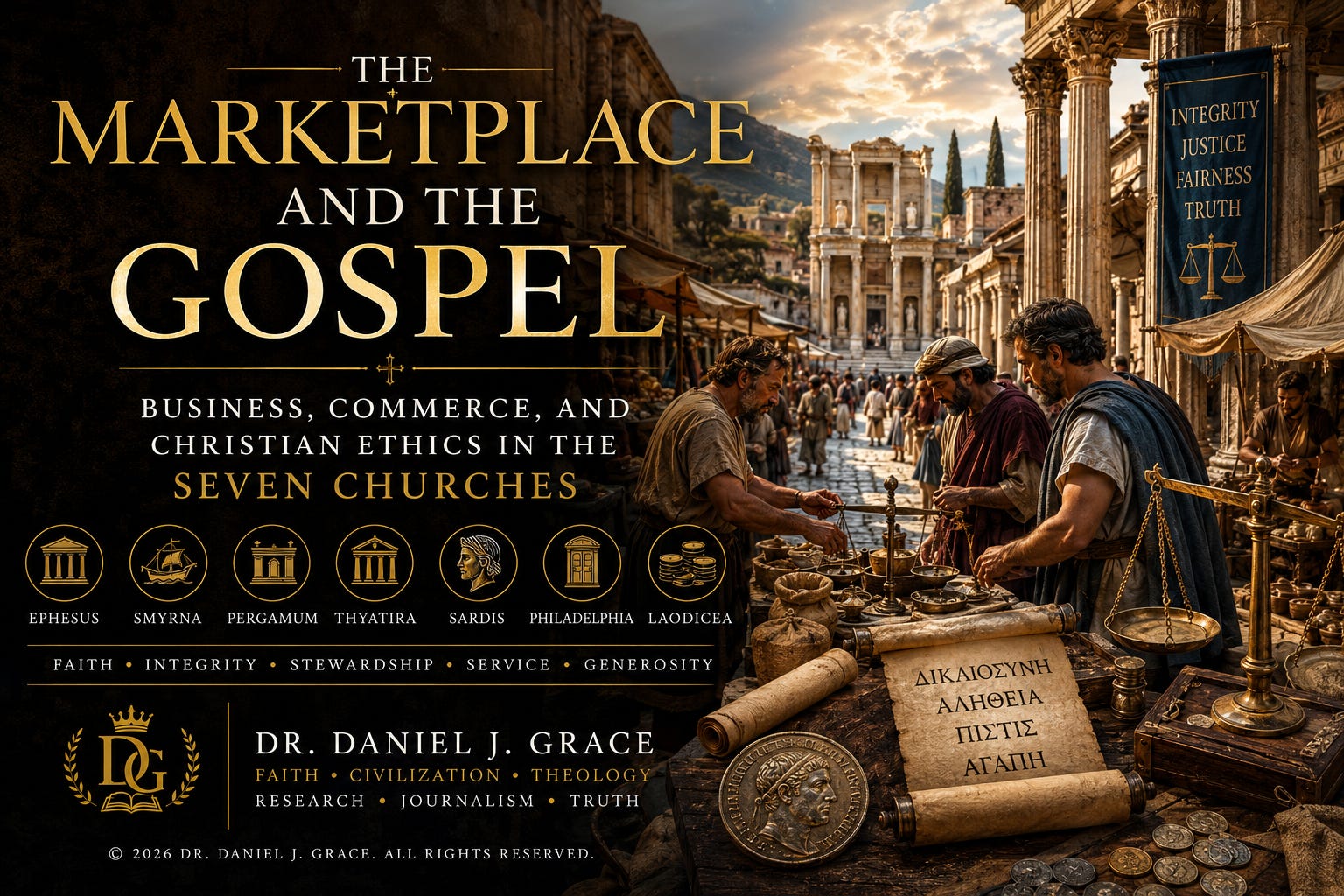
The story of Christianity in the first century is often told through the lens of theology, persecution, miracles, and missionary journeys. Yet another powerful force influenced the growth of the early Church: commerce. The Seven Churches of Revelation were not isolated villages hidden from the world. They were located in thriving commercial centers connected by roads, ports, trade routes, financial institutions, and marketplaces. Merchants, craftsmen, bankers, sailors, and entrepreneurs filled their streets. The Gospel spread not only through synagogues and homes but also through marketplaces and commercial networks.
Understanding the economic life of the Seven Churches provides a deeper appreciation of how Christianity interacted with the realities of business, wealth, work, and ethics. It also offers valuable lessons for modern entrepreneurs, professionals, and business leaders seeking to live faithfully in a competitive world.
Commerce in the Roman World
The Roman Empire created one of the largest economic systems in ancient history. Extensive road networks connected major cities across Europe, Asia Minor, North Africa, and the Middle East. Ports linked distant regions through maritime trade. Goods, ideas, cultures, and religions moved alongside merchants and travelers.
Asia Minor occupied a strategic position within this economic system. The region connected eastern and western trade routes and contained some of the wealthiest cities in the empire. Ephesus, Smyrna, Pergamum, Thyatira, Sardis, Philadelphia, and Laodicea all benefited from their location within this network.
Business was not merely an aspect of life in these cities; it was the foundation of their prosperity.
Ephesus: A Commercial Gateway
Ephesus was one of the most important trading cities in the Roman Empire. Its harbor welcomed ships carrying goods from across the Mediterranean. Merchants filled its streets. Travelers from many nations passed through its markets.
The city’s prosperity created opportunities for economic advancement but also spiritual challenges. The famous Temple of Artemis generated significant income through tourism, religious festivals, and the sale of idols.
When Paul preached in Ephesus, the Gospel directly affected local commerce. Acts 19 records how craftsmen who made silver shrines for Artemis became alarmed because Christian teaching threatened their profits.
The conflict reveals an important principle: the Gospel sometimes challenges business practices when profit depends upon deception, exploitation, or idolatry.
The issue was not wealth itself. The issue was whether economic activity served truth or opposed it.
Smyrna: Prosperity and Faithfulness
Smyrna was another wealthy port city. Trade brought economic growth and cultural influence. Yet the church in Smyrna received no rebuke from Christ in Revelation.
Instead, believers were praised for their faithfulness amid hardship.
This presents an interesting contrast. Wealth surrounded the church, but believers were not defined by material success. Their spiritual identity mattered more than economic status.
Modern Christians often measure success by financial achievement. Smyrna reminds us that God’s evaluation differs from the world’s standards.
A person may possess little wealth and yet be spiritually rich.
Pergamum: Business and Cultural Pressure
Pergamum served as a political and administrative center. Government influence, emperor worship, and commercial activity shaped daily life.
Business relationships frequently required participation in cultural practices that conflicted with Christian convictions.
Believers faced difficult choices.
Should they compromise to gain economic advantages?
Should they remain silent to protect their careers?
Should they participate in activities that violated their faith?
The same questions confront many professionals today.
The challenge of Pergamum was not merely theological. It was practical. Christians needed to determine whether success was worth the cost of compromise.
Revelation warns against sacrificing conviction for acceptance.
Thyatira: Trade Guilds and Ethical Challenges
Among the Seven Churches, Thyatira offers perhaps the clearest example of the relationship between commerce and faith.
The city was famous for its trade guilds. These associations functioned similarly to modern business organizations or professional networks.
Membership provided economic opportunities, social connections, and commercial advantages.
However, participation often included pagan ceremonies and religious activities.
Christians faced enormous pressure.
Refusing participation could mean losing customers, contracts, partnerships, or income.
Joining could require compromising biblical principles.
The church in Thyatira struggled precisely because some believers attempted to combine Christian faith with practices incompatible with the Gospel.
The lesson remains relevant.
Every generation faces pressure to adapt ethical standards in pursuit of financial gain.
Sardis: Reputation Versus Reality
Sardis had once been one of the wealthiest cities in the ancient world. Its reputation for prosperity continued even after its political influence declined.
Yet Revelation presents a sobering assessment.
The church possessed a reputation for life but lacked genuine spiritual vitality.
This warning applies not only to churches but also to businesses and professionals.
Reputation can be deceptive.
Companies may appear successful while operating without integrity.
Individuals may project confidence while neglecting character.
The Gospel calls believers to pursue authenticity rather than appearances.
True success begins with integrity.
Philadelphia: Opportunity and Faithfulness
Philadelphia occupied a strategic location on important trade routes. Commerce created opportunities for influence and growth.
Unlike several other churches, Philadelphia received praise rather than criticism.
Christ described an open door set before them.
Business leaders understand the value of opportunity.
New markets emerge.
Partnerships develop.
Doors open unexpectedly.
The church in Philadelphia demonstrates that opportunities should be viewed not only through financial lenses but also through spiritual ones.
Success becomes meaningful when used for purposes greater than personal gain.
Laodicea: Wealth and Spiritual Complacency
Laodicea was famous for banking, textiles, and medicine. The city was among the wealthiest in Asia Minor.
Its prosperity became a source of pride.
When an earthquake destroyed the city in AD 60, Laodicea rebuilt itself without imperial financial assistance.
The citizens believed they needed nothing.
This mindset eventually influenced the church.
Christ’s message to Laodicea contains one of the strongest warnings in Revelation.
The church believed it was rich and successful.
Yet spiritually it was poor.
The danger was not wealth itself.
The danger was self-sufficiency.
Modern society faces the same temptation.
Financial success can create the illusion that human achievement eliminates dependence upon God.
Laodicea reminds believers that prosperity without spiritual awareness leads to complacency.
Christian Ethics in Business
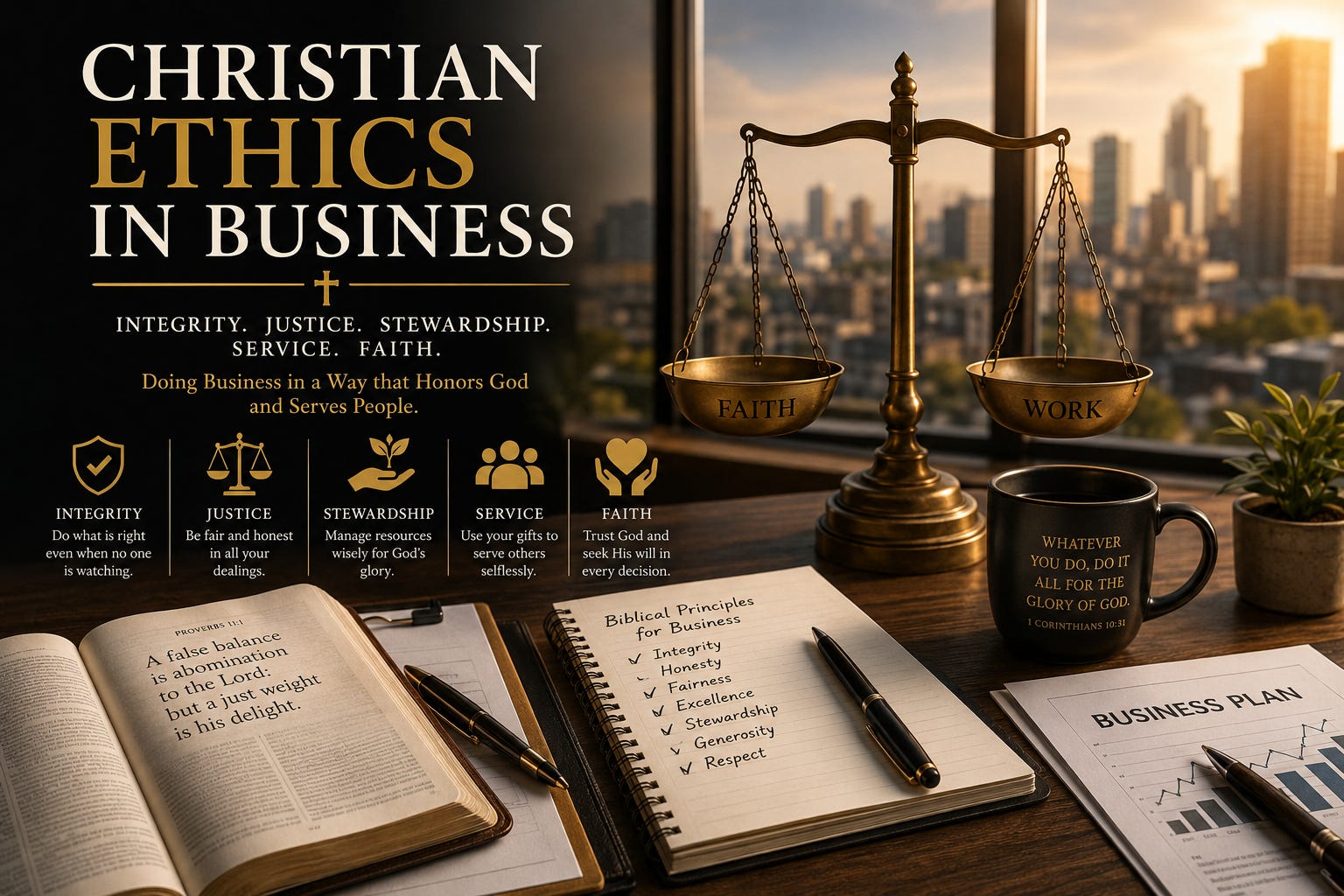
The New Testament never condemns honest business activity.
Many early Christians worked as merchants, craftsmen, traders, and entrepreneurs.
Paul himself practised tentmaking.
Lydia, one of the earliest Christian converts in Europe, operated a successful textile business.
Commerce becomes problematic only when profit replaces principle.
Christian business ethics rest upon several foundational values:
Integrity
Honesty must guide every transaction.
Trust is more valuable than short-term gain.
Fairness
Employees, customers, and partners should be treated with dignity and respect.
Stewardship
Resources are gifts entrusted by God and should be managed responsibly.
Service
Business should create value and contribute positively to society.
Generosity
Success creates opportunities to support others and advance meaningful causes.
The Modern Marketplace
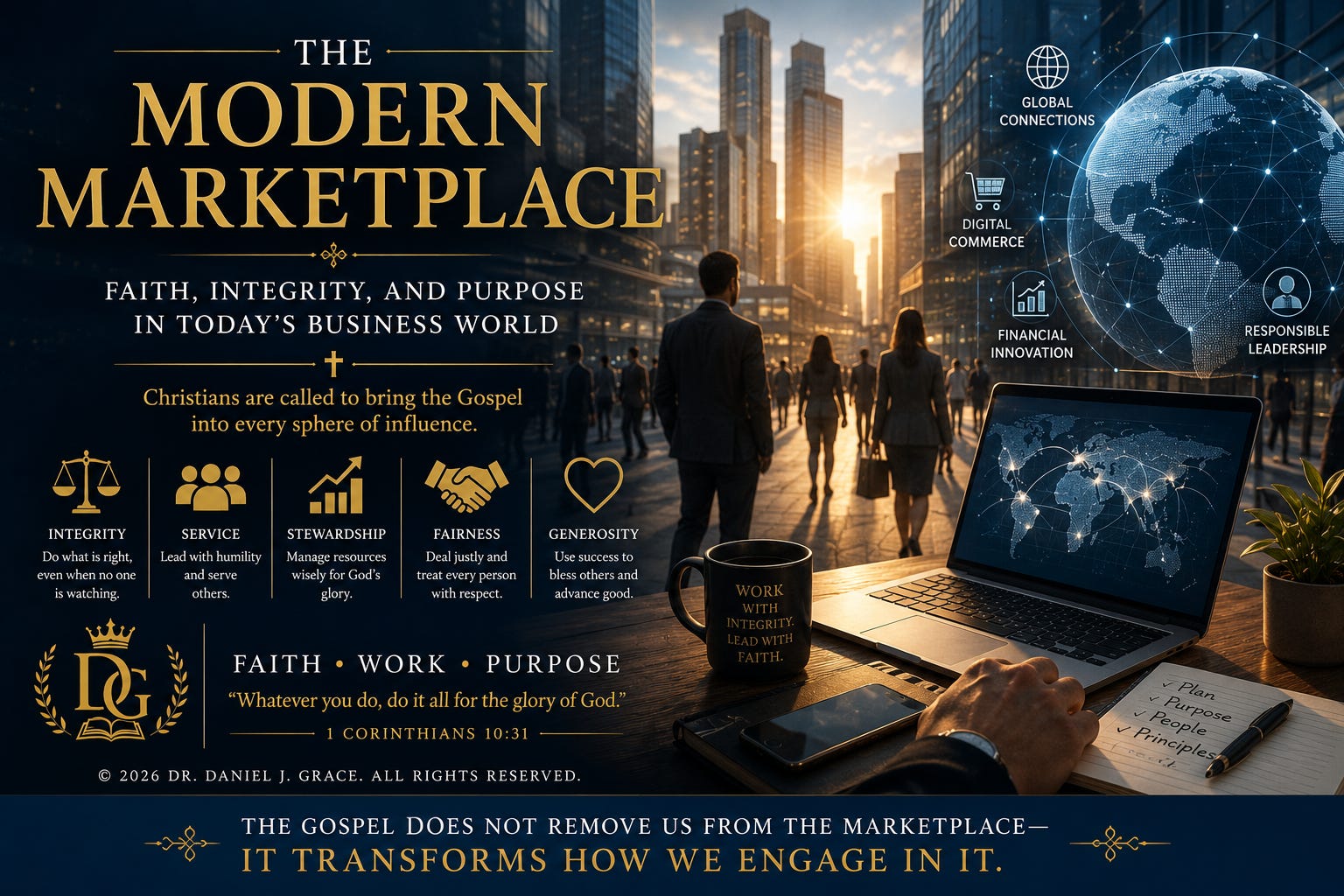
The marketplaces of the first century differ greatly from today’s digital economy.
Yet the underlying questions remain remarkably similar.
How should Christians respond to unethical practices?
How should wealth be viewed?
How should professionals navigate cultural pressures?
How should success be measured?
The Seven Churches provide enduring guidance.
They remind believers that faith is not limited to worship services or religious activities.
Faith influences contracts, investments, leadership decisions, marketing practices, workplace relationships, and corporate culture.
The Gospel belongs in the marketplace.
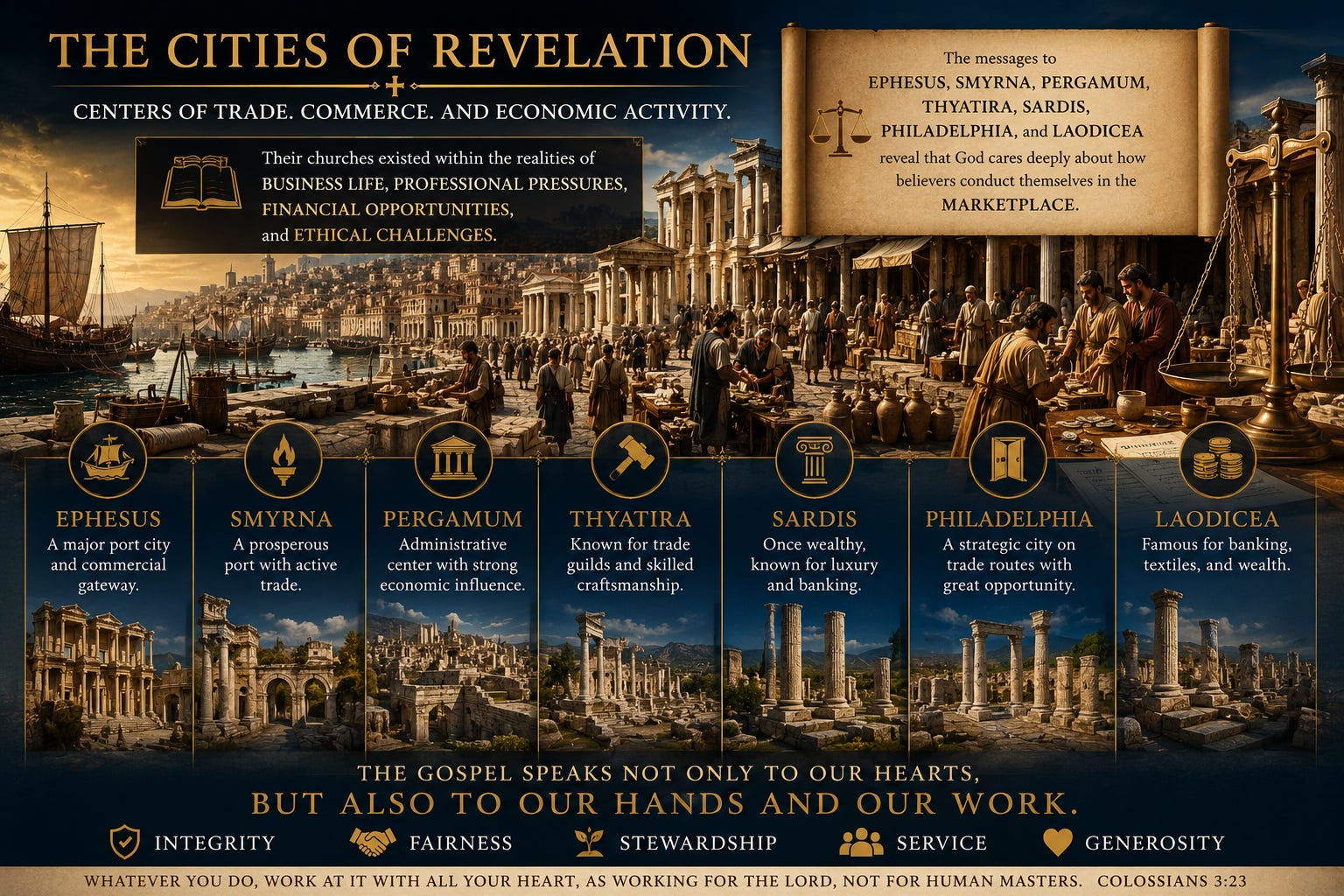
The cities of Revelation were centers of trade, commerce, and economic activity. Their churches existed within the realities of business life, professional pressures, financial opportunities, and ethical challenges.
The messages to Ephesus, Smyrna, Pergamum, Thyatira, Sardis, Philadelphia, and Laodicea reveal that God cares deeply about how believers conduct themselves in the marketplace.
The question is not whether Christians should participate in business.
The question is how they should conduct business.
The Gospel does not oppose success, entrepreneurship, or prosperity.
Rather, it calls believers to pursue these things with integrity, humility, wisdom, and faithfulness.
Nearly two thousand years later, the marketplaces have changed, but the principles remain the same.
The challenge facing modern professionals is the challenge that confronted the Seven Churches:
Will success shape our faith, or will faith shape our success?
Dr. Daniel J. Grace
Faith • Civilization • Theology
Research • Journalism • Truth
© 2026 Dr. Daniel J. Grace. All Rights Reserved.