
Pergamum: The Church Living Where Darkness Ruled
By Dr. Daniel J. Grace

Among the Seven Churches of the Book of Revelation, perhaps none carries an atmosphere as intense and mysterious as Pergamon. The words spoken to the church there are both powerful and frightening:
“I know where you dwell, where Satan’s throne is.”
— Revelation 2:13
Pergamum was not simply an ordinary city. It was a center of imperial power, philosophy, pagan worship, and spiritual confusion. Temples rose high above the city like monuments to human pride. Religion and politics mixed together until truth itself became difficult to recognize.
Yet in the middle of that darkness, there were believers who still held onto faith.
This is what makes the Church of Pergamum deeply relevant today.
Modern society also lives surrounded by competing voices:
political ideologies,
technological distractions,
celebrity worship,
consumerism,
endless noise,
and spiritual emptiness hidden beneath entertainment.
Humanity has advanced scientifically, yet internally many people still feel lost, anxious, isolated, and spiritually hungry.
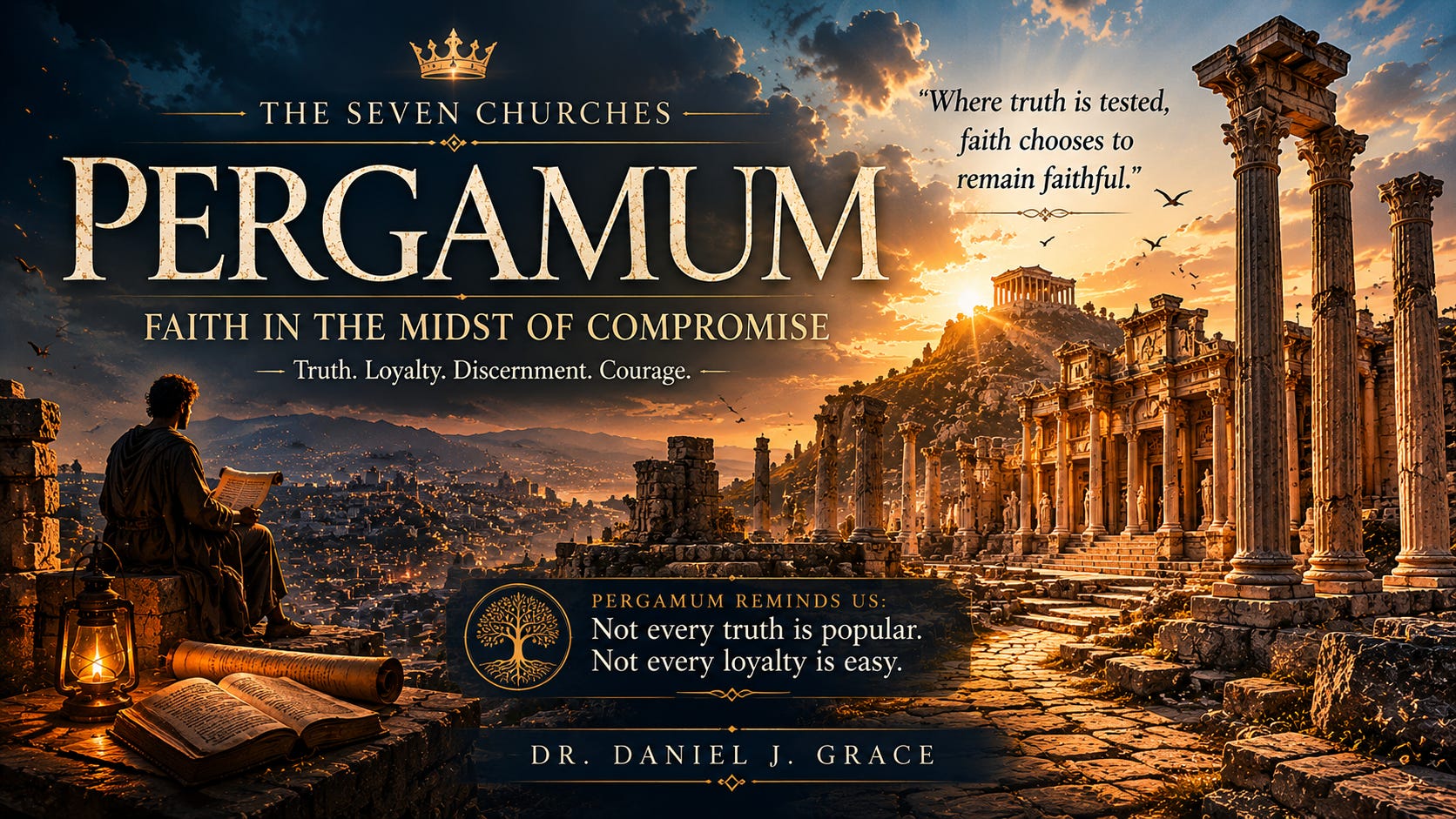
Pergamum reminds us that external civilization does not always mean inner wisdom.
The believers there were praised because they did not completely abandon their faith even while living in a spiritually hostile environment. But they were also warned about compromise. The danger was not only persecution from outside forces, but corruption slowly entering from within.
That warning still matters.
Often the greatest spiritual danger is not direct attack, but gradual compromise:
truth becoming flexible,
morality becoming fashionable,
conviction becoming convenience.
Pergamum symbolizes the struggle between faith and assimilation.
Yet the message of Revelation is not hopeless. Even in a city described with terrifying spiritual imagery, the possibility of faithfulness remained alive. Light still existed inside darkness.
Perhaps this is the deeper lesson:
human beings cannot survive on material progress alone. Technology may advance, empires may rise, and societies may change, but the human soul continues searching for meaning beyond power and pleasure.
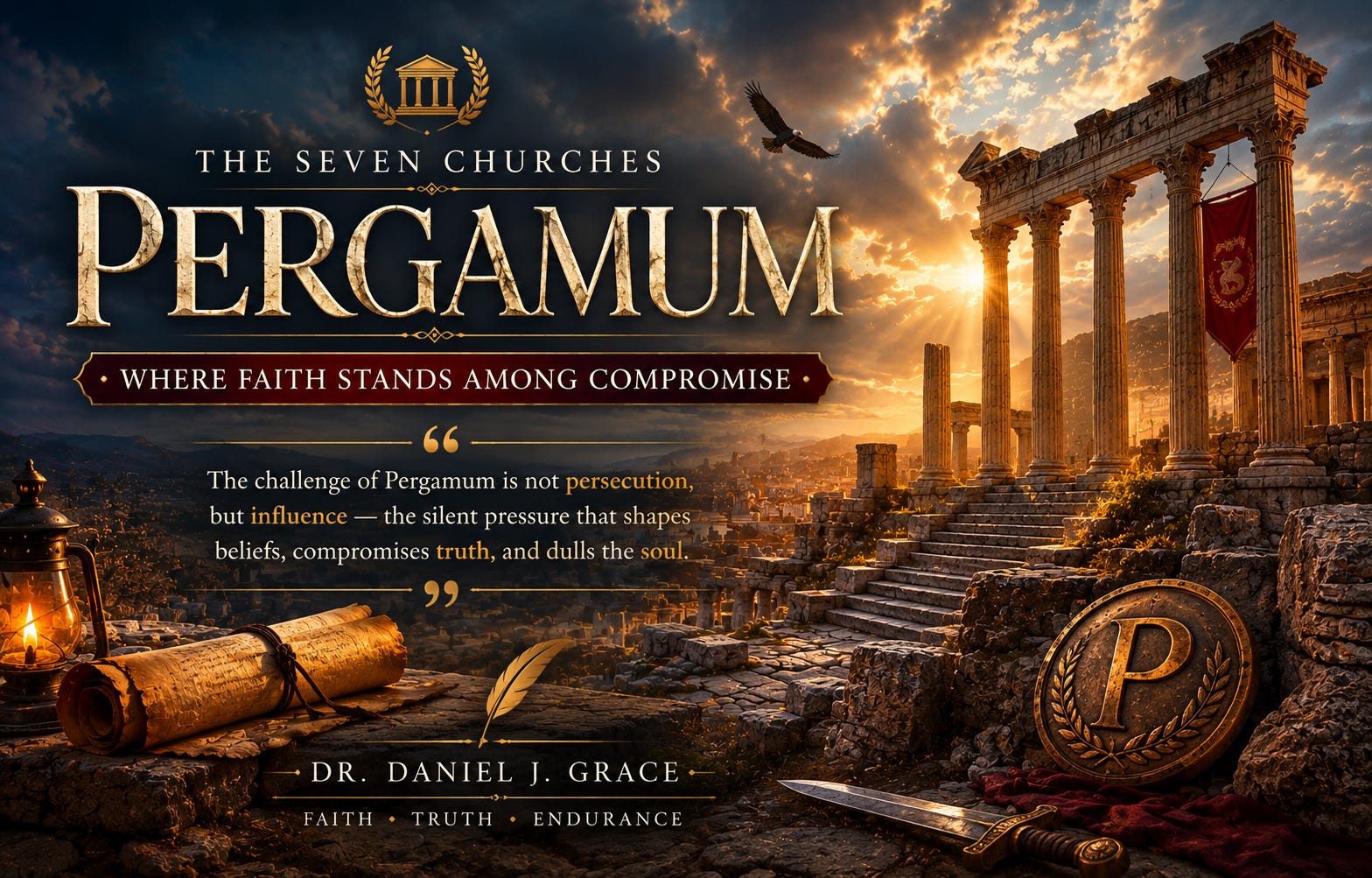
The Church of Pergamum therefore becomes more than ancient history. It becomes a mirror reflecting every generation that tries to live spiritually awake in a world filled with noise.
Maybe the question of Pergamum is still the same today:
Can a person remain spiritually alive while surrounded by a civilization losing its soul?
— Dr. Daniel J. Grace
Research • Journalism • Theology