
Pergamum and Cultural Compromise: The Ancient Warning the Modern Church Cannot Ignore
Why the Message to Pergamum May Be More Relevant Today Than at Any Time Since the First Century

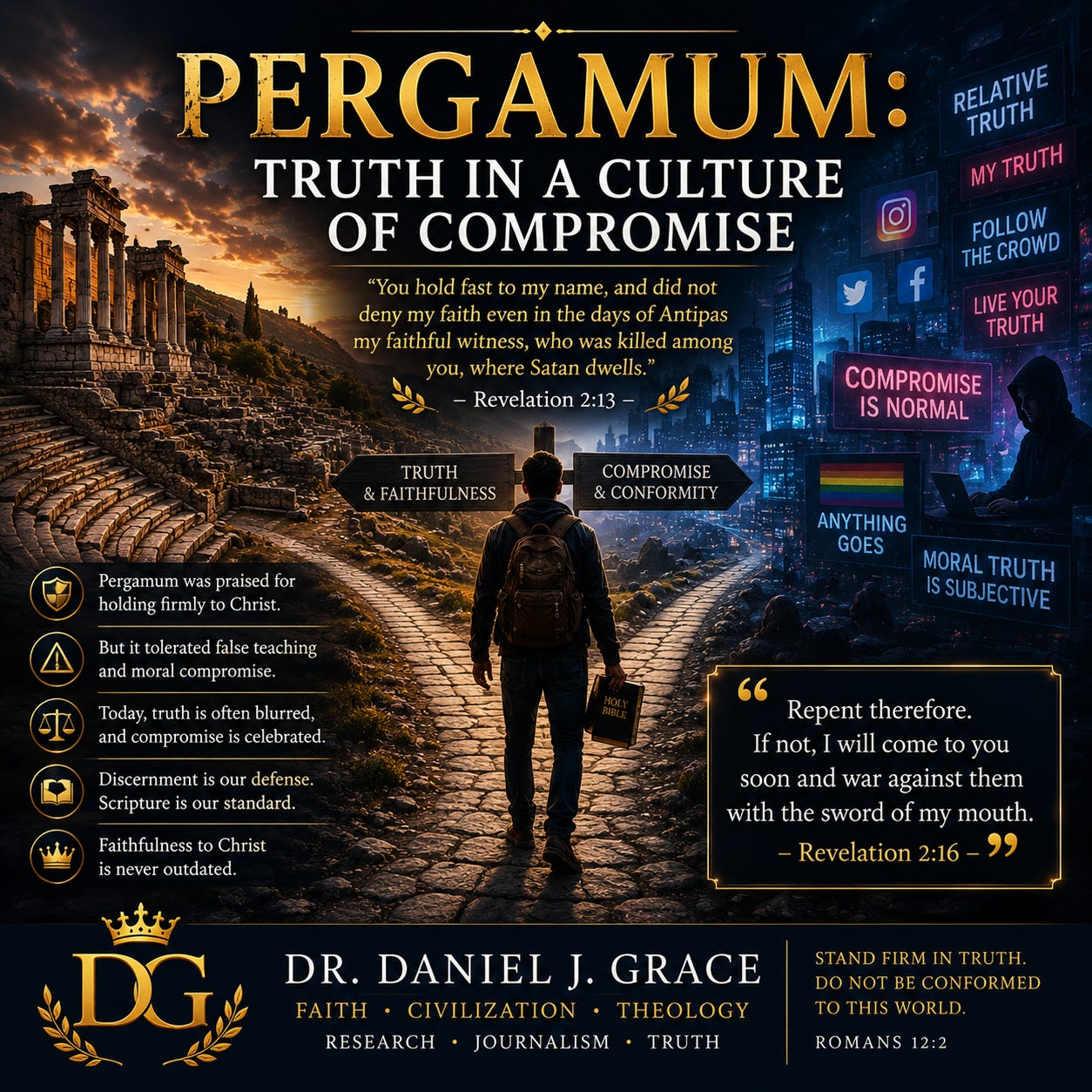
Among the Seven Churches of Revelation, Pergamum received both praise and rebuke from Christ. The church remained faithful in a city saturated with pagan religion, emperor worship, and political power. Yet despite its courage, Pergamum faced a more subtle threat: cultural compromise. Rather than abandoning Christianity outright, some believers gradually accommodated values and practices that conflicted with their faith. The message to Pergamum reveals that the greatest dangers facing the Church are not always persecution or open opposition but the slow acceptance of ideas that weaken spiritual conviction. In an age dominated by social media, consumer culture, political polarisation, and competing worldviews, the lessons of Pergamum remain profoundly relevant. This article explores the historical context of Pergamum, the nature of compromise, and the enduring challenge facing modern Christians.
Many people assume that Christianity’s greatest enemy is persecution.
History tells a different story.
The early Church often grew during periods of opposition. Believers remained united, committed, and spiritually focused when confronted by external threats.
The greater danger frequently emerged during times of comfort.
The church in Pergamum illustrates this reality.
Christ praised the believers because they held firmly to their faith despite living in one of the most spiritually challenging cities in the Roman Empire. Yet within the church, a different problem had emerged. Some members had begun compromising with the surrounding culture.
The warning delivered to Pergamum remains one of the most important messages in Revelation because it addresses a temptation every generation faces.
The temptation is not necessarily to reject Christ.
The temptation is to redefine discipleship until it no longer requires sacrifice.
Pergamum: A City of Power
Pergamum was one of the most influential cities in Asia Minor.
It served as a political, religious, and cultural center. Magnificent temples dominated the skyline. The city possessed a famous library, important government institutions, and numerous religious sanctuaries.
Pergamum was particularly known for emperor worship. It became one of the earliest cities in the Roman world to host temples dedicated to the imperial cult.
Citizens were expected to demonstrate loyalty to Rome through participation in religious ceremonies.
Religion, politics, and public life were inseparable.
Living as a Christian in Pergamum required courage because faithfulness often involved social, economic, and political consequences.
“Where Satan Has His Throne”
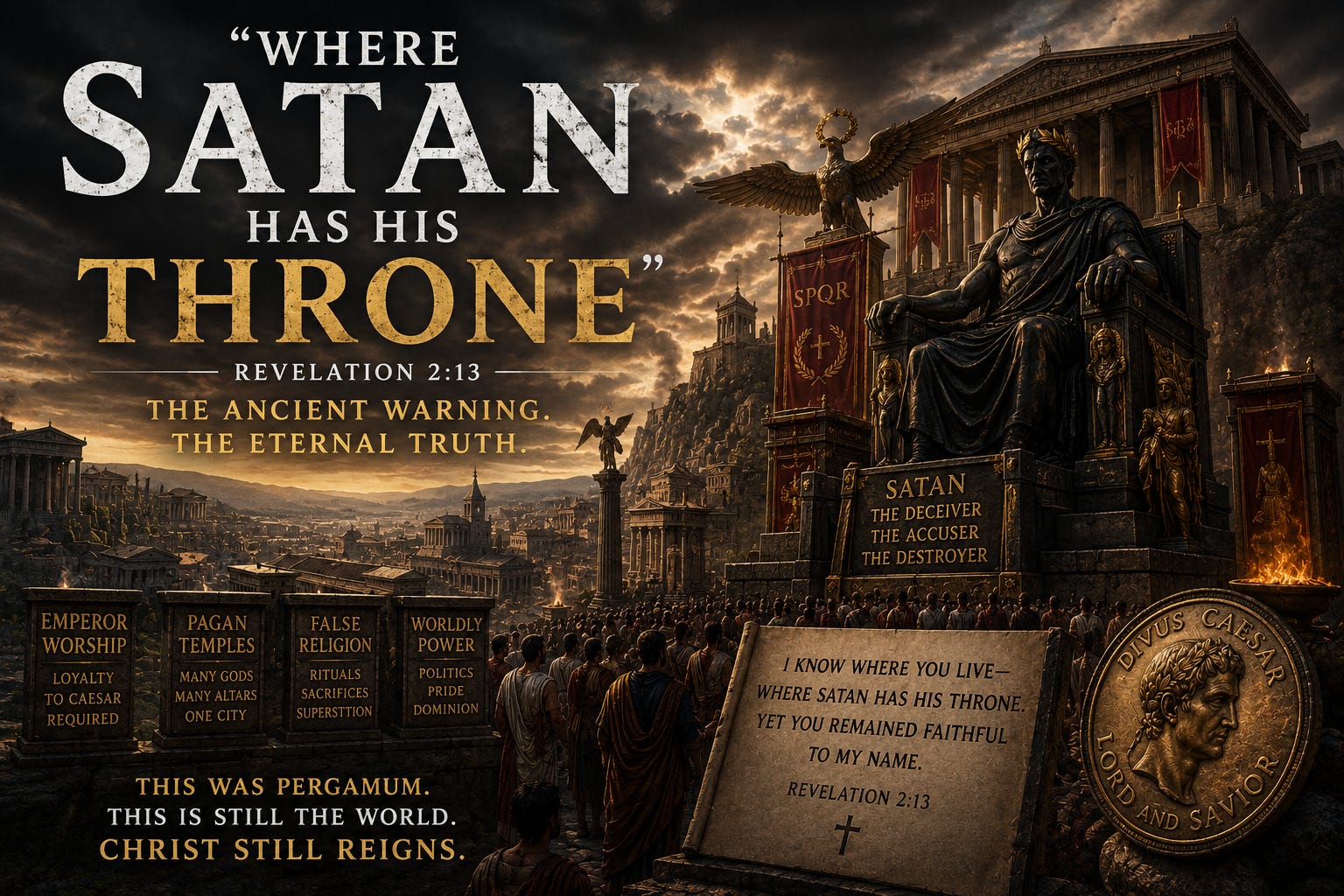
One of Revelation’s most striking statements describes Pergamum as the place “where Satan has his throne.”
Scholars debate the exact meaning of this phrase.
Some connect it to emperor worship.
Others associate it with the city’s numerous pagan temples.
Still others point to its role as a center of political authority hostile to Christian faith.
Regardless of the precise reference, the message is clear.
Pergamum represented an environment where spiritual pressures were intense.
Believers lived in a culture that constantly challenged their allegiance to Christ.
The situation may sound ancient, but it mirrors modern life in surprising ways.
The Nature of Compromise
Compromise rarely begins with dramatic rebellion.
Most believers do not wake up one morning and decide to abandon their faith.
Instead, compromise usually begins with small adjustments.
Truth becomes less important than acceptance.
Conviction becomes less important than convenience.
Faith becomes less important than comfort.
Gradually, the line between the Church and the surrounding culture becomes difficult to distinguish.
The believers in Pergamum were not accused of rejecting Christ entirely.
Their problem was that they tolerated influences that slowly weakened their spiritual identity.
Why Compromise Is Attractive

Compromise often appears reasonable.
It promises peace instead of conflict.
Acceptance instead of criticism.
Comfort instead of sacrifice.
Belonging instead of isolation.
Human beings naturally desire approval from others. We want to fit in, avoid controversy, and maintain relationships.
The challenge arises when cultural expectations conflict with biblical convictions.
At that point believers must decide whether faithfulness or acceptance will guide their choices.
Pergamum demonstrates that compromise is rarely attractive because it appears evil.
It becomes attractive because it appears practical.
The Modern Pergamum
Modern Christians may not live among Roman temples, but they face similar pressures.
Today’s culture constantly communicates messages about identity, success, morality, truth, and human purpose.
Social media rewards conformity.
Consumer culture promotes materialism.
Political movements demand loyalty.
Entertainment shapes values.
Technology influences attention, relationships, and beliefs.
The question facing Christians is not whether culture influences them.
The question is whether culture influences them more than Scripture.
In this sense, many modern societies resemble Pergamum.
The pressure to conform remains powerful.
When the Church Adopts the Culture
One of the greatest dangers occurs when the Church begins reflecting the culture more than the teachings of Christ.
History demonstrates this repeatedly.
Whenever the Church becomes primarily concerned with popularity, power, wealth, or public approval, spiritual vitality often declines.
The problem is not cultural engagement.
Christians are called to engage society.
The problem arises when engagement becomes accommodation.
The Church serves the world best when it remains distinct from the values that contradict the Gospel.
Faithfulness Without Isolation
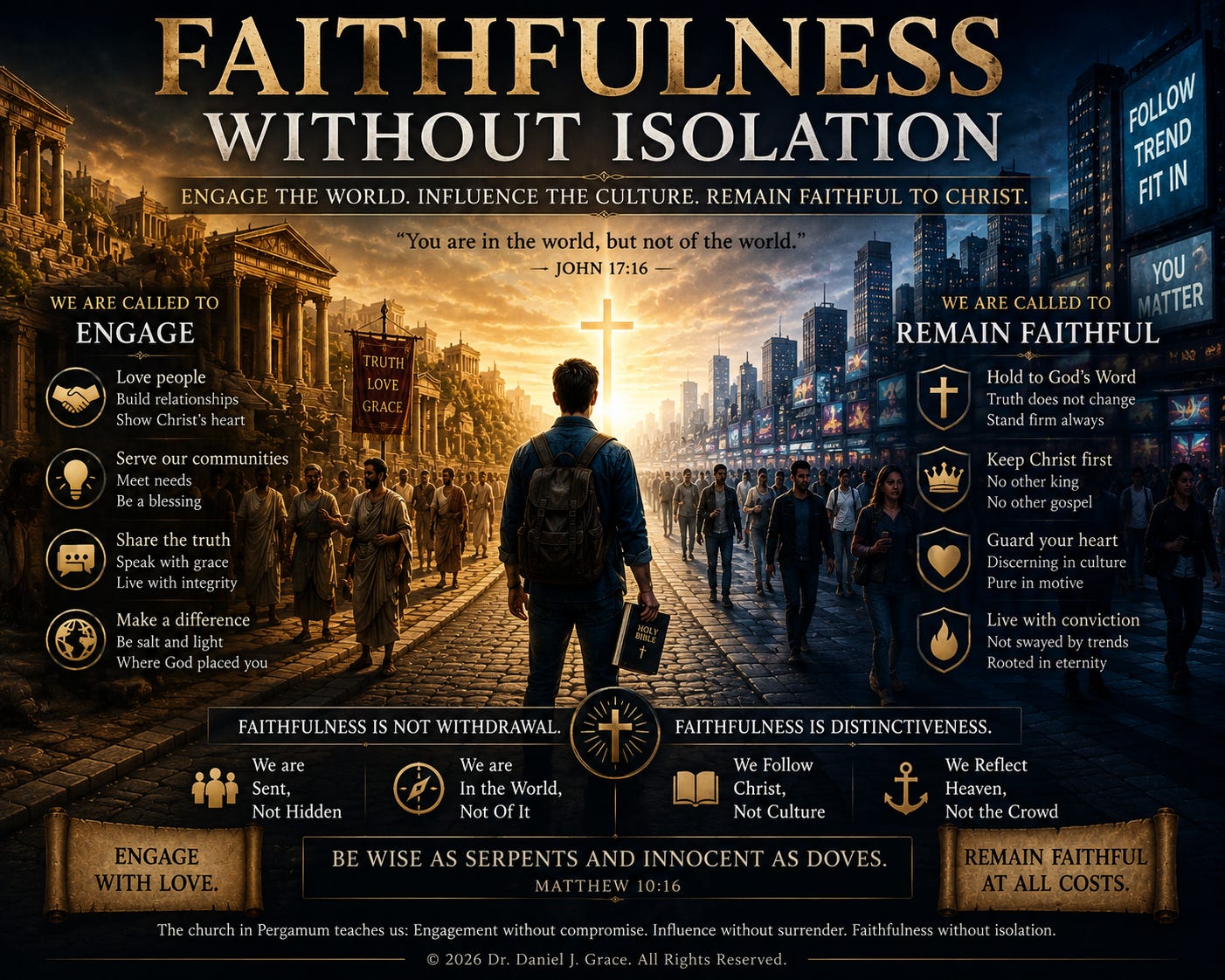
The message of Pergamum does not encourage believers to withdraw from society.
Jesus did not call His followers to escape the world.
He called them to remain faithful within it.
This distinction is important.
Christians are called to work, serve, learn, create, and participate in society.
Yet they are also called to evaluate cultural values through the lens of Scripture.
Faithfulness requires engagement without surrender.
Influence without compromise.
Conviction without hostility.
Truth without arrogance.
The Cost of Compromise
Compromise may provide temporary benefits.
It may reduce conflict.
It may increase popularity.
It may create opportunities.
Yet Revelation warns that spiritual compromise always carries consequences.
When believers gradually adjust their convictions to fit cultural expectations, they often lose clarity about who they are and what they believe.
The greatest loss is not public reputation.
The greatest loss is spiritual identity.
Pergamum reminds Christians that preserving faithfulness is more important than preserving comfort.
The Hope Within the Warning
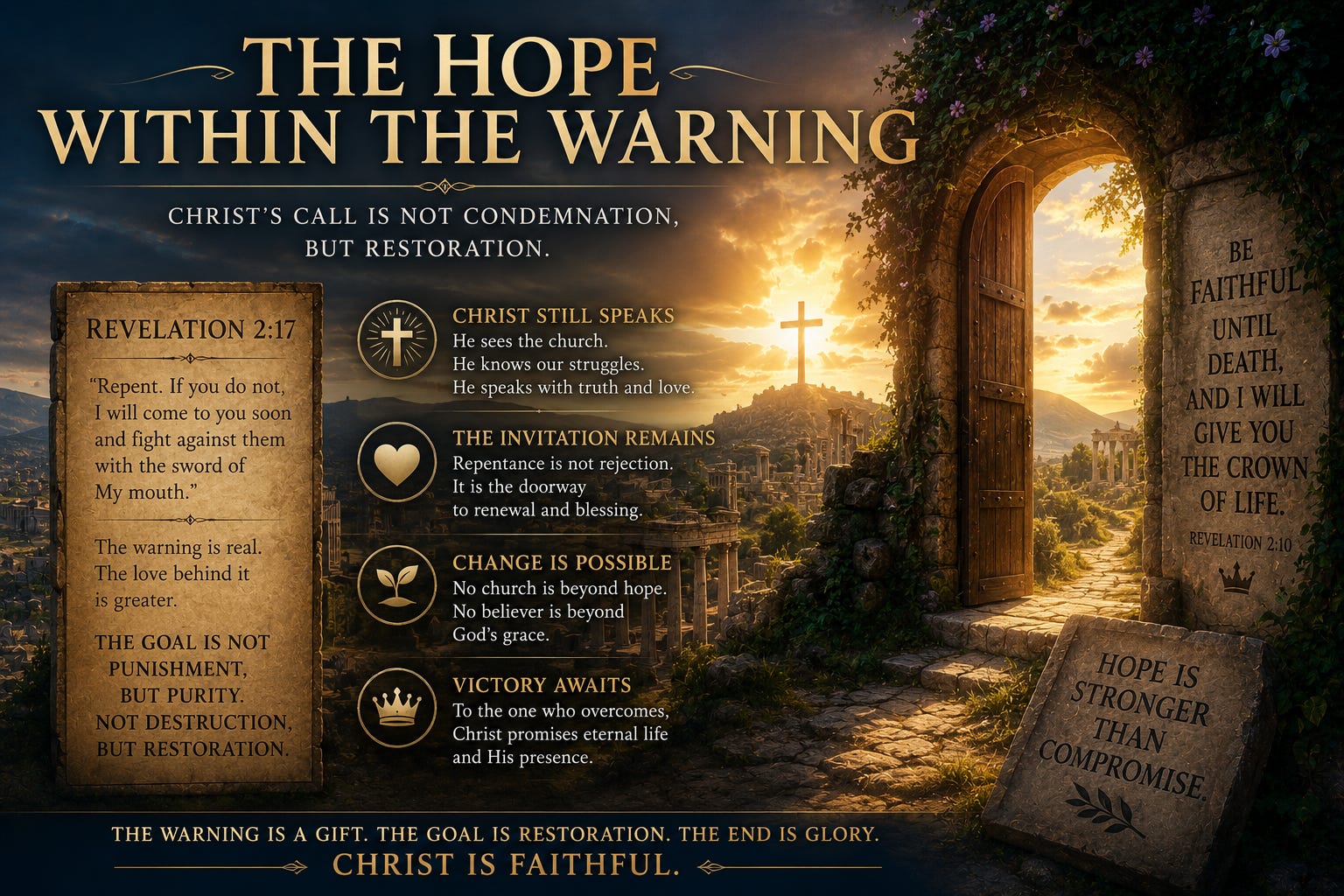
Despite the seriousness of Christ’s rebuke, the message to Pergamum is ultimately hopeful.
Christ does not abandon the church.
He calls it to repentance and renewal.
The purpose of the warning is restoration, not condemnation.
This remains true today.
Every generation faces cultural pressures.
Every church must continually examine itself.
Every believer must decide where ultimate loyalty belongs.
The invitation remains open.
Faithfulness is still possible.
The message to Pergamum is not merely an ancient letter addressed to a forgotten city. It is a warning for every generation.
The church in Pergamum teaches that compromise often presents a greater danger than persecution because it operates gradually and quietly.
The challenge facing modern Christians is not simply whether they will oppose the culture but whether they will allow the culture to redefine their faith.
In a world filled with competing loyalties, changing values, and constant pressure to conform, the message of Pergamum remains remarkably relevant.
Christ’s call is the same today as it was in the first century: remain faithful, resist compromise, and remember that allegiance to Him must always come before allegiance to the surrounding culture.
Dr. Daniel J. Grace
Research • Journalism • Theology
© 2026 Dr. Daniel J. Grace. All Rights Reserved.