
Pentecostal Theology – Part 3
Healing, Prayer, and God’s Compassion in Pentecostal Belief

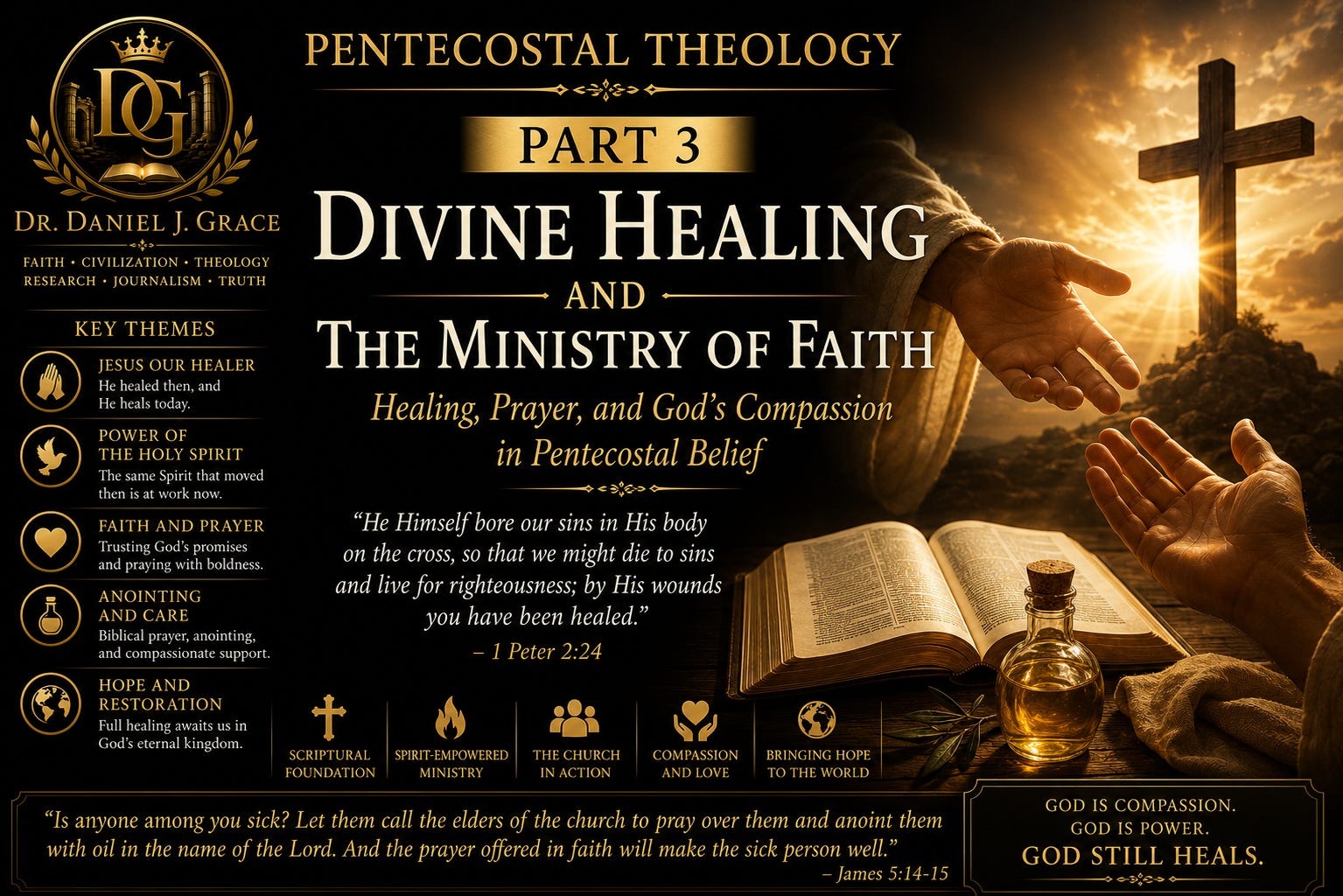
Divine Healing and the Ministry of Faith
Among the most recognisable aspects of Pentecostal theology is its emphasis on divine healing. From its earliest beginnings, the Pentecostal movement has taught that God continues to heal physically, emotionally, mentally, and spiritually. Pentecostals believe that the healing ministry demonstrated throughout the Bible did not cease with the apostles but remains an important part of Christian faith and practice today.
Pentecostal teaching on healing is based on the ministry of Jesus Christ. Throughout the Gospels, Jesus healed the blind, the deaf, the paralysed, and those suffering from various diseases. He restored sight, cleansed lepers, raised the dead, and delivered people from spiritual oppression. These miracles were not simply displays of power; they revealed God’s compassion and His desire to bring restoration to broken lives.
Pentecostals view the healing ministry of Jesus as an expression of God’s character. Christ’s miracles showed that God cares for both the soul’s salvation and the whole person’s wellbeing. Healing is therefore understood as an act of divine love and mercy. It points toward God’s ultimate plan to restore all creation and remove the effects of sin and suffering.
The Book of Acts continues this theme. After the Day of Pentecost, the apostles performed many signs and wonders through the power of the Holy Spirit. Peter and John healed a lame man at the temple gate. Paul ministered healing to the sick and cast out evil spirits. These events convinced early Christians that God’s healing power remained active after Christ’s ascension.
Pentecostals believe that these biblical accounts provide encouragement for believers today. While acknowledging that God is sovereign and works according to His will, they maintain that Christians should continue to pray for healing and trust God for miracles. Many Pentecostal churches regularly include prayer for the sick as part of their worship services and ministry activities.
One frequently cited passage is James 5:14–15, where believers are instructed to call the elders of the church to pray over the sick and anoint them with oil in the name of the Lord. Pentecostals view this practice as both biblical and relevant for modern Christian life. The act of anointing with oil symbolises consecration and dependence on God, rather than any power within the oil itself.
Faith occupies a central place in Pentecostal teaching on healing. Pentecostals believe that faith enables believers to trust God’s promises and seek His intervention in difficult circumstances. However, mature Pentecostal theology does not teach that healing automatically occurs whenever faith is present. Instead, faith is understood as confidence in God’s goodness regardless of the outcome.
Unfortunately, some misunderstandings have developed over the years regarding faith and healing. Critics have sometimes accused Pentecostals of suggesting that a lack of faith always causes illness. Most responsible Pentecostal scholars reject such simplistic conclusions. The Bible contains many examples of faithful believers who experienced suffering, hardship, and physical weakness. The Apostle Paul himself spoke of a “thorn in the flesh” that was not removed despite repeated prayer.
This balanced perspective recognises that God sometimes heals instantly, sometimes gradually, and sometimes in ways people do not expect. Pentecostals continue to pray for healing because they believe God can perform miracles, but they also acknowledge that human understanding is limited. Ultimately, believers are called to trust God’s wisdom and sovereignty.
Divine healing is not restricted to physical illness. Pentecostal ministry often emphasises emotional and spiritual healing as well. Many individuals carry deep wounds caused by grief, trauma, abuse, rejection, addiction, or disappointment. Pentecostals believe that the Holy Spirit works within people’s hearts to bring comfort, restoration, and freedom. In this sense, healing encompasses the whole person rather than focusing solely on the body.
Testimonies play a significant role in Pentecostal life. Believers frequently share stories of answered prayers, recoveries, and personal transformation. These testimonies serve as reminders of God’s faithfulness and encourage others to trust Him. While Pentecostals value personal experiences, they generally maintain that people should always evaluate those experiences in light of Scripture.
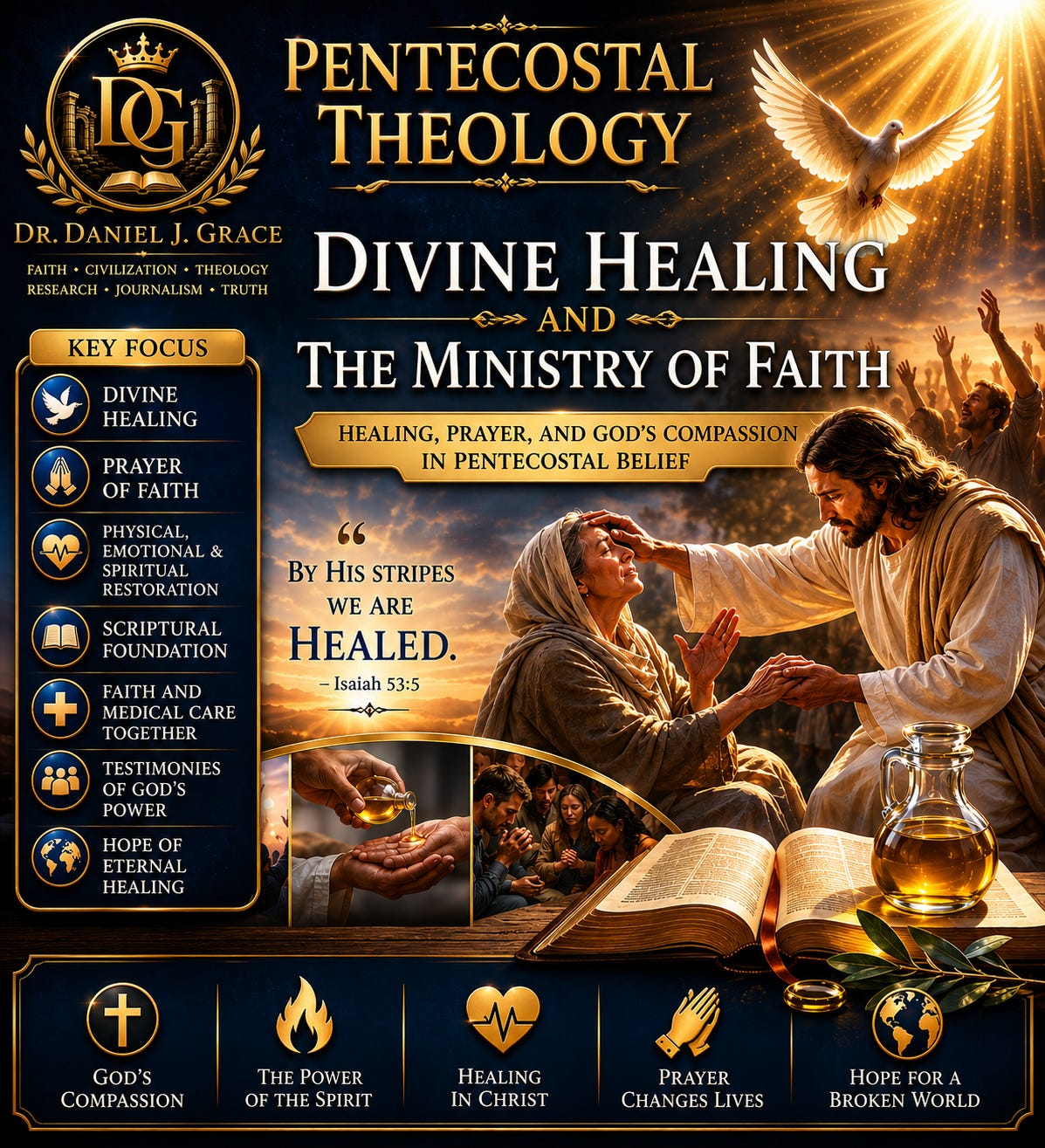
The twentieth century witnessed the rise of many healing ministries within Pentecostalism. Evangelists travelled throughout the world conducting revival meetings and praying for the sick. Some ministries gained widespread influence and contributed to the growth of Pentecostal churches across continents. At the same time, controversies occasionally emerged when exaggerated claims or financial exploitation occurred. Such incidents reminded believers of the need for accountability, discernment, and biblical integrity.
Modern Pentecostal churches continue to approach healing with both faith and responsibility. Many encourage believers to seek prayer while also recognising the value of medical treatment. Most Pentecostals do not see prayer and medicine as enemies. Rather, they view both as potential means through which God can bring healing. Doctors, nurses, therapists, and healthcare professionals may all play important roles in God’s provision and care.
This perspective is particularly important in today’s world. Advances in medicine have improved countless lives, yet human suffering remains a reality. Pentecostal theology seeks to hold together two truths: God still heals, and believers must trust Him even when healing does not come in the way they hope. This balance helps prevent both despair and unrealistic expectations.
Ultimately, divine healing points beyond temporary relief toward a greater future hope. Christians believe that God’s eternal kingdom will one day realise complete healing, where sickness, pain, suffering, and death will no longer exist. Every healing experienced in this life serves as a glimpse of that future restoration promised by God.
Conclusion
Divine healing remains one of the most significant teachings within Pentecostal theology. Rooted in the ministry of Jesus and the witness of the early church, Pentecostals believe that God continues to heal and restore according to His will. Through prayer, faith, and the work of the Holy Spirit, believers seek God’s intervention while trusting His wisdom in every circumstance. Whether healing occurs immediately, gradually, or ultimately in eternity, Pentecostal theology affirms that God is compassionate, powerful, and deeply concerned for the wellbeing of His people.
Next Article
Part 4 – The Global Pentecostal Movement
From Azusa Street to a Worldwide Christian Revival
Dr Daniel J. Grace
Faith • Civilization • Theology
Research • Journalism • Truth
🌐 danieljamesgrace.com
© 2026 Dr Daniel J. Grace. All Rights Reserved.
No part of this article may be reproduced, distributed, transmitted, or published in any form or by any means without prior written permission from the author, except for brief quotations used in academic citation, review, or research purposes.