

Pentecostal Theology – Part 2
Understanding the Gifts of the Spirit for Ministry and Service

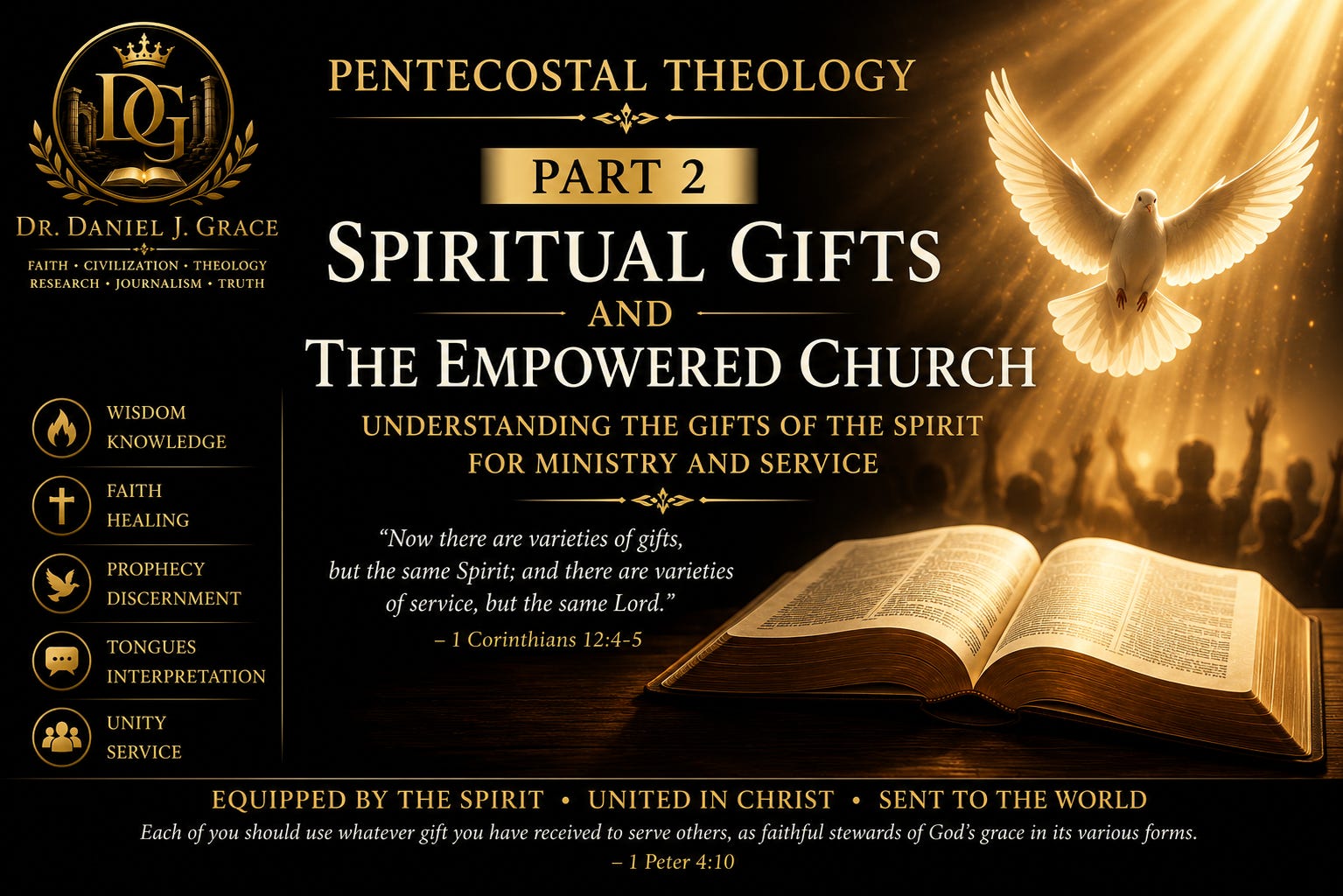
Spiritual Gifts and the Empowered Church
One of the most distinctive features of Pentecostal theology is its emphasis on the gifts of the Holy Spirit. Pentecostals believe that God saves and transforms believers and equips them with spiritual gifts to serve the church and advance His mission in the world. These gifts are not viewed as relics of the early church but as present realities available to believers today through the work of the Holy Spirit.
The foundation for understanding spiritual gifts is found throughout the New Testament, particularly in 1 Corinthians 12–14, Romans 12, and Ephesians 4. These passages describe various gifts given by the Holy Spirit for the benefit of the church. Pentecostals teach that every believer has a role within the body of Christ and that spiritual gifts are God’s means of empowering Christians for ministry and service.
The Apostle Paul compared the church to a human body. Just as a body consists of many parts working together, the church is made up of believers with different gifts and functions. No gift is more important than another, and all are intended to work together in harmony. This understanding helps Pentecostals to emphasise both diversity and unity within the church.
Among the gifts mentioned in Scripture are wisdom, knowledge, faith, healing, miracles, prophecy, discernment of spirits, speaking in tongues, and the interpretation of tongues. Pentecostals generally believe that these gifts remain available today because the Holy Spirit continues to work through believers just as He did in the early church.
One of the most discussed gifts within Pentecostal theology is speaking in tongues. Pentecostals point to the events of Pentecost in Acts 2, where believers spoke in other languages as they were filled with the Holy Spirit. Many Pentecostal churches view speaking in tongues as a sign associated with Spirit baptism and as a gift that can be used in personal prayer and corporate worship. However, responsible Pentecostal teaching also emphasises that Paul instructs us to exercise spiritual gifts in an orderly and edifying manner.
Prophecy is another significant gift within Pentecostal practice. Pentecostals understand prophecy primarily as a Spirit-inspired message intended to encourage, strengthen, and comfort believers. Genuine prophetic ministry is expected to align with Scripture and point people toward Christ rather than draw attention to individuals.
The gift of discernment is also highly valued. Pentecostals recognise that not every spiritual experience automatically comes from God. Discernment helps believers distinguish truth from error and maintain faithfulness to biblical teaching. In a world filled with competing voices and influences, discernment remains essential for healthy spiritual growth.
Healing and miracles occupy an important place within Pentecostal theology as well. Pentecostals believe that God continues to heal and perform miracles according to His will. Prayer for the sick is commonly practiced, reflecting confidence in God’s power and compassion. At the same time, many Pentecostal scholars acknowledge that not every prayer results in healing and that believers must trust God’s wisdom even when outcomes differ from their expectations.
Despite their emphasis on spiritual gifts, Pentecostals generally agree that character is more important than giftedness. The New Testament teaches that gifts are valuable, but the fruit of the Spirit demonstrates spiritual maturity. Love, humility, patience, kindness, and faithfulness should accompany the exercise of every spiritual gift. A gifted person without Christlike character can cause confusion and division rather than spiritual growth.
For this reason, Pentecostal theology places profound importance on love. In 1 Corinthians 13, Paul teaches that even the most extraordinary spiritual gifts are meaningless without love. Pentecostals often point to this chapter to remind us that spiritual power must always be balanced by Christian character and compassion.
The purpose of spiritual gifts is not personal status or recognition. Rather, gifts exist to glorify God, strengthen the church, and help believers serve others effectively. Whether teaching, encouraging, leading, praying, prophesying, or showing mercy, each gift contributes to the church’s mission and witness in the world.
Pentecostal churches around the globe continue to encourage believers to discover and develop their spiritual gifts. Through prayer, discipleship, and active involvement in ministry, Christians learn to use their gifts responsibly and faithfully. This emphasis on participation has helped many believers move from being passive observers to active servants within their congregations.
This understanding of the Holy Spirit’s empowerment has often linked the rapid growth of Pentecostalism worldwide. Believers should not only attend church but also participate in God’s work through the gifts He has given them. This creates a dynamic and engaged church culture that seeks to combine spiritual experience with practical ministry.
Conclusion
Spiritual gifts stand at the heart of Pentecostal theology because they reflect the Holy Spirit’s ongoing work within the church. Pentecostals believe that God equips believers with unique gifts to serve, encourage, teach, heal, and strengthen others. While gifts vary from person to person, their purpose remains the same: to glorify God and build up the body of Christ. When exercised with wisdom, humility, and love, spiritual gifts become powerful instruments through which God continues His work in the world today.
Next Article
Part 3 – Divine Healing and the Ministry of Faith
Healing, Prayer, and God’s Compassion in Pentecostal Belief

Dr Daniel J. Grace
Faith • Civilization • Theology
Research • Journalism • Truth
🌐 danieljamesgrace.com
© 2026 Dr Daniel J. Grace. All Rights Reserved.
No part of this article may be reproduced, distributed, transmitted, or published in any form or by any means without prior written permission from the author, except for brief quotations used in academic citation, review, or research purposes.