
Modern Psychology: A Theology of Eternal Memory
Trauma, Amnesia, Personal Identity, and the Healing of Memory in the Resurrection

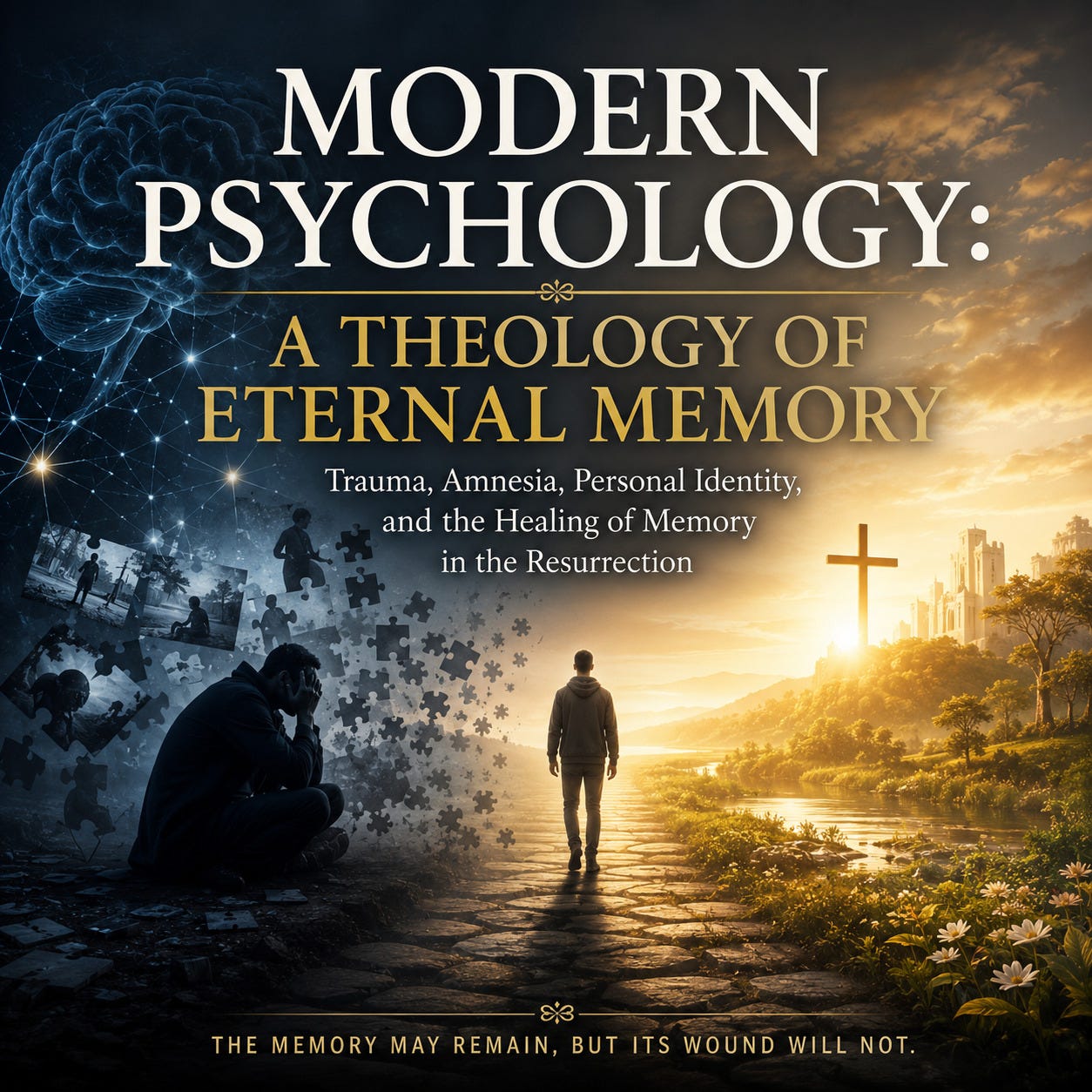
Modern Psychology: A Theology of Eternal Memory
Trauma, Amnesia, Personal Identity, and the Healing of Memory in the Resurrection
What happens to memory in the resurrection?
Christians often speak about heaven, healing, reunion, and the end of pain. But we rarely ask what happens to the memories that caused that pain.
Will trauma be erased?
Will forgotten memories return?
Will people who lived with dementia, amnesia, brain injury, or PTSD still be themselves?
This question matters because memory is deeply connected to identity. Our memories carry relationships, suffering, courage, failure, love, and the story of who we have become.
Yet modern psychology also shows that memory is not a perfect recording. Trauma can produce flashbacks, fear, shame, avoidance, and a sense that the past is still happening. Dementia and amnesia can block access to parts of a person’s life.
So what does Christian resurrection mean for memory?
I believe it points toward something more profound than either total forgetting or the endless continuation of pain.
Healed Continuity
The best way to describe it is healed continuity.
The person remains the same person.
Their history remains real.
The truth of what happened is not erased.
But the pathological power of trauma is removed.
A survivor may remember the event without reliving it.
A person may know what happened without being controlled by fear, shame, panic, or fragmentation.
The memory may remain, but its wound will not.
This also gives hope to people affected by dementia and amnesia.
A person does not cease to be themselves because they can no longer remember a name, a place, or part of their story. Neurological damage can limit access to memory, but it does not remove the person from God’s knowledge.
The one who forgets is not forgotten.
The Wounds of the Risen Christ
The risen Christ still carried his wounds.
They remained visible, but they were no longer bleeding. They no longer represented defeat.
They became signs of identity, love, truth, and victory.
This gives us a powerful picture of eternal memory.
Resurrection does not mean pretending that suffering never happened.
It means suffering no longer has the final word.
The wounds remain part of the story, but they no longer rule the person.
A Christian Hope for Trauma and Memory
Christian hope does not require God to delete our past in order to save us.
Nor does it require us to carry untreated trauma into eternity.
God restores the whole person.
He preserves truth.
He heals memory.
He overcomes neurological damage.
He does not save us by removing our identity. He saves us by restoring it.
The final hope is not that survivors become people to whom nothing happened.
It is that they become fully themselves.
Known.
Restored.
Truthful.
And free.
Read the full academic article on Faith • Civilization • Theology:
https://faithcivilizationtheology.com/
Modern Psychology: A Theology of Eternal Memory
DOI: 10.5281/zenodo.21495164
© 2026 Daniel J. Grace. All rights reserved.