

Modern Lessons from the Seven Churches: What Revelation Teaches the Church Today
Timeless Warnings, Enduring Faith, and the Relevance of Christ’s Messages to the Modern Church

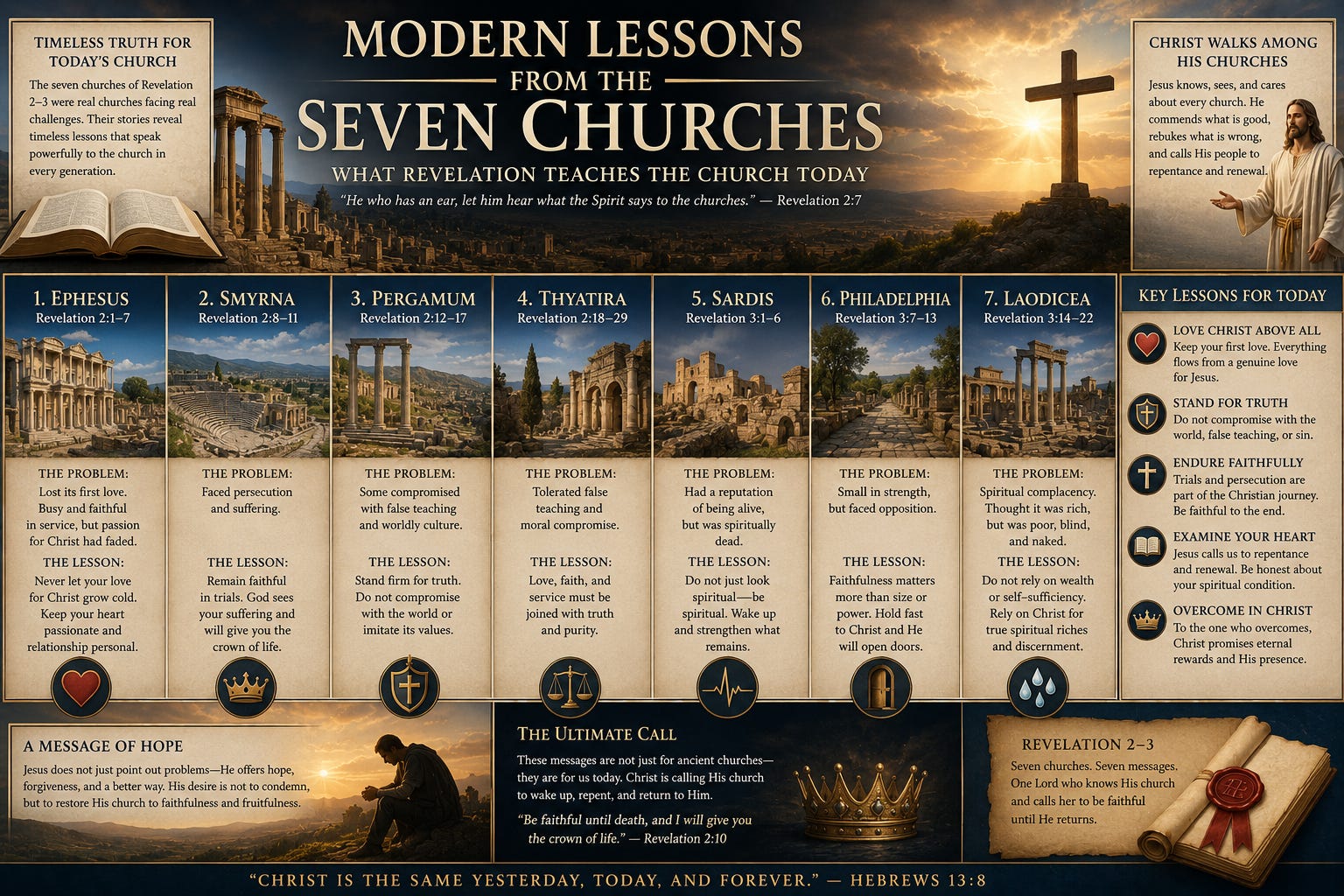
The messages to the Seven Churches in Revelation 2–3 were originally addressed to Christian communities in first-century Asia Minor. While each church faced unique historical circumstances, the spiritual principles contained within Christ’s words transcend time and culture. The churches of Ephesus, Smyrna, Pergamum, Thyatira, Sardis, Philadelphia, and Laodicea represent challenges that continue to confront believers today. Issues such as declining spiritual passion, persecution, doctrinal compromise, moral corruption, complacency, and faithfulness remain relevant in contemporary Christianity. This article examines the enduring lessons of the Seven Churches and explores how their strengths and failures guide the modern church in an increasingly complex world.
Introduction
The Book of Revelation is often associated with prophecy, symbolism, and visions concerning the future. Yet before presenting its dramatic apocalyptic imagery, Revelation begins with seven practical messages addressed to real churches located in Asia Minor. These congregations existed within specific historical settings, facing pressures from Roman society, pagan religion, emperor worship, economic challenges, and internal spiritual struggles.
Despite being written nearly two thousand years ago, the messages remain remarkably relevant. Human nature has not fundamentally changed, nor have the spiritual dangers facing the people of God. Churches today continue to wrestle with many of the same issues encountered by the first Christians.
The Seven Churches serve as mirrors through which believers can examine their own faithfulness, priorities, and spiritual condition. Their stories reveal both the strengths that Christ commends and the weaknesses He condemns.
Ephesus: The Danger of Losing First Love
The church in Ephesus was doctrinally sound and committed to defending truth. Christ praised its perseverance, hard work, and discernment. Yet despite these strengths, He identified a serious problem: the believers had abandoned their first love.
Modern churches often face a similar danger. Congregations may maintain correct doctrine, effective programs, and strong leadership while gradually losing their passion for Christ. Ministry can become routine. Service can replace devotion. Activity can overshadow intimacy with God.
The lesson of Ephesus reminds believers that orthodoxy alone is insufficient. Genuine Christian faith requires both truth and love. A church may possess theological accuracy while suffering spiritual decline.
Smyrna: Faithfulness in Suffering
Unlike most of the other churches, Smyrna received no rebuke from Christ. Instead, believers were encouraged to remain faithful despite persecution and hardship.
Many Christians throughout history have experienced discrimination, imprisonment, violence, and social exclusion because of their faith. Even today, millions of believers live in regions where following Christ carries significant personal risk.
The church of Smyrna teaches that faithfulness is often demonstrated not through comfort and prosperity but through perseverance in adversity. Christ’s encouragement reminds believers that temporary suffering cannot compare to eternal reward.
Pergamum: The Challenge of Cultural Compromise
Pergamum was praised for maintaining faith under difficult circumstances. Yet some members had begun compromising with surrounding cultural influences.
The modern church faces similar pressures. Contemporary society often promotes values that conflict with biblical teaching. The desire for acceptance can tempt believers to soften convictions or accommodate prevailing cultural trends.
The lesson of Pergamum is clear: Christians are called to engage culture without surrendering biblical truth. Faithfulness requires discernment and courage.
Thyatira: The Danger of False Teaching
The church in Thyatira demonstrated love, service, faith, and perseverance. However, it tolerated false teaching that encouraged moral compromise.
Throughout church history, false doctrines have frequently emerged from within Christian communities. Distortions of biblical truth can appear attractive because they promise easier paths, greater popularity, or accommodation to cultural expectations.
The lesson of Thyatira reminds believers that love and tolerance must never come at the expense of truth. Churches must exercise discernment while remaining committed to sound doctrine.
Sardis: Appearance Without Reality
Sardis possessed a reputation for being alive, yet Christ declared it spiritually dead.
This warning speaks powerfully to modern Christianity. Churches can enjoy impressive buildings, growing attendance, financial resources, and public influence while experiencing spiritual emptiness beneath the surface.
The lesson of Sardis challenges believers to examine whether outward success reflects genuine spiritual vitality. Reputation alone is not evidence of faithfulness.
Philadelphia: The Power of Faithful Endurance
Philadelphia received strong commendation from Christ. Though possessing limited strength, the church remained faithful and obedient.
Many believers feel insignificant when compared to larger institutions or influential ministries. Yet Philadelphia demonstrates that God values faithfulness more than size, power, or prestige.
The church’s example encourages Christians to remain steadfast regardless of their circumstances. Small acts of obedience often have lasting significance in God’s kingdom.
Laodicea: The Danger of Spiritual Complacency
The message to Laodicea contains one of the strongest rebukes in Revelation. Wealthy and self-sufficient, the church believed itself prosperous while remaining blind to its true spiritual condition.
The modern church faces similar temptations. Material success, organisational efficiency, technological advancement, and social influence can create the illusion of spiritual health.
Christ’s warning reminds believers that genuine faith cannot be measured solely by external success. Dependence upon God remains essential regardless of worldly achievements.
Common Themes for the Modern Church
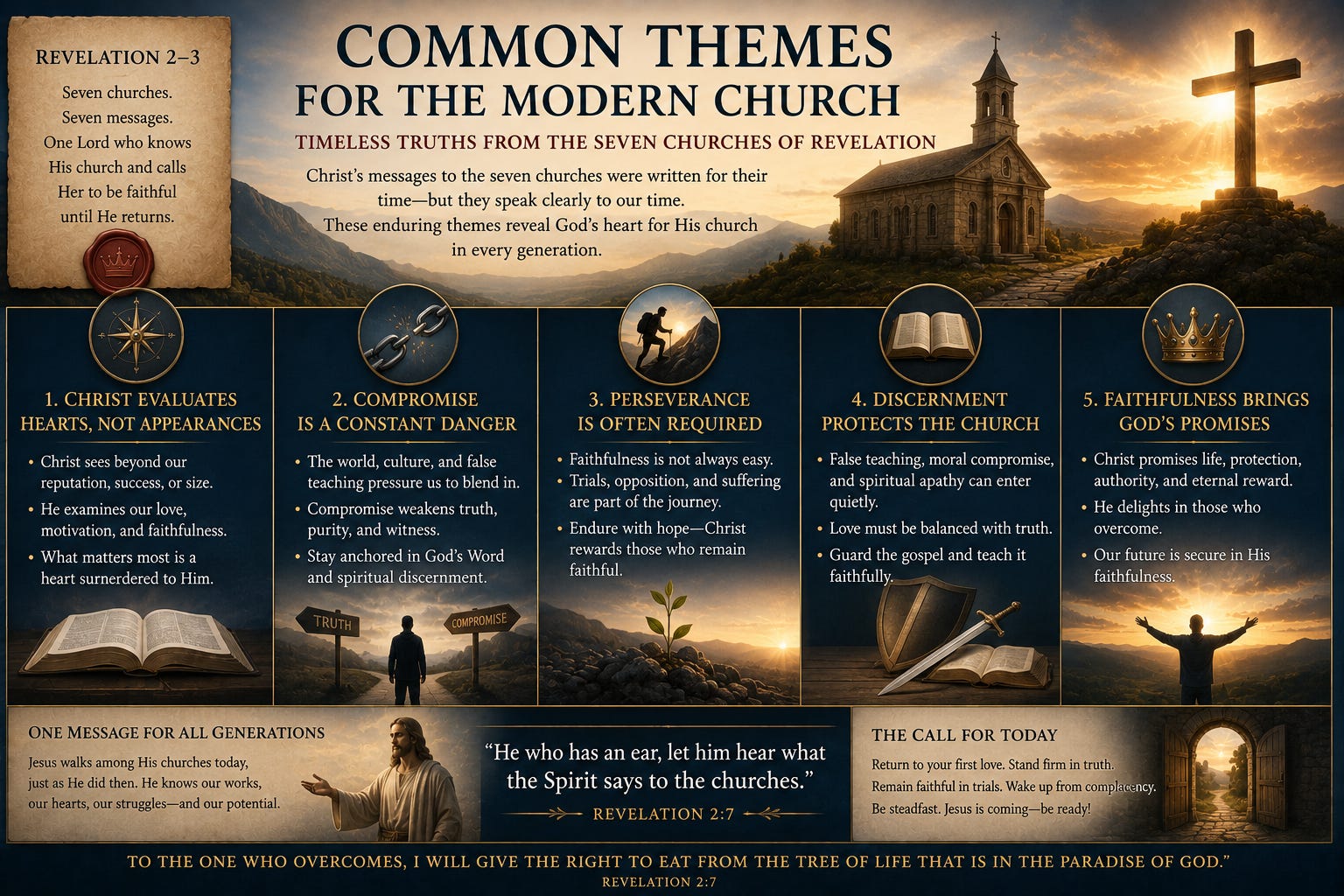
Several themes unite the messages to the Seven Churches.
First, Christ evaluates churches according to spiritual faithfulness rather than worldly standards. Wealth, influence, popularity, and reputation are secondary to obedience.
Second, compromise represents a constant danger. Whether through false teaching, cultural accommodation, or moral decline, believers must remain vigilant.
Third, perseverance is repeatedly emphasised. Faithfulness often requires endurance in the face of opposition, disappointment, and suffering.
Finally, each message concludes with a promise to those who overcome. Despite challenges, Christ offers hope, victory, and eternal reward to those who remain faithful.
The Seven Churches of Revelation provide a timeless spiritual diagnosis of the challenges facing God’s people. Their stories reveal that every generation confronts similar dangers: declining devotion, persecution, compromise, false teaching, spiritual complacency, and the temptation to rely upon worldly success.
Yet the messages are not merely warnings. They are invitations to repentance, renewal, faithfulness, and deeper dependence upon Christ.
For the modern church, the Seven Churches remain more than historical communities. They serve as living lessons, calling believers to examine their hearts, strengthen their faith, and remain faithful until the return of Christ.
Dr. Daniel J. Grace
Research • Journalism • Theology
Seven Churches Research Project
© 2026 Dr. Daniel J. Grace. All Rights Reserved.