
Archaeological Discoveries from Ephesus, Sardis, and Laodicea: Unearthing the World of Early Christianity
Archaeological Insights from Ephesus, Sardis, and Laodicea

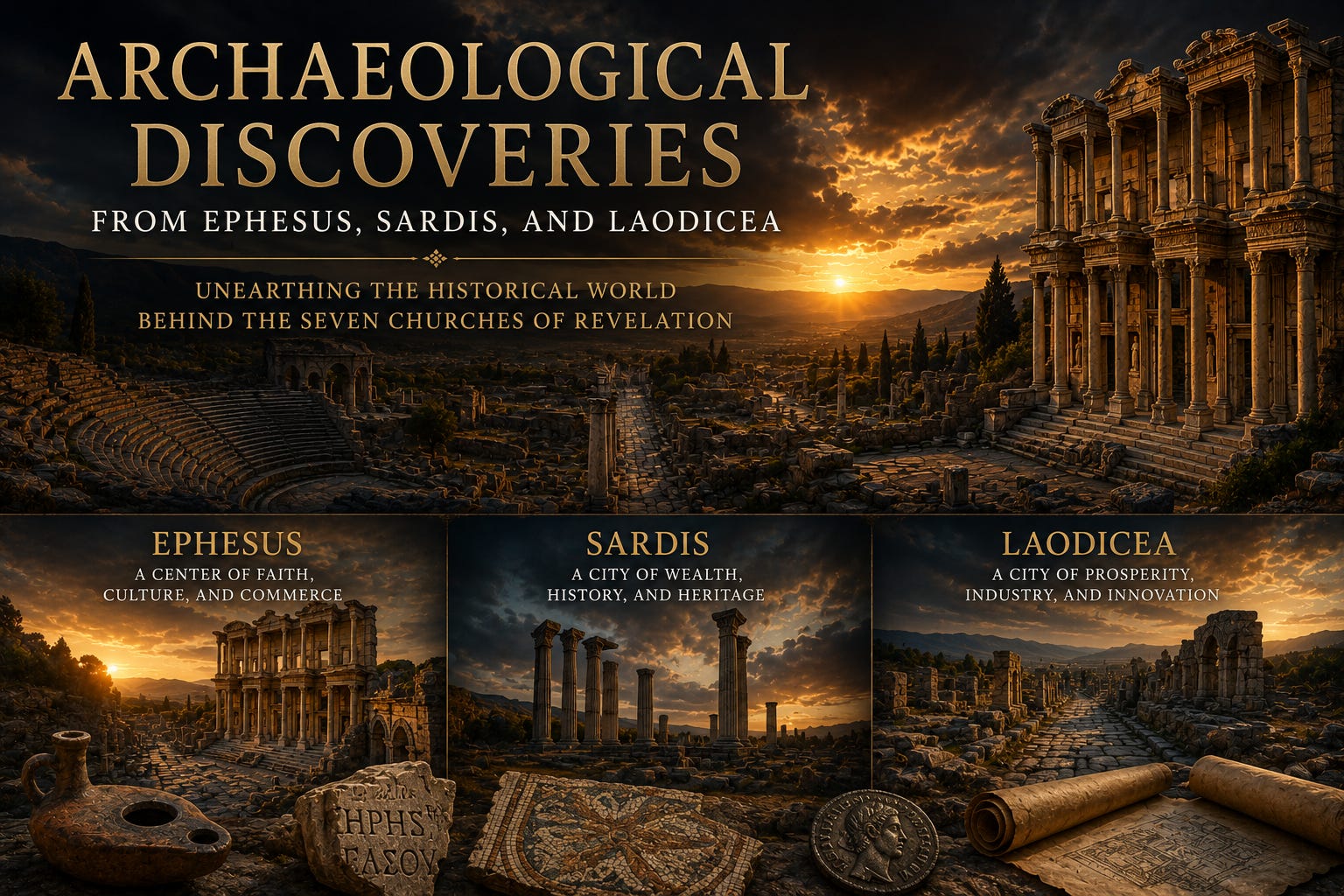
The cities of Ephesus, Sardis, and Laodicea occupy a unique place in both Christian history and archaeology. Mentioned among the Seven Churches of Revelation, these ancient urban centres served as important religious, political, and commercial hubs within the Roman province of Asia. While biblical texts provide valuable insight into their spiritual significance, archaeological discoveries have allowed modern scholars to reconstruct the social, economic, and cultural realities that shaped the lives of their inhabitants.
Over the past century, extensive excavations have transformed these sites into some of the most important archaeological locations in Türkiye. Their ruins provide remarkable evidence of urban planning, religious life, commerce, architecture, and daily existence during the Hellenistic, Roman, Byzantine, and early Christian periods. Together, these discoveries not only illuminate the historical setting of the New Testament but also deepen our understanding of the communities addressed within the Book of Revelation.
Ephesus: The Great Metropolis of Asia
Among the Seven Churches, Ephesus was arguably the most influential city. Located near the Aegean coast, Ephesus functioned as a major port, commercial centre, and religious destination. Archaeological excavations have revealed one of the most impressive ancient cities in the Mediterranean world.
Perhaps the most famous discovery is the remains of the Temple of Artemis, one of the Seven Wonders of the Ancient World. Although only fragments survive today, archaeological evidence confirms the enormous scale and significance of the sanctuary. Pilgrims travelled from across the Roman Empire to worship Artemis, making Ephesus a centre of both religious devotion and economic activity.
Excavations have also uncovered the magnificent Library of Celsus, constructed during the second century AD. Its reconstructed façade remains one of the most iconic archaeological monuments in Türkiye. The library housed thousands of scrolls and reflected the city’s status as a centre of learning and culture.
The Great Theatre of Ephesus provides another significant discovery. Capable of seating approximately 25,000 spectators, it demonstrates the city’s wealth and civic importance. According to the Book of Acts, this theatre was associated with the riot sparked by the preaching of the Apostle Paul, highlighting the tension between emerging Christianity and traditional pagan worship.
Residential excavations have revealed the Terrace Houses, luxurious homes decorated with mosaics, frescoes, marble floors, and sophisticated plumbing systems. These discoveries provide insight into the lifestyles of the wealthy elite who lived within Ephesus during the Roman period.
Christian archaeology has also flourished in Ephesus. The Basilica of St. John, constructed in the sixth century, was traditionally believed to stand above the burial site of the Apostle John. Nearby remains of early churches demonstrate the growth of Christianity following the apostolic period. Together, these discoveries reveal the transformation of Ephesus from a centre of pagan worship into an important Christian city.
Sardis: Capital of Ancient Lydia
Situated inland from the Aegean coast, Sardis served as the capital of the ancient Kingdom of Lydia. Known historically for its wealth and association with King Croesus, Sardis occupied a strategic position along important trade routes linking the interior of Anatolia with coastal regions.
Archaeological excavations have revealed evidence of extraordinary prosperity. One of the most significant discoveries is the massive Temple of Artemis at Sardis. Although smaller than its Ephesian counterpart, the temple remains one of the largest religious structures in ancient Anatolia. Its impressive columns continue to dominate the archaeological landscape.
Equally remarkable is the discovery of the Sardis Synagogue, one of the largest ancient synagogues ever uncovered. Dating from the Roman period, the synagogue demonstrates the substantial Jewish presence within the city. Richly decorated with marble, mosaics, and inscriptions, the structure provides important evidence for understanding Jewish life within the Roman Empire.
Excavations have also uncovered a large gymnasium complex. Combining athletic, educational, and social functions, the gymnasium reflects the city’s integration into Greco-Roman culture. Restoration efforts have revealed monumental architecture, marble façades, and sophisticated engineering techniques.
One of the most historically significant discoveries concerns Sardis’ role in early coinage. Archaeological evidence supports historical accounts that the Lydians were among the first civilizations to produce standardized coins. Numerous coin finds from Sardis have contributed greatly to the study of ancient economies and trade networks.
Christian remains within Sardis are less extensive than those found at Ephesus. Nevertheless, archaeological evidence confirms the existence of early Christian communities and later Byzantine occupation. The city’s mention in Revelation gains additional significance when viewed against its archaeological record. Despite its reputation for wealth and historical prestige, Sardis experienced periods of decline and vulnerability that parallel the biblical warning regarding spiritual complacency.
Laodicea: Wealth, Commerce, and Self-Sufficiency
Laodicea, located in the Lycus Valley, was one of the wealthiest cities in Roman Asia. Archaeological discoveries have consistently reinforced descriptions of its prosperity and self-confidence.
Excavations have revealed a city distinguished by impressive urban planning and monumental architecture. The remains of two large theatres, extensive colonnaded streets, public baths, fountains, and civic buildings demonstrate considerable economic resources. The city’s infrastructure reflects its role as a major commercial centre within the Roman Empire.
One of the most remarkable discoveries concerns the city’s sophisticated water system. Aqueducts transported mineral-rich water from nearby springs into Laodicea. Archaeologists have identified extensive limestone deposits within the pipes, confirming historical descriptions of the city’s lukewarm water supply. This discovery provides important context for the imagery used in Revelation concerning spiritual lukewarmness.
Laodicea was also renowned for textile production, particularly a valuable black wool highly prized throughout the region. Archaeological evidence supports literary sources describing the city’s textile industry as a major contributor to local wealth. Numerous artefacts associated with production and trade have been uncovered during excavations.
Medical activity formed another important aspect of Laodicean life. Historical sources describe a medical school known for producing eye treatments. Archaeological discoveries have supported the city’s reputation as a centre for health and medicine. This context helps illuminate the reference in Revelation to spiritual blindness and the need for true sight.
The city’s prosperity is perhaps most vividly demonstrated through evidence of reconstruction following major earthquakes. Historical records indicate that Laodicea rebuilt itself largely without imperial financial assistance. Archaeological evidence supports this remarkable achievement and confirms the city’s reputation for wealth and independence.
Christian archaeology in Laodicea has expanded significantly in recent decades. Excavations have uncovered church buildings, Christian inscriptions, and evidence of an established Christian presence during the Byzantine period. These discoveries help bridge the gap between the New Testament era and the subsequent development of Christianity within the region.
Archaeology and the Seven Churches
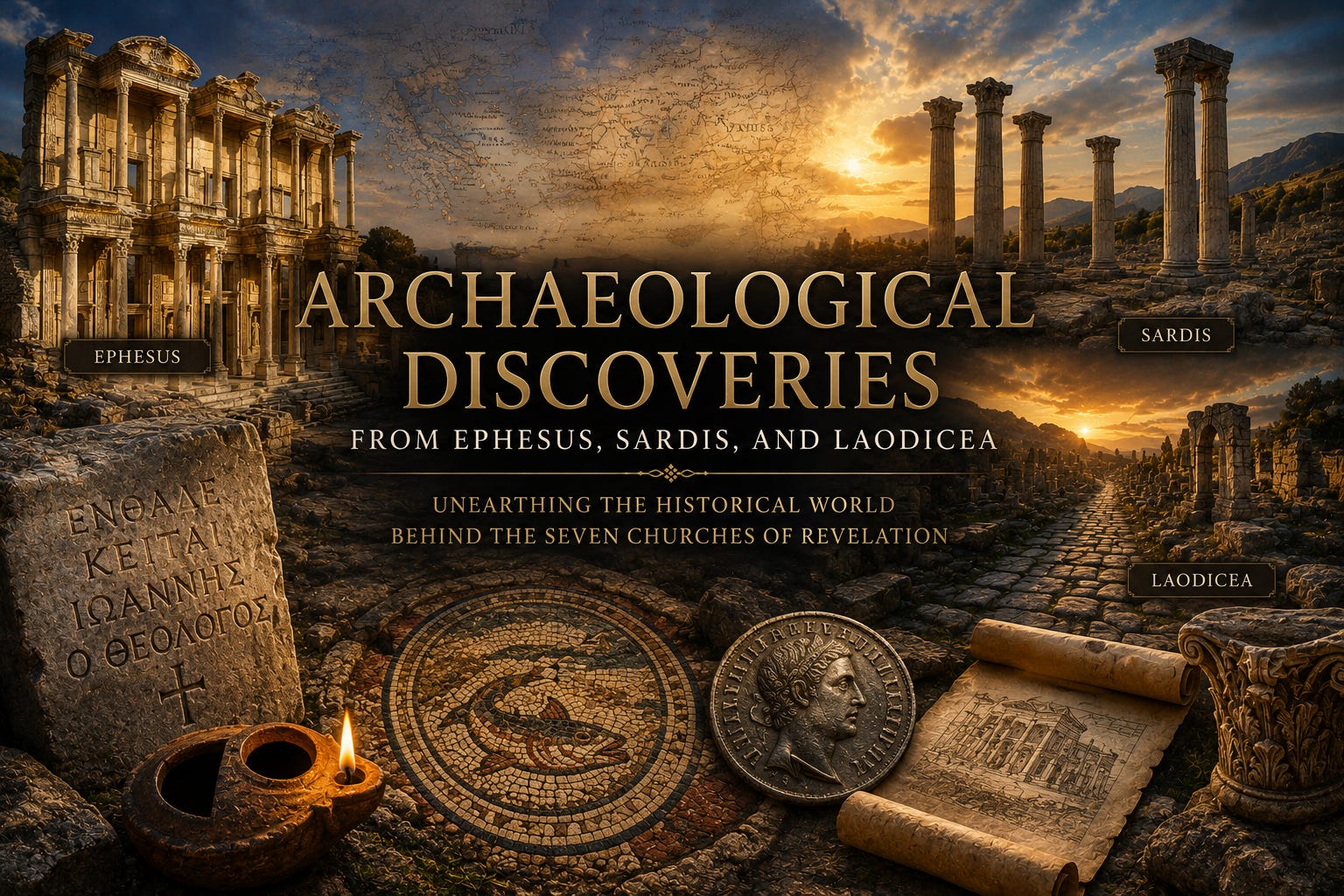
The archaeological discoveries from Ephesus, Sardis, and Laodicea provide valuable historical context for interpreting the messages contained within Revelation. Rather than existing as abstract spiritual warnings, the biblical texts addressed real communities shaped by distinctive social, economic, and cultural environments.
Ephesus was a city of immense religious influence and commercial activity. Sardis possessed a legacy of wealth and historical prestige. Laodicea embodied prosperity, comfort, and self-sufficiency. Archaeology confirms these characteristics and allows modern readers to understand the challenges confronting each Christian community.
Furthermore, archaeological evidence demonstrates how Christianity emerged and developed within complex urban environments. Early believers lived alongside pagan temples, Jewish communities, commercial networks, political institutions, and diverse cultural traditions. Their faith was not practised in isolation but within vibrant and often contested social landscapes.
Archaeological discoveries from Ephesus, Sardis, and Laodicea have transformed scholarly understanding of the Seven Churches and the broader world of early Christianity. Through temples, theatres, synagogues, churches, homes, streets, inscriptions, and artefacts, archaeologists have reconstructed the environments in which some of the earliest Christian communities lived and worshipped.
These discoveries reveal cities marked by wealth, influence, cultural diversity, and religious complexity. They confirm many historical details preserved within biblical texts while providing valuable insight into daily life throughout the Roman Empire. More importantly, they remind modern readers that the messages of Revelation were addressed to real people facing real challenges within specific historical contexts.
As excavations continue, Ephesus, Sardis, and Laodicea remain among the most important archaeological windows into the world of the New Testament. Their ruins continue to speak across the centuries, preserving the memory of civilisations whose influence helped shape both Christian history and the development of the ancient Mediterranean world.
Dr. Daniel J. Grace
Research • Journalism • Theology