
Anglican Theology – Part 2
The Political, Religious, and Theological Forces That Shaped Anglicanism

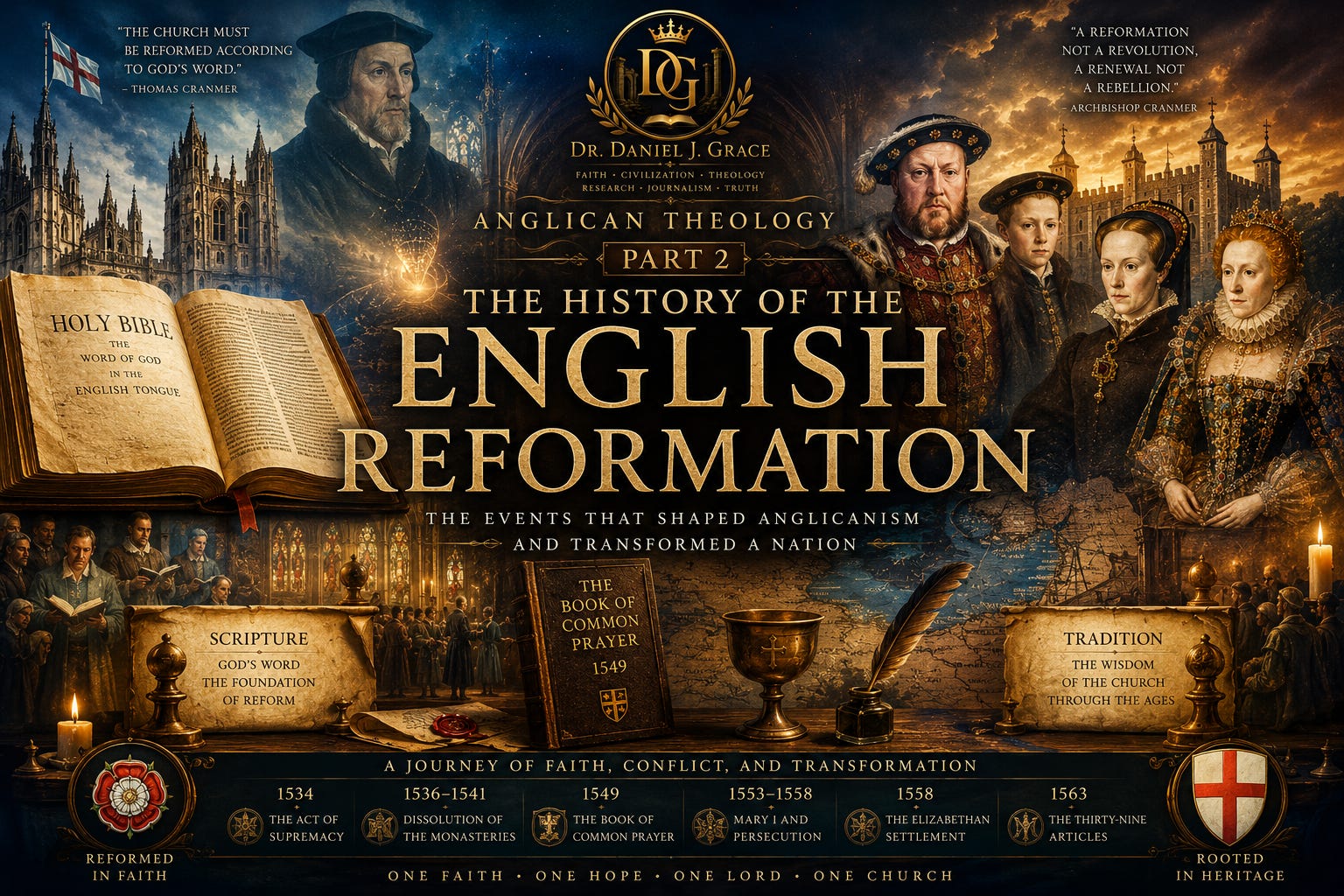
The History of the English Reformation
Introduction
You cannot understand the story of Anglican theology without exploring the English Reformation. While the Protestant Reformation on the European continent is often associated with figures such as Martin Luther and John Calvin, the English Reformation followed a unique path. It was a mix of Protestant and Catholic. Instead, it became a distinctive movement that eventually shaped what is now known as Anglicanism.
The English Reformation was not simply a dispute over politics, kings, and marriages. It involved profound questions about authority, Scripture, worship, salvation, and the identity of the Church itself. The events of the sixteenth century transformed England and laid the foundation for a global Christian tradition that today includes millions of believers across every continent.
Understanding this history helps us understand why Anglican theology values both ancient tradition and biblical reform, continuity and renewal, stability and adaptation.
England Before the Reformation
Before the sixteenth century, England was part of the Western Church under the authority of the pope in Rome. English Christians attended Mass, revered the saints, participated in pilgrimages, and followed the sacramental life of the mediaeval Catholic Church.
Cathedrals dominated the landscape. Monasteries served communities through education, charity, and prayer. The Church possessed enormous influence over social and political life.
Yet beneath this appearance of stability, concerns were growing.
Many church leaders worried about corruption within the clergy. Some priests were poorly educated. Others accumulated wealth and power. Questions emerged regarding indulgences, church finances, and papal authority.
At the same time, scholars inspired by the Renaissance began returning to original biblical sources. They sought a more profound understanding of Christianity based on Scripture and the writings of the early Church Fathers.
One important figure was William Tyndale, who translated the Bible into English. His work allowed ordinary people to read Scripture directly, an idea that would become central to later Protestant movements.
They were preparing for dramatic change.
King Henry VIII and the Break with Rome
The beginning of the English Reformation is often associated with Henry VIII.
Henry initially defended Catholic doctrine and even received the title “Defender of the Faith” from the pope. However, a personal and political crisis altered the course of English history.
Henry was married to Catherine of Aragon. Concerned about producing a male heir, he sought an annulment of the marriage.
When the pope refused to grant the annulment, Henry and his advisers began exploring alternatives.
In 1534, Parliament passed the Act of Supremacy, declaring the king to be the Supreme Head of the Church in England.
This was a revolutionary step.
For the first time, the English Church formally separated from papal authority.
It is important to note that at this stage the Church of England was not yet Protestant in theology. Many Catholic beliefs and practices remained intact. The primary change was the rejection of papal jurisdiction.
Nevertheless, the break with Rome led to wider reforms.
The Dissolution of the Monasteries
One of the most dramatic consequences of Henry’s policies was the dissolution of the monasteries.
Between 1536 and 1541, monasteries, abbeys, and religious houses throughout England were closed.
Their lands and wealth were transferred to the Crown.
Supporters argued that many monasteries had become corrupt and inefficient.
Critics believed that the closures destroyed valuable centres of prayer, learning, and charity.
The social impact was enormous. Communities that depended upon monasteries for assistance often struggled after their disappearance.
The dissolution remains one of the most controversial aspects of the English Reformation.
The Influence of Protestant Reformers
Although Henry VIII retained many traditional doctrines, Protestant ideas continued to spread throughout England.
Reformers emphasised:
The authority of Scripture
Salvation by faith
Preaching and teaching
Worship in the language of the people
Greater access to the Bible
Continental reformers influenced English theologians who sought further change.
As English scholars studied biblical texts and early Christian writings, they increasingly questioned certain mediaeval practices.
This intellectual movement prepared England for deeper theological reform after Henry’s death.
Edward VI and Protestant Reform
When Henry died in 1547, his son Edward VI became king.
Edward was sympathetic to Protestant ideas.
Under his reign, reform accelerated dramatically.
Church services were translated into English.
The Bible became more central to worship.
Traditional ceremonies were simplified.
Most importantly, Archbishop Thomas Cranmer produced the first edition of the Book of Common Prayer in 1549.
A revised version followed in 1552.
These prayer books transformed English worship.
Instead of Latin services understood mainly by clergy, ordinary people could now participate directly in public worship.
The Book of Common Prayer became one of the most influential works in Anglican history.
Its language shaped English spirituality for centuries.
Thomas Cranmer’s Legacy
No figure influenced Anglican worship more than Thomas Cranmer.
As Archbishop of Canterbury, Cranmer sought to reform the Church while maintaining continuity with historic Christianity.
His goal was not to create an entirely new church.
Rather, he wanted to renew the Church according to Scripture and the practices of the early Christian community.
The Book of Common Prayer reflected this vision.
Its prayers emphasised:
God’s grace
Repentance
Faith in Christ
Biblical teaching
Corporate worship
Many Anglicans still regard Cranmer as one of the principal architects of Anglican theology.
His influence remains visible in worship services around the world.
Mary I and the Catholic Restoration
The Protestant reforms of Edward VI did not last unchallenged.
After Edward’s death, his half-sister Mary I became queen.
Mary was a committed Catholic.
She sought to restore England’s relationship with Rome and reverse Protestant reforms.
During her reign, many Protestant leaders were imprisoned, exiled, or executed.
Among those who died were prominent reformers, including Thomas Cranmer.
Because of these persecutions, Mary became known among Protestants as “Bloody Mary”.
Yet her reign was relatively short.
When she died in 1558, the future of English Christianity remained uncertain.
Elizabeth I and the Elizabethan Settlement
The accession of Elizabeth I was a significant moment.
Elizabeth sought a religious settlement that would bring stability to England.
Her approach avoided the extremes of both Roman Catholicism and radical Protestantism.
The result became known as the Elizabethan Settlement.
Key features included the following:
Royal authority over the Church
Use of the Book of Common Prayer
Protestant theology
Retention of bishops
Continuity with historic Christian worship
This settlement created what later became known as the “via media” or “middle way.”
Anglicanism developed as a church that was both Catholic and Reformed.
This balance remains one of its defining characteristics.
The Thirty-Nine Articles
A further step in shaping Anglican identity came with the Thirty-Nine Articles.
Completed during Elizabeth’s reign, these articles outlined key Anglican beliefs.
They affirmed:
The authority of Scripture
The Trinity
Salvation through Christ
The importance of faith
The value of the sacraments
At the same time, they rejected certain teachings associated with mediaeval Catholicism.
The Articles became an important doctrinal foundation for Anglican theology.
Although modern Anglicans interpret them differently, they remain historically significant.
The Emergence of Anglican Identity
By the end of the sixteenth century, the Church of England had developed a unique identity.
It was:
Reformed in theology
Historic in structure
Liturgical in worship
Biblical in emphasis
Unlike some Protestant groups, Anglicans retained bishops and traditional forms of worship.
Unlike Rome, Anglicans rejected papal authority and emphasised Scripture as the supreme standard for doctrine.
This combination created a distinctive Christian tradition that continues today.
Global Expansion
The English Reformation eventually influenced far more than England.
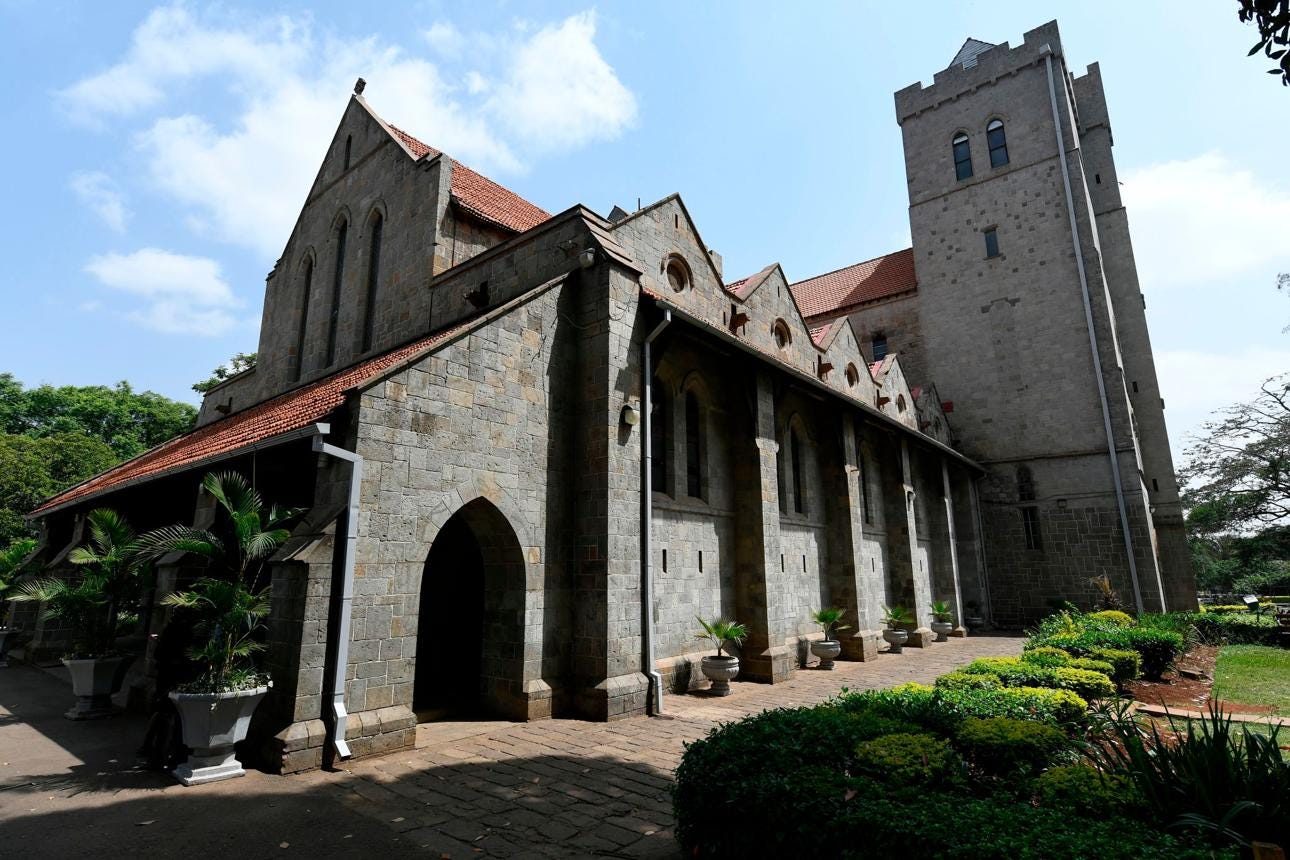
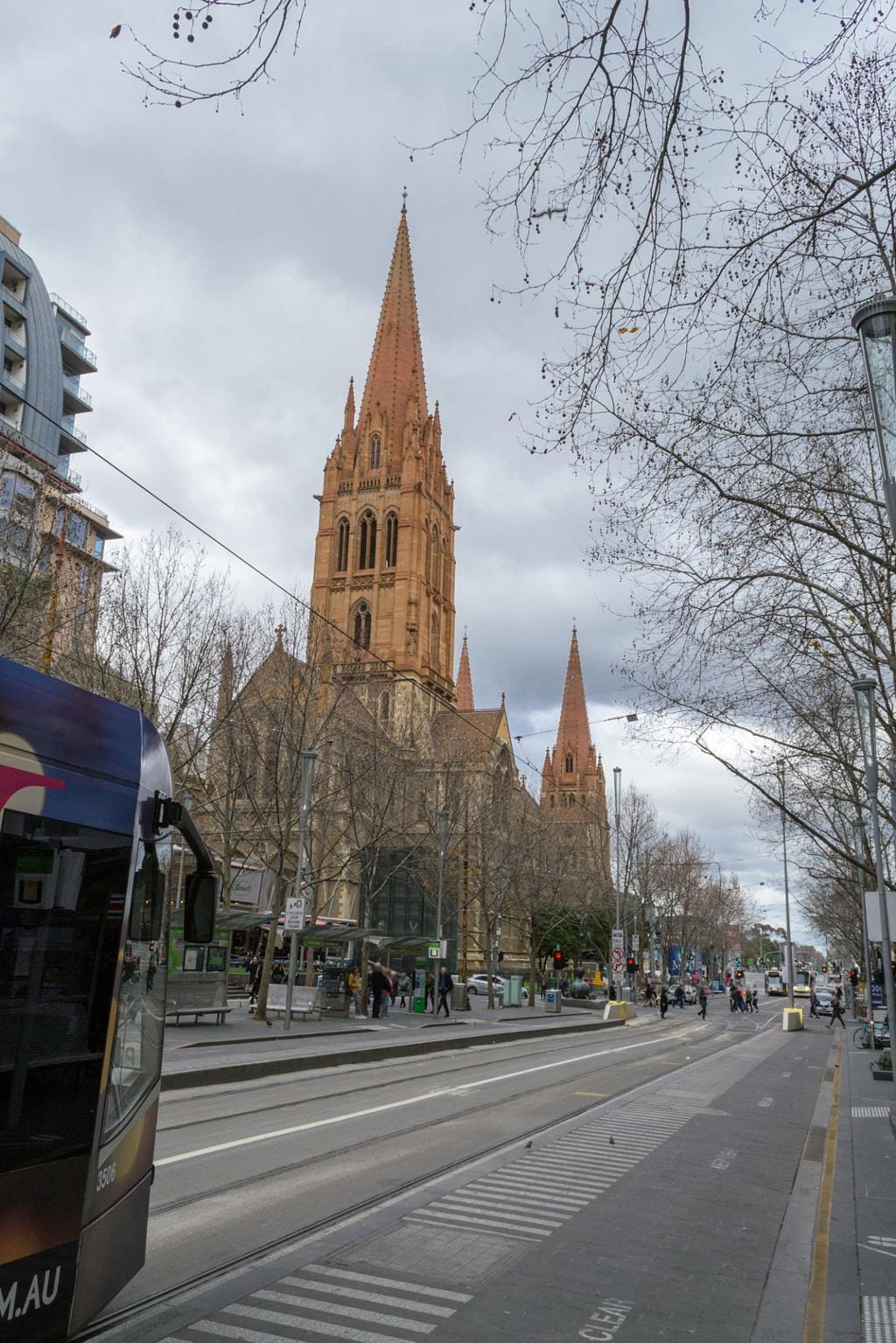
As the British Empire expanded, Anglican churches emerged throughout the world.
Today, Anglicanism is present in the following regions:
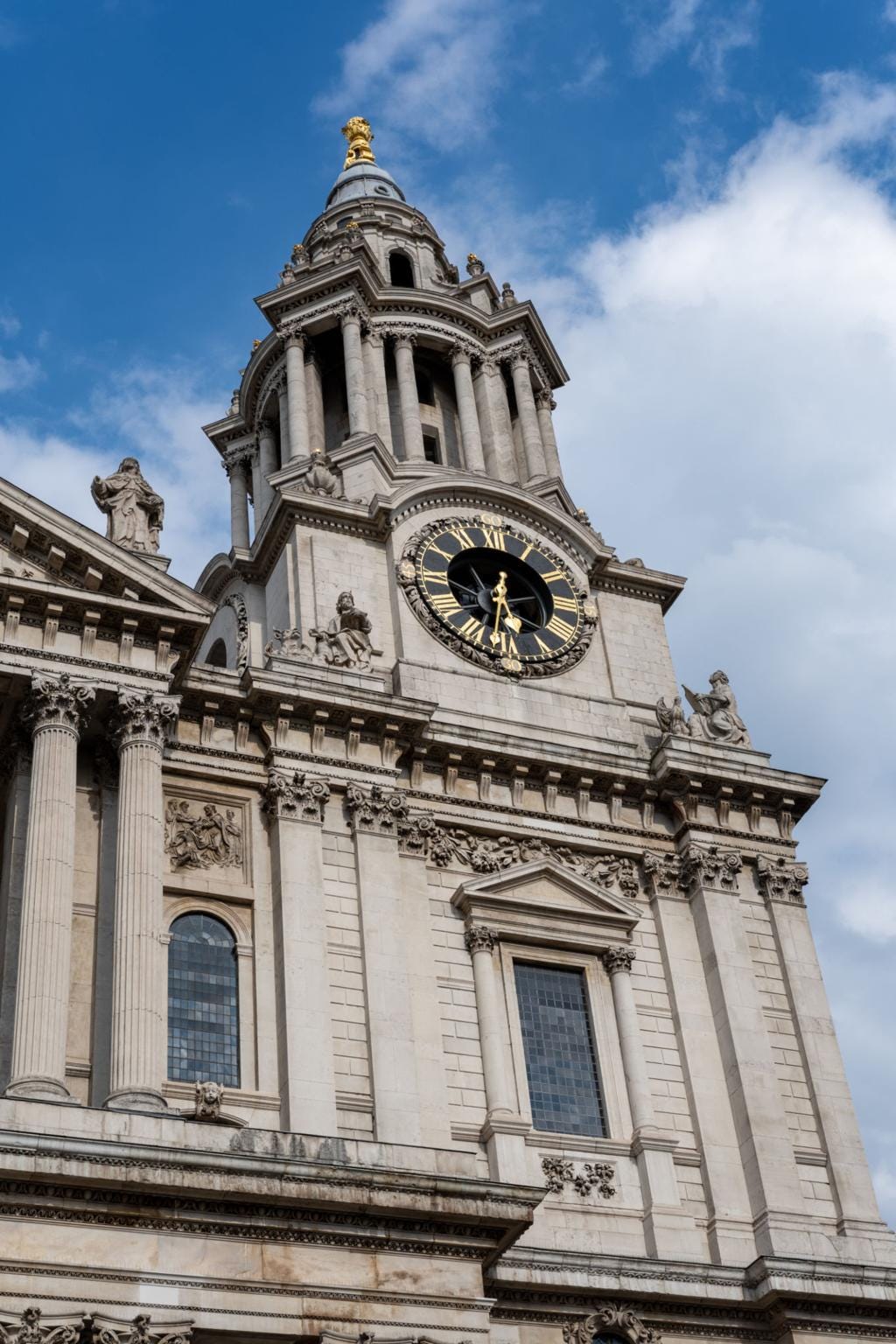
United Kingdom
Australia
Kenya
Nigeria
Canada
South Africa
India
Many other nations
The modern Anglican Communion includes tens of millions of Christians representing diverse cultures and traditions.
Yet all share roots in the events of the English Reformation.
Lessons for Today
The English Reformation teaches several important lessons.
First, churches must continually examine themselves in the light of Scripture.
Second, reform and tradition do not have to be enemies.
Third, Christian unity often requires humility and patience.
Fourth, faith must be communicated in ways that ordinary people can understand.
Finally, the story reminds us that God often works through imperfect people and turbulent circumstances to accomplish lasting purposes.
Conclusion
The English Reformation was far more than a political dispute between a king and a pope. It was a profound transformation that reshaped theology, worship, and church life. Through the contributions of Henry VIII, Thomas Cranmer, Edward VI, Elizabeth I, and many others, a distinct Anglican tradition emerged.
This tradition sought to remain rooted in the ancient Christian faith while embracing biblical reform. The result was Anglicanism—a global Christian movement that continues to influence worship, theology, and mission across the world.
In Part 3, we will explore one of the most distinctive features of Anglican theology: Scripture, Tradition, and Reason—the Anglican approach to authority and theological reflection.
Dr Daniel J. Grace
Faith • Civilization • Theology
Research • Journalism • Truth
🌐 danieljamesgrace.com
© 2026 Dr Daniel J. Grace. All Rights Reserved.
No part of this article may be reproduced, distributed, transmitted, or published in any form or by any means without prior written permission from the author, except for brief quotations used in academic citation, review, or research purposes.